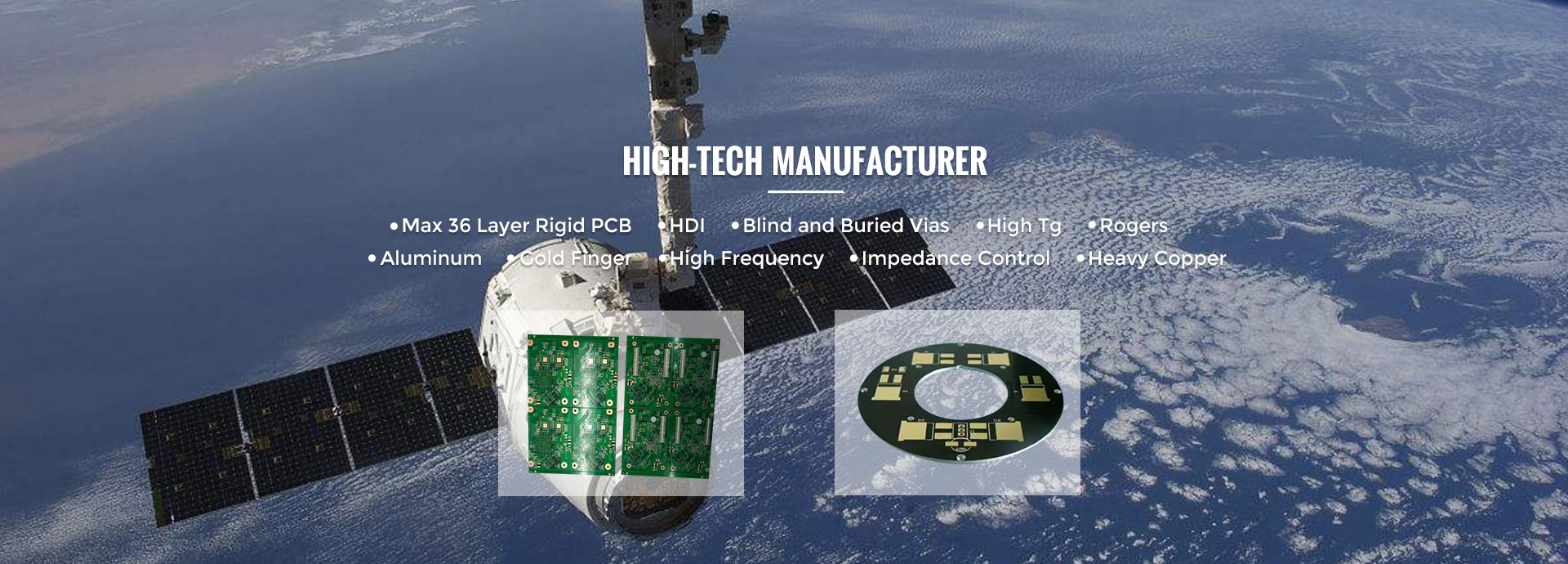
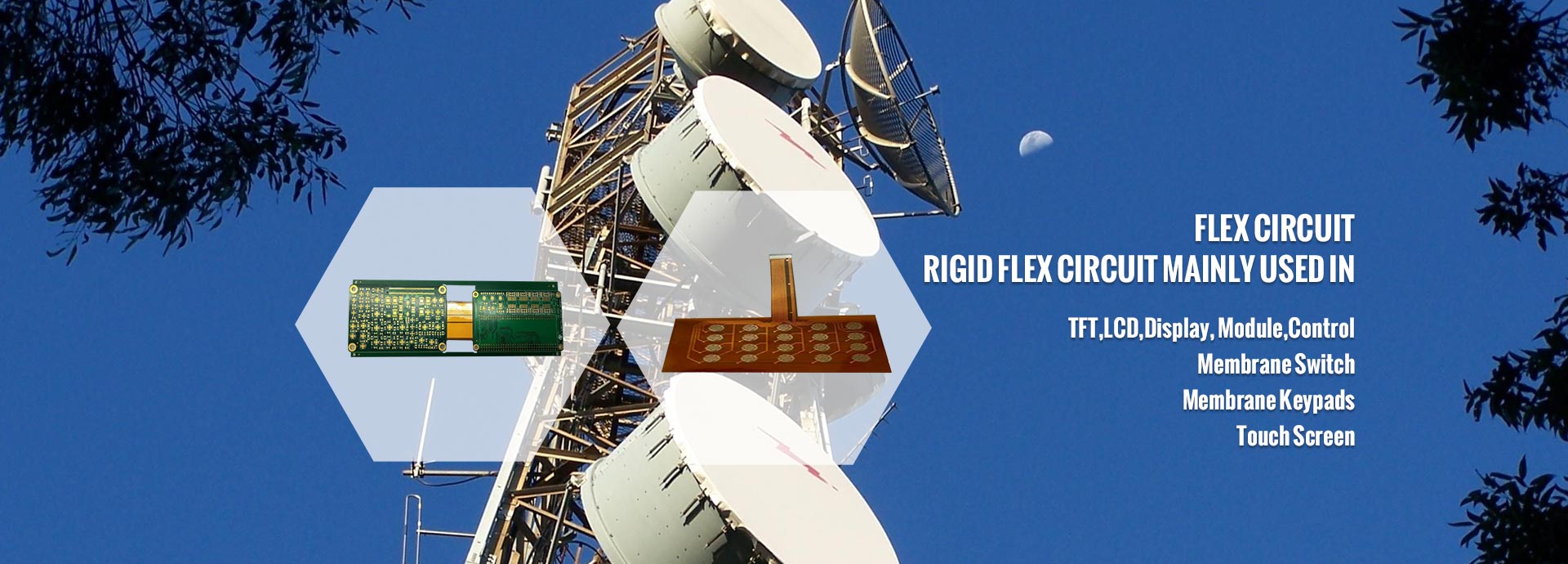
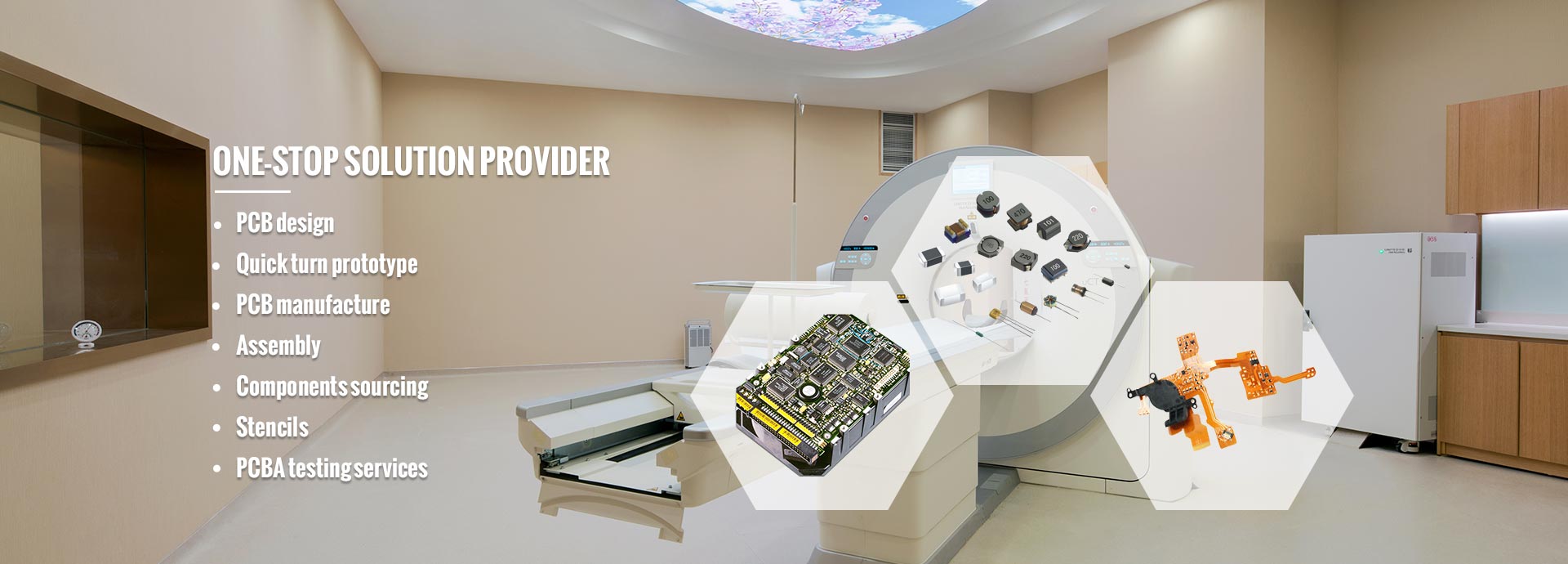
Dear Partners, welcome to MINKINZI – China’s Trusted End-to-End Manufacturing Partner, with 20 years of expertise, we specialize in: Design & Development → Max 58 Layer PCB Fabrication →Turnkey PCBA Assembly → Box-Build Assembly. ODM/OEM/Contract Manufacturing tailored to global standards. Support DFM. Welcome to send your NDA, PCB Gerber, BOM, so that we can provide quotation for you. .

  • High Frequency High Speed Back Drilled PCB – Low Loss Multilayer Circuit Board for 5G, RF

  • High Frequency High Speed Back Drilled PCB – Low Loss Multilayer Circuit Board for 5G, RF

  • High Frequency High Speed Back Drilled PCB – Low Loss Multilayer Circuit Board for 5G, RF

  • High Frequency High Speed Back Drilled PCB – Low Loss Multilayer Circuit Board for 5G, RF

  • High Frequency High Speed Back Drilled PCB – Low Loss Multilayer Circuit Board for 5G, RF

  • High Frequency High Speed Back Drilled PCB – Low Loss Multilayer Circuit Board for 5G, RF

High Frequency High Speed Back Drilled PCB – Low Loss Multilayer Circuit Board for 5G, RF

1. 5G Base Station Back-Drilled PCB

2. 77 GHz Automotive mmWave Radar PCB

3. 100G / 400G / 800G Optical Transceiver PCB

4. Server & Data Center Backplane PCB

5. Aerospace & Satellite Communication (SatCom) PCB

6. Rogers RO4350B Hybrid Back-Drilled PCB

Share

Description :

Comprehensive Analysis of High-Frequency, High-Speed Back-Drilled PCBs | Minkinzi

I. Product Overview

High-frequency, high-speed back-drilled PCBs are high-performance circuit boards engineered using advanced back-drilled via technology to remove excess copper stubs within plated through-holes (PTHs). Designed primarily for applications involving high-frequency signal transmission and high-speed digital signals, these boards leverage precisely controlled drilling depth to dramatically reduce signal reflection, crosstalk, and signal integrity (SI) issues. By eliminating non-functional stub portions through controlled depth back-drill, manufacturers can deliver boards that meet the rigorous demands of next-generation communication, computing, and data center platforms.

II. Core Technologies and Process Characteristics

FeatureDescription
Back-drilling depth accuracyWithin ±0.05mm; utilizes laser depth detection and CCD visual alignment
Stub residual control≤ 0.10mm (down to 0.05mm for select high-end products)
Hole diameter range0.20mm – 0.60mm (mechanical back-drilling)
MaterialsHigh-frequency and high-speed materials from Rogers, Panasonic MEGTRON, Isola, Hitachi, SY, Zhejiang Huazheng, and Shengyi—selected for their low Dk Df PCB material properties
Dissipation Factor (Df)0.002 – 0.012 (depending on material grade)
Signal rateSuitable for 10 Gbps – 112 Gbps high-speed signals, including PCIe 5.0/6.0, 100G/400G Ethernet, and 5G communications

These controlled impedance back-drilled PCB capabilities ensure consistent impedance profiles across complex multilayer stack-ups, supporting the most demanding signal integrity high-speed PCB requirements.

III. Key Application Areas

High-frequency, high-speed back-drilled PCBs are widely deployed across mission-critical industries where via stub removal PCB techniques deliver measurable performance gains:

  • 5G communication base stations, including AAU/RRU units and Massive MIMO antenna systems

  • Data center servers and switches supporting 25G, 50G, 100G, and 400G network equipment

  • AI accelerator cards and GPU computing boards, including NVIDIA and AMD high-end computing platforms

  • Optical modules such as QSFP-DD, OSFP, and CFP2 for 400G and 800G applications

  • Aerospace, defense, and radar systems

  • High-end test instruments and medical imaging equipment

  • Millimeter-wave radar systems for autonomous driving

IV. Necessity of the Back-Drilling Process

The adoption of controlled depth back-drill is no longer optional in high-speed design—it is fundamental to achieving reliable system performance.

  • Eliminate signal reflection: When the stub length exceeds one-sixth of the signal rise time, an antenna-like reflection effect occurs, leading to inter-symbol interference (ISI) and signal distortion. Back-drilled via technology removes the source of these reflections.

  • Reduce insertion loss: High-frequency signal attenuation can be reduced by 1–3 dB after back-drilling, translating directly into improved link budgets and longer trace reach.

  • Improve eye diagram quality: Enhanced high-speed signal eye height and eye width deliver greater system margin and robust compliance with SI/PI standards.

  • Compliance with industry standards: Fully meets IEEE 802.3, OIF-CEI, and PCI-SIG specifications for high-speed serial interfaces.

V. Guide to Selecting Partners for High-Frequency, High-Speed Back-Drilled PCBs

Selecting a PCB Manufacturer

Evaluation DimensionKey Indicators
Process CapabilitiesBack-drill depth tolerance, minimum stub length, minimum via diameter, and back-drill registration accuracy at or below 75μm
Material InventoryReady access to low Dk Df PCB material options such as Rogers RO4350B/RO4003C, Panasonic MEGTRON 6/7, and Isola I-Speed
Equipment ConfigurationMultiple CNC drilling machines with CCD registration, Laser Direct Imaging (LDI), AOI, and X-ray drilling target systems
CertificationsUL, ISO 9001, IATF 16949, AS9100, and IPC-A-600/IPC-6012 Class 3
Engineering SupportIn-house SI simulation, impedance matching, and stack-up design optimization (DFM) services
Mass Production ExperienceDemonstrated track record supporting 5G, data centers, and AI computing board production

Selecting an EMS (Electronics Manufacturing Services) Provider

  • BGA/QFN packaging capabilities: High-precision SMT lines supporting 01005 components and 0.3mm pitch BGA

  • High-speed testing capabilities: Oscilloscopes, Vector Network Analyzers (VNA), and Time-Domain Reflectometry (TDR) testing

  • Comprehensive test platforms: ICT, FCT, AOI, and X-ray inspection

  • Specialty assembly processes: Conformal coating, potting, and assembly processes addressing airtightness requirements for high-frequency modules

  • Global supply chain management: Proven capability in handling IC shortages, qualifying alternative components, and managing multi-region logistics

Selecting a Contract Manufacturer (OEM/ODM)

Key ConsiderationsDescription
Industry ExperienceProven track record across telecommunications, data centers, and automotive electronics
R&D CapabilitiesDedicated SI/PI simulation, thermal simulation, and mechanical structural design teams
Quality SystemsSuccessful completion of customer audits by leading companies such as NVIDIA, Intel, Huawei, and ZTE
ResponsivenessNPI cycle and prototype lead times aligned with fast-moving program schedules
NDA CapabilitiesRobust protection of customer IP and design schematics throughout the engagement

Selecting a Turnkey / PCBA One-Stop Service Provider

  • Component sourcing channels: Authorized distribution partnerships with Arrow, Avnet, and WPG to guarantee component authenticity

  • BOM fulfillment accuracy: Consistent achievement of high BOM completion rates to keep production on schedule

  • Cost control capabilities: Volume purchasing power and qualified alternative component solutions

  • Logistics and customs: Full support for DDU/DDP terms and customs clearance at major global ports

  • Financial strength: Capability to support VMI and JIT delivery models for high-volume programs

For teams looking to source new projects, requesting a Back-Drilled PCB Quote Online from a vetted manufacturer is the fastest path to validating cost, lead time, and technical feasibility before committing to a full program.

VI. Minkinzi's Core Advantages

Minkinzi brings extensive experience in manufacturing high-frequency, high-speed back-drilled PCBs, offering global clients a complete one-stop service spanning PCB fabrication, component sourcing, SMT assembly, and final system integration. Our capabilities are purpose-built to support High-Frequency PCB Fast Turnaround and High-Speed PCB Small Batch prototyping alongside large-scale mass production.

  • ✅ Advanced back-drilling process: CNC drilling machines equipped with CCD visual alignment and a back-drill depth tolerance of ±0.05mm

  • ✅ Comprehensive high-frequency material inventory: Established partnerships with leading material manufacturers including Rogers, Mitsubishi, Panasonic, and Isola, providing broad access to low Dk Df PCB material grades

  • ✅ End-to-end SI simulation support: In-house signal integrity team capable of providing input during the stack-up design phase for any signal integrity high-speed PCB project

  • ✅ Rigorous quality control: 100% X-ray inspection of back-drill depth, statistical impedance testing, and full-batch AOI and flying probe testing

  • ✅ Flexible production models: True Back-Drilled PCB Low MOQ support for prototypes and small-batch programs, with rapid scaling into mass production

  • ✅ Fast delivery cycles: Industry-leading High-Frequency PCB Fast Turnaround, with prototype delivery in days and mass production cycles measured in weeks

  • ✅ Global delivery coverage: Seamless service across North America, Europe, Southeast Asia, the Middle East, and beyond, with support for DHL, FedEx, and UPS

  • ✅ One-stop turnkey service: Full-process delivery covering PCB fabrication, components, SMT, assembly, and testing, all under a single quality system

Whether you need a controlled impedance back-drilled PCB for a 112 Gbps backplane, a via stub removal PCB solution for a 5G radio unit, or expert guidance on back-drilled via technology for an AI accelerator platform, Minkinzi is your trusted partner from prototype through volume production.


Contact the Minkinzi factory to manufacture your high-frequency, high-speed back-drilled PCBs or to request a Back-Drilled PCB Quote Online today. Email: sales@minkinzi.com

Applications :

Minkinzi: One-Stop Solution for High-Frequency & High-Speed Back-Drilled PCBs

Application Areas

Minkinzi's high-frequency and high-speed back-drilled PCB solutions power the most demanding industries where uncompromising signal integrity, blazing transmission rates, and mission-critical reliability are non-negotiable. Our technologies are trusted across 5G infrastructure, next-generation data centers, advanced aerospace platforms, intelligent automotive systems, precision test and measurement instrumentation, high-end medical imaging, and cutting-edge AI computing hardware.

These industries commonly operate at data rates from 10Gbps to 112Gbps and beyond—speeds that simply cannot be achieved with conventional PCB designs. Typical deployments include 5G Back-Drilled PCB modules for millimeter-wave AAU/RRU and Massive MIMO antenna systems, Telecom High-Frequency PCB assemblies for core network equipment, Aerospace Back-Drilled PCB platforms for radar, electronic warfare, satellite communications, and missile guidance, Military Grade High-Speed PCB solutions for defense electronics, 400G/800G/1.6T optical modules and switches, 77GHz millimeter-wave automotive radar, ADAS domain controllers, T-Box modules, oscilloscopes, signal generators, network analyzers, high-speed signal processing boards for CT, MRI, and ultrasound systems, as well as GPU/CPU acceleration cards and HPC motherboards.

Product Types

Minkinzi delivers a comprehensive portfolio engineered around the Depth-Controlled Drilling Process and advanced lamination expertise, ensuring optimal PCB Stub Effect Elimination across every design:

Product TypeKey FeaturesTypical Applications
High-Speed Back-Drilled PCBDepth-controlled drilling removes excess via stubs; dramatically reduces signal reflection and resonanceBackplanes, telecom equipment, servers
Hybrid Stack-Up PCBMixed lamination of Rogers + FR4 high-frequency materials; balances performance and cost5G antennas, radar systems
Pure High-Frequency PCBBuilt entirely on low-Dk/low-Df materials such as Rogers High-Frequency PCB substrates, Taconic, and PTFE-based laminatesSatellites, millimeter-wave applications
PTFE Back-Drilled PCBPTFE/Rogers-based construction combined with precision back-drilling for ultra-low-loss performanceAerospace, defense, high-frequency front-end modules
HDI Back-Drilled PCBAny-layer interconnection plus back-drilling for maximum integration densitySmartphones, compact modules
4-Layer to 16-Layer Back-Drilled PCBScalable multilayer architecture from 4 to 16 layers; built on M6/M7/M8 high-speed materials with back-drillingData center switches, network infrastructure
High-Speed Multilayer Back-Drilled PCB8 to 58 layers; high-speed substrates with full back-drilling integrationHyperscale data center switches
Flex-Rigid Back-Drilled PCBFlexible zones paired with rigid zones to separate high- and low-power regionsFoldable smartphones, military avionics
Embedded Copper Block PCBEmbedded copper blocks address extreme heat dissipation and high-current demandsPower modules, AI computing hardware

Key Customer Priorities

Minkinzi understands exactly what buyers evaluate when selecting a back-drilled PCB partner.

Professional Qualifications and Industry Background. Customers look for internationally recognized certifications such as ISO9001, IATF 16949, AS9100, UL, and RoHS compliance, along with a proven track record serving tier-one clients in military, aerospace, and telecommunications sectors. Equally important is the engineering team's depth of understanding in Signal Integrity (SI) and Power Integrity (PI), ensuring design decisions are validated from the earliest stages of development.

Hardware Capabilities. Production-ready back-drilling precision is essential, including depth-controlled drilling machines capable of holding depth tolerances within ±0.05mm. Laser Direct Imaging (LDI) systems supporting line width and spacing down to 3mil (75μm), vacuum lamination presses, robust material inventory for hybrid stack-up builds, and a complete testing ecosystem featuring TDR, network analyzers, and impedance testers are all part of the Minkinzi infrastructure.

Design for Manufacturability (DFM) Expertise. True engineering partners engage at the Gerber or ODB++ stage, advising on optimal back-drilling stub length, impedance matching, stack-up structures, and lamination sequences. Minkinzi also provides comprehensive Signal Integrity simulation support using industry-standard tools such as HFSS, ADS, and Siwave, ensuring designs are production-ready before fabrication begins.

Manufacturing Challenges and Pain Points

This is what sets Minkinzi apart from ordinary PCB manufacturers and directly addresses the issues customers care about most.

Back-Drilling Process Challenges. Our Depth-Controlled Drilling Process tackles the industry's most stubborn problems head-on. Stub residual length control is critical—longer stubs generate more severe signal reflections, and while industry standards typically require stubs ≤ 10 mils, advanced applications demand ≤ 6 mils. Minkinzi consistently achieves this tighter threshold for true PCB Stub Effect Elimination. Back-drill registration accuracy is equally vital, as misalignment can lead to breakout, annular ring breakage, and short-circuit failures. In multilayer constructions, stack-up tolerance accumulation can shift drilling depths, requiring rigorous process discipline at every stage.

Mixed-Material Lamination Challenges. Combining dissimilar materials in a single build introduces Coefficient of Thermal Expansion (CTE) mismatch, which can cause blistering or delamination during lamination. Additionally, PTFE and Rogers-type substrates require specialized surface treatment chemistries, and Minkinzi has developed proprietary brown oxide and black oxide processes to ensure reliable bonding across all hybrid builds.

Impedance Consistency Challenges. High-speed signals demand impedance tolerances of ±5%, with the most demanding designs requiring ±3%. Even minor fluctuations in dielectric thickness, copper thickness, or trace width and spacing can cause impedance drift. Minkinzi controls these variables with statistical process control and in-line verification at every critical step.

Hole Wall Quality and Reliability. High-speed backplanes frequently require deep holes with board thickness ≥ 3.0mm and aspect ratios of 12:1 or greater. Post-back-drilling hole wall roughness (Ra) directly affects plating quality and long-term signal transmission, making this a focal point of our quality engineering.

Yield Versus Cost Conflict. The back-drilling process introduces additional failure points that can double scrap costs on a single board. Minkinzi addresses this directly by combining rigorous in-process inspection with engineering-driven DFM feedback, reducing rework and protecting customer budgets without compromising quality.

Quality Control Requirements

Minkinzi's quality assurance framework is built to exceed the expectations of the most demanding customers.

Incoming Quality Control (IQC). Every batch of laminate is sample-tested for critical parameters including Dk, Df, Tg, and CTE. Copper foil, prepreg (PP), and chemicals are managed under strict batch controls to ensure material consistency from the start.

In-Process Quality Control (IPQC). Back-drilling depth is verified through 100% in-line TDR measurement or strategically planned spot checks. Statistical Process Control (SPC) is applied across lamination, drilling, plating, and solder mask operations. A three-stage inspection regime—combining AOI, Flying Probe, and Impedance Testing—catches defects early and ensures only fully compliant boards advance.

Finished Product Control (OQC). Every back-drilled hole is verified through 100% TDR testing with documented stub values. Impedance test reports include the test equipment model and calibration certificate. Cross-section analysis is mandatory for key orders, complemented by ionic contamination testing, solderability testing, and thermal stress testing to confirm long-term reliability.

Reliability Testing Capabilities. Minkinzi performs IST (Interconnect Stress Test) and thermal shock testing from -55°C to 125°C, reflow simulation across 5 to 6 cycles, plating thickness measurement, and plating adhesion verification using tape testing protocols.

Full Traceability. Every key parameter—back-drill depth, impedance values, and hole location—is traceable via QR code and MES system. Sample retention extends to a minimum of three years, providing customers with complete documentation and peace of mind.

Delivery Capability Requirements

Minkinzi's logistics and service model is designed for global customers who demand speed, flexibility, and accountability.

Delivery Commitments. Sample lead times run 7 to 10 working days, including back-drilling and impedance testing. Small-batch production is delivered in 15 to 20 working days, while mass production orders are completed in 20 to 25 working days with full VMI/JIT delivery support available.

Response Time. Quote responses are issued within 4 hours, including engineering assessment. DFM reports are generated within 24 hours. When exceptions arise, the team responds within 1 hour and delivers a full 8D report within 4 hours.

Flexible Production Capacity. Minkinzi supports both high-mix/low-volume NPI builds and high-volume mass production. An urgent order channel provides 48-hour expedited service for time-critical projects.

Global Logistics. One-stop shipping is available via DHL, FedEx, and sea freight, with flexible trade terms including DDP, DDU, and EXW. Every key customer is assigned a dedicated Project Manager (PM) for seamless coordination.

Welcome to contact the Minkinzi factory to manufacture your high-frequency, high-speed back-drilled PCBs: sales@minkinzi.com

Flow Chart :

High-Frequency & High-Speed Back-Drilled PCBs | Minkinzi – From Prototype to Mass Production

What Is a Back-Drilled PCB and Why Use Back-Drilling in High-Speed PCB Design?

In today's most demanding high-frequency and high-speed application environments—including 5G and emerging 6G prototype PCB development, radar systems, hyperscale data centers, AI server platforms, and satellite communication infrastructure—signal integrity is the defining metric that determines whether a product succeeds or fails in the field. As PCB layer counts climb and via depths grow longer, unwanted residual stubs re inevitably left behind inside the through-hole vias. These stubs act as miniature transmission line discontinuities, generating signal reflections, resonance distortion, ringing, and elevated insertion loss that collectively cripple the quality of high-speed serial transmission.

Back-drilling is the precision manufacturing process engineered specifically to eliminate this problem. By performing a controlled secondary drilling operation that removes the excess conductive stub at the bottom of the via, the high-speed signal path becomes shorter, cleaner, and far more electrically transparent. The result is a dramatic improvement in both signal integrity (SI) and power integrity (PI) performance. This is why back-drilling has become an indispensable process for high-end products such as Data Center Back-Drilled PCB assemblies, high-speed backplanes, Server Motherboard PCB designs, optical transceiver modules, and Automotive Radar PCB (77GHz) modules operating in the millimeter-wave spectrum.


Key Application Scenarios: Where Back-Drilled PCBs Deliver Measurable Value

Application AreaKey Performance RequirementsValue Added by Back-Drilling
5G Base Stations & Network Equipment High-Speed PCB Systems25 Gbps+ high-speed serial signalingEliminates stub reflections; dramatically improves eye diagram margin
AI Servers, Hyperscale Data Center Back-Drilled PCB Platforms56G / 112G PAM4 channelsReduces insertion loss; minimizes inter-symbol interference (ISI) on long-reach channels
Aerospace, Defense & Radar System Back-Drilled PCB ApplicationsMillimeter-wave frequency bands (including 77 GHz automotive radar)Reduces signal distortion; improves phase accuracy and beam-forming precision
Satellite Communication PCB & Space-Grade ElectronicsKa-band, Ku-band, and beyondMaintains signal fidelity across extreme temperature and vacuum conditions
Medical Imaging, Test & Measurement, Industrial ControlHigh-speed ADC/DAC links, low-jitter clockingImproves signal-to-noise ratio and clock stability for precision measurement
6G Research, Prototyping & Pre-Commercial PlatformsSub-THz exploratory frequencies, ultra-wideband channelsProvides the clean via transitions required for next-generation RF validation

End-to-End Manufacturing Process: From Prototype to Mass Production

Requirements Discussion & DFM Assessment

Once the customer submits Gerber, ODB++, or native PCB CAD design files, the Minkinzi engineering team initiates an in-depth DFM (Design for Manufacturing) review. This collaborative stage focuses on the following critical checkpoints:

  • Stack-up architecture: Evaluation of dielectric layer thickness, prepreg (PP) selection, and core material pairing

  • Back-drill location and depth control: Residual stub length must be tightly controlled, ideally under 10 mils, with ≤ 7 mils recommended for premium high-speed channels

  • Impedance matching validation: Verification of trace width and spacing designs for 50 Ω single-ended and 85 Ω / 100 Ω differential pairs

  • Back-drill-to-target-via registration accuracy: Must remain within ± 2 mils to guarantee complete stub removal without damaging functional signal layers

  • Finished board thickness tolerances and warpage control strategies

Expert Insight: Approximately 70% of all engineering issues can be identified, isolated, and resolved during the DFM phase—long before any expensive tooling or production time is committed. This proactive approach is especially critical for 6G Prototype PCB programs, where every design iteration carries significant R&D cost.


Material Selection & Engineering Preparation

High-frequency, high-speed back-drilled boards are exceptionally sensitive to the electrical and mechanical properties of the base materials. Minkinzi's material library spans the full performance spectrum to match every application requirement:

  • Mid-Loss grade: FR4 systems such as ITEQ IT-180A and Shengyi S1000-2M

  • Low-Loss grade: Isola 408HR and Shengyi S7439 for enhanced signal performance

  • Mid-Low Loss to Low-Loss RF grade: Rogers RO4350B and RO4003C for controlled-impedance RF and microwave designs

  • Ultra-Low Loss grade: Taconic TLY-5Z and PTFE-based laminates for millimeter-wave and Automotive Radar PCB (77GHz) production

Beyond laminate selection, the following parameters are confirmed in writing with the customer:

  • Glass transition temperature (Tg > 150 °C preferred for multilayer reliability)

  • Dissipation factor (Df) and dielectric constant (Dk) at the project's target frequency

  • Copper foil profile type (RTF, VLP, or HVLP—lower copper roughness directly translates to lower conductor loss)

  • Lamination cycle planning, including interlayer alignment compensation for prepreg (PP) resin flow behavior


Sample Fabrication

The sample build is the moment of truth where the design, materials, and process recipe are validated as an integrated system:

  • Inner-layer imaging and etching: Laser Direct Imaging (LDI) is used to achieve line width precision of ± 1 mil on fine-pitch routing

  • Lamination cycle: High-temperature, high-pressure cure (> 180 °C, > 350 psi) ensures full prepreg resin flow and void-free dielectric bonding

  • Mechanical drilling of target vias: Brand-new precision alloy drill bits are used; hole diameter tolerance is held to ± 0.05 mm

  • Hole metallization and electroless + electrolytic plating: Barrel copper thickness is guaranteed at ≥ 25 μm for reliable high-current and high-speed performance

  • Back-drilling operation: Performed on CNC or laser-guided back-drill equipment (laser offers superior precision for the tightest designs), with X-ray guided alignment achieving ± 2 mil registration accuracy. The back-drill bit diameter is typically selected 6–8 mils larger than the target via to ensure complete, clean stub removal

  • Outer-layer imaging, solder mask application, and surface finish: Options include ENIG, Immersion Silver, OSP, ENEPIG, and hard gold depending on assembly and end-use requirements

  • Profiling, routing, and electrical test: Flying probe or dedicated fixture-based continuity and isolation testing

  • Back-drill depth verification: A dual-method inspection approach combining polished cross-section microscopy with 2D / 3D X-ray analysis to confirm stub removal quality


Signal Integrity Testing & Sample Verification

Every engineering build undergoes a comprehensive signal integrity validation cycle before customer release:

  • TDR impedance testing: 100% coverage of all critical high-speed nets to confirm characteristic impedance matches the design target

  • S-parameter testing with Vector Network Analyzer (VNA): Quantitative evaluation of insertion loss and return loss across the operating frequency band

  • Eye diagram testing: Real-time verification of signal quality margin and jitter performance

  • TDR-based stub-length verification: Direct measurement confirming residual stub length is within the design specification

  • SEM cross-section analysis: High-magnification confirmation of back-drill profile geometry, via wall copper integrity, and dielectric quality

Customer Acceptance Targets: Typical high-speed link requirements call for insertion loss below 1.5 dB/inch at 10 GHz and residual stub length below 7 mils. These benchmarks are readily achievable on Minkinzi's AI Server PCB and Network Equipment High-Speed PCB platforms.


Mass Production Preparation (NPI Introduction)

Following customer sign-off on engineering samples, each project transitions into a formal NPI (New Product Introduction) launch sequence:

  • Process finalization: Complete documentation package including PFMEA, Process Control (PC), Process Flow (PF), and Control Plans

  • Fixture and test program design: Flying probe and ICT fixture builds, test program development, and validation

  • First Article Inspection (FAI): Comprehensive dimensional, electrical, and visual inspection of initial production units, with formal customer approval

  • Capacity planning and scheduling: Confirmation of delivery milestones and order priority sequencing

  • Supply chain locking: Strategic raw material stocking with a minimum two-month safety inventory buffer

Six Core Advantages of Choosing Minkinzi

AdvantageDetails
 Professional Process CapabilitiesSupports 12–30 layer back-drilled boards; minimum line width and spacing of 3 mil / 3 mil; proven expertise across Data Center Back-Drilled PCBSatellite Communication PCB, and Radar System Back-Drilled PCB programs
Rapid DeliveryEngineering samples delivered in as fast as 5 days; standard mass production lead time of 10–15 days
 Precision GuaranteeBack-drilling depth control within ± 2 mil; via registration accuracy within ± 3 mil
In-House Signal Testing CapabilitiesFull suite of TDR, VNA, eye diagram, and SEM equipment for comprehensive SI validation
Globally Validated by CustomersTrusted by engineering teams in 30+ countries across North America, Europe, and Southeast Asia
Dedicated Engineering SupportSenior FAE team provides complimentary DFM review and signal integrity simulation guidance

Ready to manufacture your next-generation High-Frequency, High-Speed Back-Drilled PCB?
Contact the Minkinzi factory directly at sales@minkinzi.comfor a confidential engineering consultation, custom DFM feedback, and a competitive quotation—whether you are building a 6G Prototype PCB, scaling an AI Server PCB platform, or qualifying a new Automotive Radar PCB (77GHz) design for volume production.

Capability :

Minkinzi | One-Stop Contract Manufacturing Capabilities for High-Frequency, High-Speed, and Back-Drilled PCBs/PCBAs

The Qualifying Criteria of a True High-End PCB/PCBA Contract Manufacturer

A high-end PCB/PCBA contract manufacturer is not merely a general-purpose facility capable of producing "any type of board." To achieve stable mass production of high-frequency, high-speed, and back-drilled boards, a factory must meet four critical criteria: specialized materials, high-precision manufacturing processes, rigorous quality control, and a comprehensive supply chain. Through years of dedicated development, Minkinzi has fully established this ecosystem, offering customers a complete "turnkey" service that encompasses bare board fabrication, component procurement, SMT assembly, testing, and packaging.

When it comes to the Back-Drilled PCB vs Standard PCB decision, the difference is profound. Standard PCBs often leave unwanted via stubs that act as resonant antennas, causing signal reflections, EMI, and bit-error-rate degradation above 5 Gbps. Back-drilled PCBs eliminate these stubs physically, delivering the clean signal paths required for 25 Gbps, 56 Gbps, and 112 Gbps channels. Minkinzi helps customers evaluate the Back-Drilled PCB Cost vs Benefit trade-off on a per-project basis, quantifying the improvements in eye-diagram margins, jitter reduction, and channel reach against incremental fabrication cost—typically a 5–10% NRE increase that is rapidly recovered through higher yields in high-speed system integration.


High-Frequency Material Processing Capabilities

Choosing the Best Material for High-Frequency PCB design is the foundation of any successful RF, microwave, or millimeter-wave product. Minkinzi is capable of processing the industry's most trusted high-frequency and high-speed laminates, including Rogers (RO4003C, RO4350B, RO4450F, RT/duroid 5880, RO3003, RO6002), Taconic (TLX, RF-35, TLY), Arlon (AD255C, AD1000), Isola (FR408HR, I-Speed, IS680), Nelco (NH4000-13), Panasonic high-speed materials (M6, M7, M-GO), and Shengyi high-speed materials. We actively consult with customers on material selection based on dielectric constant (Dk), dissipation factor (Df), thermal stability, and cost targets.

Our hybrid lamination expertise is a key differentiator. We support PTFE hybrid lamination and partial hybrid lamination (high-frequency materials combined with FR-4 high-speed materials) as well as PPO/PPE high-speed boards. This approach allows engineers to optimize the High-Speed PCB Stack-Up Design by placing low-loss PTFE layers only where the RF signal travels, while leveraging cost-effective FR-4 for power and low-speed layers—delivering the best of both performance and economics.

Minkinzi also brings extensive experience in plasma etching, sodium-naphthalene treatment, and pre-treatment for electroless copper plating on PTFE materials—processes that are notoriously difficult to control and that determine long-term reliability in harsh environments.


High-Precision High-Speed PCB Manufacturing

When the design question becomes How to Reduce Signal Loss in PCB channels, manufacturing precision is just as critical as material selection. Minkinzi delivers industry-leading capabilities across every step of fabrication:

  • Minimum line width/spacing: 2/2 mil (50 μm), with select capabilities reaching 1.5/1.5 mil.

  • Laser Direct Imaging (LDI): Ensures high registration accuracy for fine circuitry on advanced HDI structures.

  • Multilayer Lamination: Supports complex structures exceeding 30 layers with ±75 μm layer-to-layer registration accuracy, which is fundamental to a stable High-Speed PCB Stack-Up Design.

  • HDI Processes: 1+N+1, 2+N+2, 3+N+3, and Any-layer HDI (mSAP/SAP options available).

  • Via-in-Pad + VIPPO (Via-in-Pad Plated Over) + Resin-filled vias + Planarized pad surfaces for BGA breakout and high-density routing.

  • Impedance control accuracy of ±5%–±8%, verified via a closed-loop process combining Polar Si9000 field solvers and TDR testing—directly supporting precise Back-Drilled PCB Impedance Control on every production lot.


The Core Back-Drilling Process: Solving the Via Stub Effect

Understanding the Via Stub Effect in High-Speed Design is essential for any engineer working above 5 Gbps. A via stub—the unused portion of a plated through-hole that does not connect to a trace on its far side—behaves like a quarter-wave resonant stub. At high frequencies, it causes severe signal reflections, insertion loss, and inter-symbol interference, often closing the eye diagram entirely. The most direct physical remedy is back-drilling, which removes the unused portion of the barrel after initial plating.

How Back-Drilling Improves Signal Integrity

This is exactly where Minkinzi excels. Our Back-Drilled PCB Manufacturing Process is built on a foundation of precision equipment and metallurgical expertise:

  • Equipped with CNC depth-controlled drilling machines (e.g., Schmoll, Hitachi, Via Mechanics); depth tolerance of ±0.05 mm.

  • Drill diameters from 0.2 mm to 6.5 mm; supports board thicknesses from 0.3 mm to 6.0 mm.

  • Stub length controlled to within 0.15 mm, with proven capability down to <0.1 mm for AI server backplanes.

  • Supported by X-ray drilling registration, CCD alignment, and cross-sectional metallographic analysis for every lot.

  • Concentricity between back-drilled holes and signal vias ≤ 3 mil.

  • Supports multi-level back-drilling and composite structures combining blind/buried vias with back-drilling.

For engineers seeking Back-Drilled PCB Design Guidelines, our engineering team provides DFM support covering anti-pad sizing, drill-to-copper clearance, stub-length budgeting, and depth-control tolerancing—ensuring that designs transition smoothly from prototype to mass production.

How Back-Drilling Improves Signal Integrity — Quantified Benefits

By eliminating resonant stubs, back-drilling delivers measurable improvements in insertion loss (typically 1–3 dB per via at Nyquist frequency), return loss (often >10 dB improvement), and eye-diagram height (15–30% improvement at 28 Gbps and beyond). Combined with strict Back-Drilled PCB Impedance Control and verified by TDR on coupon and in-circuit, Minkinzi's back-drilled boards are trusted in 56 Gbps and 112 Gbps channels, 5G AAU radio units, and AI server backplanes.

PCB Specifications

SpecificationCapability
Layer Count2–32 layers (expandable to 58 layers)
Max. Board Thickness6.0 mm
Max. Copper ThicknessInner layers: 4 oz; Outer layers: 12 oz
Max. Finished Size610 mm × 1100 mm (larger sizes via panelization)
Min. Hole DiameterMechanical: 0.15 mm; Laser: 0.075 mm
Aspect Ratio12:1 (up to 20:1)

PCBA One-Stop Manufacturing and Sourcing Capabilities

Minkinzi's one-stop PCBA service complements our bare-board capabilities with turnkey assembly and sourcing:

  • SMT Assembly: Placement accuracy ±0.03 mm, Cpk ≥ 1.67.

  • Component Sourcing: Deep partnerships with manufacturers and Tier-1 distributors (e.g., Murata, TDK, Taiyo Yuden, Yageo, AVX, TI, ADI, Broadcom); BOM sourcing accuracy ≥ 99.8%; includes MSL level control, dry packaging, and X-ray sampling inspections.

  • Comprehensive Testing Suite: AOI, X-Ray, ICT, FCT, Flying Probe, and Functional Testing.

  • Micro-Package Support: BGA, QFN, CSP, PoP, 01005, and 008004.

  • Full Range of Secondary Processes: Conformal coating, underfill, potting, and dispensing.

  • Reflow Soldering: Lead-free with nitrogen protection; peak temperature control within ±2 °C.

This integrated approach means that customers can address How to Reduce Signal Loss in PCB designs not only at the bare-board level but across the full signal path—material selection, stack-up engineering, precision fabrication, back-drilling, controlled impedance, and qualified assembly—all from a single accountable partner.


Quality Control System

Certifications and Systems

  • ISO 9001:2015 Quality Management System

  • IATF 16949:2016 Automotive Electronics System

  • AS9100D Aerospace System

  • ISO 13485:2016 Medical Device System

  • UL Certification (e.g., E473128)

  • Environmental Compliance: RoHS 2.0, REACH, PFAS

  • IPC-A-600, IPC-6012 Class 2/3, IPC-6013 Class 3, IPC-A-610 Class 2/3


Success Stories

IndustryCustomer/ApplicationProduct SpecificationsKey Processes
5G CommunicationsEuropean Tier-1 Equipment Vendor (5G AAU)12-layer, RO4350B + FR4 Hybrid LaminationPartial hybrid lamination, controlled-depth drilling
Data CenterNorth American AI Acceleration Server20-layer, Isola I-Speed, Stub <0.1 mmMulti-stage back-drilling, Via-in-Pad
Autonomous DrivingDomestic 77 GHz Millimeter-Wave Radar4-layer, RO3003PTFE plasma treatment, low-loss material
Satellite CommunicationsLEO Satellite Communication Payload14-layer, RO5880Embedded resistors, buried resistors
Medical ImagingHigh-end CT Detector16-layer, Isola FR408HRHigh aspect ratio, high layer count
AerospaceAirborne Radar System18-layer, RO4350B + RO4450FHybrid lamination, back-drilling, conformal coating
Server Backplane56 Gbps / 112 Gbps Backplane24-layer, Isola I-Tera MT40Deep back-drilling, signal integrity optimization
Test InstrumentsHigh-end Oscilloscope Mainboard10-layer, RO4350BMulti-impedance, low-noise ground plane

Due to non-disclosure agreements, client names are displayed using aliases. For formal partnerships, we can provide anonymized case studies and performance comparison data against similar products.


Why Engineers Choose Minkinzi

Whether you are evaluating the Back-Drilled PCB vs Standard PCB decision for a new design, seeking the Best Material for High-Frequency PCB performance, optimizing your High-Speed PCB Stack-Up Design, or calculating the Back-Drilled PCB Cost vs Benefit for your next platform, Minkinzi delivers the engineering depth, manufacturing precision, and full-turnkey supply chain to take your product from concept to mass production with confidence.

Welcome to contact the Minkinzi factory for the manufacturing of high-frequency, high-speed, and back-drilled PCBs.  Email: sales@minkinzi.com

Advantages :

High Frequency High  Speed Back Drilled PCB | Minkinzi One-Stop Manufacturing Service

Material and Process Capabilities

Minkinzi delivers a comprehensive High-Frequency PCB and High-Speed PCB material portfolio, stocking mainstream high-frequency laminates such as Rogers (RO4003C / RO4350B / RO3003 / RT5880), Taconic (TLX / TLY / RF-35), Isola (FR408HR / I-Tera MT40 / Astra MT77), Panasonic (Megtron 6 / Megtron 7), Nelco (NH9300), and Shengyi (High-Frequency Series), supporting PTFE, ceramic-filled, and modified epoxy systems. This broad inventory allows us to support every Back-Drilled High-Frequency PCB and Back-Drilled High-Speed PCB application, from RF front-end modules to 112Gbps PAM4 backplane channels.

Our Multilayer Back-Drilled PCB capabilities are built around hybrid lamination processes that combine high-frequency materials with FR4, as well as flexible prepreg bonding combinations, balancing cost and electrical performance. For projects requiring dense routing, our HDI Back-Drilled PCB manufacturing process supports advanced structures including stacked vias, microvias, and sequential lamination with back-drilling.

The mature back-drilling process at Minkinzi achieves back-drill depth tolerance controlled within ±0.05mm, with a maximum aspect ratio of 1:12, supporting multi-level back-drilling, back-drilling on buried vias, and through-hole back-drilling. This is critical for our Low-Loss Back-Drilled PCB solutions, where stub elimination directly improves signal integrity in 25Gbps, 56Gbps, and 112Gbps channels.

Low-roughness copper foil is used as standard across all RF Back-Drilled PCB and Microwave Back-Drilled PCB builds, with RTF (Reverse Treat Foil) and HVLP (Hyper Very Low Profile) copper foil options. Skin effect loss is held below 0.3dB/inch at 10GHz, ensuring exceptional performance in millimeter-wave and microwave frequency ranges.

Impedance control precision is maintained at ±5% (typically ±8%), with trace width and spacing tolerance of ±0.025mm (1 mil), making Minkinzi a trusted partner for impedance-sensitive High-Speed PCB designs.

Engineering Capabilities

Minkinzi provides in-house SI/PI simulation support for every Back-Drilled PCB project, with a dedicated signal integrity team offering HFSS, ADS, and HyperLynx simulation validation prior to production, significantly shortening customer R&D cycles. Our one-on-one DFM review service includes a dedicated DFM checklist specifically designed for high-frequency back-drilling, with engineering assessment reports delivered within 24 hours.

Stack-up optimization recommendations are tailored for high-speed protocols including 25Gbps+, 56Gbps, and 112Gbps PAM4, ensuring that every Back-Drilled High-Speed PCB is engineered for optimal signal performance. We offer flexible production scaling, with prototyping starting at just 5 units and mass production capacity reaching 50,000 m²/month.

One-Stop Contract Manufacturing and Material Sourcing Advantages

Minkinzi provides authorized component sourcing through deep partnerships with manufacturers and Tier-1 distributors including Yageo, Murata, Taiyo Yuden, TDK, AVX, Samsung, TI, and ADI. Our BOM sourcing and cost optimization services feature a global price comparison system, with AVL alternative part solutions, replacements for EOL (End-of-Life) components, and lifecycle alerts.

Bonded warehousing and VMI (Vendor Managed Inventory) support customer-supplied materials and consignment management to reduce inventory pressure. Our full-process PCBA manufacturing capabilities include SMT (placement accuracy ±0.035mm), THT (Through-Hole Technology), ICT, FCT, IC programming, conformal coating, potting, final assembly, and system-level testing, providing a true one-stop solution for any High-Frequency PCB or High-Speed PCB assembly project.


Essential Testing Equipment

CategoryEquipment/InstrumentTesting CapabilityApplication Scenario
Drilling PrecisionCNC Back-drilling Machine (with integrated CCD depth measurement)Back-drill depth ±0.05mm, stub length ≤ 0.1mmBack-drill precision control for every Back-Drilled PCB
Hole Wall QualityCross-sectioning/Grinding + Metallurgical Microscope (200~1000X)Barrel copper thickness, hole wall roughness, hole profileBack-drill stub length and barrel copper quality verification
Impedance TestingTDR (Time-Domain Reflectometer) (Polar / Tektronix)Differential impedance ±5%, single-ended ±5%High-speed signal line impedance verification
High-Frequency Dielectric TestingDielectric Constant (Dk) / Dissipation Factor (Df) Tester (Agilent 4291B / SPDR)Dk/Df in 1MHz~10GHz frequency rangeIncoming material inspection and batch consistency for Low-Loss Back-Drilled PCB
Signal IntegrityVector Network Analyzer (VNA) (Keysight / R&S up to 67GHz)S-parameters, insertion loss, return lossHigh-speed laminates, connectors, and signal channels
Surface Finish3D Microscope / SEM (Scanning Electron Microscope)Plating thickness, pad morphology, copper foil roughnessCopper foil roughness and barrel copper uniformity
AOIAutomated Optical Inspection (5MP High-speed)Detection of minimum line width 0.025mmCircuit defects, open/short circuits
X-Ray2D / 3D X-Ray (CT)Back-drill alignment, stub depth, BGA solder jointsBack-drill interlayer alignment and hidden defect detection
Flying Probe TestHigh-resistance Flying Probe (10GΩ)Insulation resistance, continuity testHigh-frequency board insulation performance
ReliabilityTMA / TGA / DSC (Thermal Analysis)Tg, Td, CTE (Z-axis), Tg region consistencyHeat resistance of high-frequency materials
ReliabilityThermal Shock Test Chamber-65°C to 150°C cyclingLong-term reliability verification
ReliabilityReflow/Wave Soldering Profile TestTemperature profile ±1°CPCBA soldering quality
Functional TestICT / FCT / Boundary Scan (JTAG)100% electrical performance testPCBA finished product testing
RoHS / EnvironmentalXRF Fluorescence SpectrometerHazardous substances (Pb/Cd/Hg/Cr6+, etc.)RoHS / REACH compliance

Applicable International Standards

PCB Design and Manufacturing Standards

  • IPC-6012: Qualification and Performance Specification for Rigid Printed Boards (Class 2 / 3 / 3A)

  • IPC-6018: Qualification and Performance Specification for High Frequency (Microwave) Printed Boards ⭐ Core Standard for Microwave Back-Drilled PCB production

  • IPC-TM-650: Test Methods Manual

  • IPC-2221 / IPC-2222: Generic / Rigid Board Design Standards

  • IPC-4101: Specification for Base Materials for Rigid and Multilayer Printed Boards

  • IPC-SM-840: Qualification and Performance of Permanent Solder Mask

  • IPC-A-600: Acceptability of Printed Boards

  • IPC-9191: Implementation of Statistical Process Control (SPC)

PCBA and Electronic Assembly Standards

  • IPC-A-610: Acceptability of Electronic Assemblies (Class 1/2/3) ⭐ Core

  • IPC-J-STD-001: Requirements for Soldered Electrical and Electronic Assemblies

  • IPC-7711/7721: Rework, Repair, and Modification

  • IPC-9701: Performance Test Methods and Qualification Requirements for Surface Mount Solder Attachments

High-Frequency/High-Speed Specific Standards

  • IPC-6018B: Microwave/High-Frequency Printed Boards ⭐ Core for every Back-Drilled High-Frequency PCB

  • IPC-2251: Design Guide for High-Frequency Applications

  • IEEE / OIF / CEI: 56G / 112G SerDes Industry Standards

  • ANSI/ESD S20.20: Electrostatic Discharge (ESD) Control ⭐ Mandatory

  • UL 796: Standard for Safety for Printed-Wiring Boards

Quality and Environmental Management Systems

  • ISO 9001:2015 Quality Management System ⭐ Mandatory

  • ISO 14001:2015 Environmental Management System

  • IATF 16949:2016 Automotive Quality Management ⭐ Mandatory for automotive applications

  • ISO 13485:2016 Medical Devices (Optional)

  • AS9100D Aerospace (Optional)

  • ISO 45001:2018 Occupational Health and Safety

Environmental Compliance

  • RoHS 2.0 / RoHS 3 (EU 2015/863) ⭐ Mandatory

  • REACH (EC No 1907/2006) ⭐ Mandatory

  • WEEE (Waste Electrical and Electronic Equipment Directive)

  • Conflict Minerals (CMRT / EMRT) Declaration

  • PFAS / PFOA (New EU regulations regarding PTFE materials)


Mandatory and Value-Added Certifications

⭐ Mandatory Certifications

CertificationApplication ScenarioCustomer Focus
UL 796All PCBsMandatory for North American market
UL 94V-0Flame Retardancy RatingEnd-product safety compliance
C-UL / CSACanadian MarketNorth American exports
RoHS / REACH Test ReportsEU MarketCompliant sales
ISO 9001All CustomersQuality foundation

⭐⭐ High-Value Additions (Highly Valued by High-Frequency/High-Speed Application Customers)

CertificationCore Value
IATF 16949Mandatory for 5G comms, automotive radar, and ADAS customers
AS9100DDefense/military, aerospace, and satellite communications
ISO 14001ESG compliance and access to major overseas clients
ANSI/ESD S20.20ESD protection for high-frequency components
NADCAP (Special Processes)Highly valued by aerospace customers
Sony Green PartnerRecognized by Japanese clients
Apple MFi / QCOApple supply chain (indirect)

⭐⭐⭐ Strategic Certifications (For Key Clients)

  • ITAR (US defense export controls)

  • NIST 800-171 (US supply chain information security)

  • TISAX (Automotive information security; Mercedes-Benz/VW supply chain)

  • AEO (Authorized Economic Operator; expedited customs clearance)


Your Trusted Partner for Back-Drilled PCB Manufacturing

Whether you require a Back-Drilled High-Frequency PCB for RF and microwave applications, a Back-Drilled High-Speed PCB for 56G/112G PAM4 systems, a Multilayer Back-Drilled PCB for complex stack-ups, an HDI Back-Drilled PCB for dense interconnects, a Low-Loss Back-Drilled PCB for long-reach high-speed channels, or a RF Back-Drilled PCB and Microwave Back-Drilled PCB for mission-critical aerospace and defense programs, Minkinzi delivers engineered solutions backed by world-class testing, full international compliance, and one-stop manufacturing and sourcing services.

Contact Minkinzi today for your high-frequency, high-speed back-drilled PCB manufacturing needs: sales@minkinzi.com

Materials :

Minkinzi: High  Frequency High  Speed Back  Drilled PCB  Product Applications

As a trusted Back-Drilled PCB Factory China, Minkinzi delivers end-to-end PCB solutions engineered for the most demanding high-speed digital and high-frequency RF applications. From prototype to mass production, our One-Stop Back-Drilled PCB Assembly capabilities and advanced material expertise make us the preferred partner for global OEMs and ODMs.


High-Frequency PCB — Core Materials, Parameters & Applications

PTFE-Based Substrate Series

As a leading High-Frequency PCB Supplier, Minkinzi works with premium PTFE laminates including Rogers RO4350B, RO4003C, RT/duroid 5880, RO3003, and RO3010. These materials form the foundation of our ODM High-Frequency PCB solutions for mission-critical RF and microwave systems.

Key Parameters:

  • Dielectric Constant (Dk): 2.20 (5880) / 3.48 (4350B) / 3.00 (RO3003) / 10.2 (RO3010)

  • Loss Tangent (Df): 0.0009 (5880) / 0.0037 (4350B)

  • Dielectric Thickness: 0.1mm ~ 1.6mm

  • CTE (x/y): as low as 17 ppm/℃

  • Typical Applications: millimeter-wave radar, satellite communications, 5G mmWave, RF power amplifiers, and high-frequency filters

High-Speed Low-Loss Epoxy / PPO Substrates

Minkinzi fabricates advanced boards using Panasonic Megtron 6 (M6), Megtron 7 (M7), Megtron 8 (M8), Shengyi S7136, S7041G, Isola FR408HR, and TU-872 SLK — ideal for next-generation data infrastructure.

Key Parameters:

  • Dk: 3.4 ~ 4.2 (@1GHz / @10GHz)

  • Df: 0.002 ~ 0.012

  • Tg: 150℃ ~ 250℃

  • Td: > 380℃

  • Typical Applications: 100G/400G/800G optical modules, AI server motherboards, high-end switches, and core routers

LCP (Liquid Crystal Polymer) / MPI (Modified PI) Flexible Substrates

We also supply Rogers ULTRALAM 3850HT and ULTRALAM 3908 flexible laminates, with Dk 2.9 ~ 3.2, Df 0.0025, and moisture absorption below 0.04% — perfect for ultra-thin, high-frequency flex applications.


High-Speed PCB — Core Types, Parameters & Applications

AI Server & Data Center High-Speed Motherboards

Minkinzi is a recognized High-Speed PCB Manufacturer serving hyperscale data center and AI computing customers. Our capabilities include 16L / 20L / 24L / 30L+ stack-ups, line/space down to 2.0/2.0 mil (50/50μm) and even 1.5/1.5 mil, supporting PCIe 5.0 (32 GT/s), PCIe 6.0 (64 GT/s), and 112 Gbps PAM4 signaling. We pair Megtron 7, M8, and TU-933 with back drilling, HDI, mSAP, and embedded resistor/capacitor processes.

High-Speed Backplanes

For telecom and core network infrastructure, Minkinzi delivers 20L ~ 40L+ backplanes with board thickness 2.0mm ~ 4.5mm, hole sizes 8 ~ 16 mil, back-drilled stub lengths ≤ 6 mil (typical) and ≤ 4 mil (high-end), with depth tolerance ± 2 mil — all backed by our Custom High-Speed PCB Fabrication expertise.

High-Speed Optical Module PCBs

We manufacture PCBs for 100G QSFP28, 400G QSFP-DD, 800G OSFP, and 1.6T OSFP-XD modules, ranging from 4L to 12L stack-ups. Using RO4350B + FR4 hybrid lamination or pure low-loss PPO, we support 56 Gbps, 112 Gbps, and 224 Gbps PAM4 — ideal for data center interconnects and 5G fronthaul/midhaul/backhaul.

HDI High-Density Interconnect Boards

Minkinzi produces 1~3阶 HDI and Any-layer (任意层互连) interconnect boards with minimum laser-drilled vias of 3 mil (75μm), minimum mechanical vias of 6 mil (150μm), and line/space of 1.5/1.5 mil — perfect for smartphone mainboards, wearables, and AR/VR devices.

IC Substrates & mSAP Substrate-Like PCBs

Our mSAP capabilities deliver line/space of 8/8 μm ~ 15/15 μm and board thickness 0.2mm ~ 0.5mm, supporting advanced SoC packaging, PMIC, and RF front-end module integration.


Back Drilled PCB — Process, Capabilities & Signal Integrity Benefits

As a dedicated Custom Back-Drilled PCB Manufacturer, Minkinzi specializes in removing unused via stubs through secondary drilling — dramatically reducing signal reflection and enhancing signal integrity on high-speed channels. This process is a core element of our OEM Back-Drilled PCB Service portfolio.

Key Process Capabilities

ParameterStandard CapabilityExtreme Capability
Drilling Depth Tolerance± 2 mil± 1 mil
Minimum Stub Length6 mil2 ~ 4 mil
Back Drill Hole Size10 ~ 30 mil8 mil
Board Thickness Range1.0 ~ 5.0 mm0.6 ~ 6.0 mm
Back Drill Alignment± 4 mil± 2 mil
Residual Stub Tolerance± 4 mil± 2 mil

Supported Back-Drilling Processes

  • Top-Side Back Drill

  • Bottom-Side Back Drill

  • Double-Sided Back Drill

  • Controlled Depth Back Drill (CDB)

  • Stacked Via Back Drill

Signal Integrity Improvements

  • 25 Gbps signals: insertion loss improved by 15~25%

  • 56 Gbps PAM4: eye diagram opening enhanced by 20~30%

  • 112 Gbps PAM4: jitter reduced by 30~50%


From Prototype to Mass Production

Whether you need a rapid Prototype Back-Drilled PCB for design validation or a large-scale Bulk Back-Drilled PCB Order for volume manufacturing, Minkinzi offers flexible MOQs, fast-turn engineering support, and globally competitive pricing. Our One-Stop Back-Drilled PCB Assembly service covers everything from stack-up design, material sourcing, fabrication, back drilling, and surface finish to component assembly and final testing — all under one roof.

Contact Minkinzi today to manufacture your High Frequency, High Speed, and Back Drilled PCBs. Email: sales@minkinzi.com

Materials :

Minkinzi — A Global One-Stop Smart Manufacturing Provider for High-End PCB and PCBA

End-to-End Delivery from Bare Board to PCBA | Smart Factory | Global Presence | Expert in High-Frequency, High-Speed, and Back-Drilled Boards

I. Minkinzi Core Positioning

Minkinzi is an advanced smart factory delivering one-stop PCB and PCBA solutions to global customers, covering high-end PCB fabrication, premium component sourcing, precision SMT assembly, and full-process traceability. We specialize in complex board types including high-frequency and high-speed PCBs, back-drilled boards, HDI, rigid-flex, heavy copper, and IC substrates. Equipped with MES full-process traceability, intelligent warehousing, and unique ID coding systems, every PCB we produce is fully traceable back to its raw materials, production batch, equipment, operators, and test data — ensuring unmatched quality, consistency, and accountability for mission-critical applications.


II. Engineering Insight: Choosing the Right PCB Technology

High-Frequency PCB vs High-Speed PCB — What's the Real Difference?

Although the terms are often used interchangeably, high-frequency PCBs and high-speed PCBs address different engineering challenges. High-frequency PCBs are designed to transmit electromagnetic signals at very high frequencies — typically from hundreds of MHz up to millimeter-wave (mmWave) ranges. They rely on specialized low-Dk, low-Df dielectric materials such as Rogers RO4350B, RO4003C, and PTFE-based laminates to minimize signal loss and maintain impedance stability. These boards are essential in RF, microwave, 5G base stations, radar, and satellite communication systems.

High-speed PCBs, on the other hand, focus on preserving signal integrity in digital systems where data travels at multi-gigabit rates — for example, 100G, 400G, and 800G networks, AI accelerator cards, and high-performance servers. They use ultra-low-loss materials such as Panasonic MEGTRON 6, MEGTRON 7, Isola I-Tera MT40, and Shengyi S7439 to control insertion loss, skew, and crosstalk. In short: high-frequency is about signal propagation in the RF domain, while high-speed is about digital signal integrity in the time domain. At Minkinzi, we master both disciplines under one roof.

Rogers PCB vs FR4 High-Frequency — Material Comparison

Rogers PCB materials deliver superior electrical performance with tightly controlled dielectric constant (Dk), ultra-low dissipation factor (Df), and excellent thermal stability, making them the preferred choice for high-frequency and high-speed designs. Standard FR4, while cost-effective and widely available, exhibits higher Df and inconsistent Dk across frequency ranges, limiting its use to consumer electronics and low-speed digital applications. For designs where signal loss, impedance control, and thermal reliability are non-negotiable — such as 5G infrastructure, automotive radar, and aerospace systems — Rogers high-frequency laminates are the industry benchmark. Minkinzi stocks Rogers RO4350B, RO4003C, RO3010, and RO3210 for rapid deployment

III. Quality Certifications and Compliance Standards

Minkinzi's manufacturing excellence is validated by globally recognized certifications and rigorous quality protocols:

  • ISO 9001 Certified Back-Drilled PCB Manufacturing — ensuring consistent quality management across every production stage

  • UL Listed High-Frequency PCB — meeting the highest safety and flammability standards for global market access

  • RoHS Compliant High-Speed PCB — fully aligned with environmental directives restricting hazardous substances

  • IPC Class 3 Back-Drilled PCB — the highest performance standard for high-reliability electronic products

  • 100% E-Test High-Frequency PCB — every board undergoes complete electrical testing, including flying probe and bed-of-nails verification, to guarantee zero-defect delivery


IV. Comprehensive PCB Material Portfolio

Minkinzi maintains an extensive inventory of standard, high-Tg, halogen-free, high-frequency, high-speed, flexible, and substrate-grade materials. Our material library covers virtually every application scenario, from consumer electronics to aerospace.

Material TypeTypical Brand / ModelCore Application Scenarios
Standard FR4Shengyi S1141, Kingboard KB-6160Consumer electronics, industrial control
High-Tg FR4S1000H, S1000-2Automotive electronics, power supplies
Halogen-free FR4Shengyi S1155, ITEQ IT-180AEU exports, eco-friendly applications
High-frequency PTFE (Rogers Series)Rogers RO4350B, RO4003C5G base stations, radar, mmWave
High-frequency PTFE (High Dielectric)Rogers RO3010, RO3210Antennas, filters
PTFE + Low-loss Ceramic FillerTaconic TLY-5, RF-35Satellite communications, phased arrays
Modified Epoxy (Mid-Loss)Nelco N4000-13, S1000-2MHigh-speed servers, optical modules
Low-loss High-speed MaterialPanasonic MEGTRON 6 (R-5775)100G+ switches, servers
Ultra-low-loss High-speed MaterialMEGTRON 7, R-5785400G/800G optical modules, AI accelerator cards
Isola Low-lossIsola I-Speed, I-Tera MT40High-speed backplanes, network equipment
Shengyi High-speed MaterialSY-tech S7439, S6NDomestic substitution for high-speed needs
ITEQ High-speed MaterialIT-958G, IT-988GSEHigh-speed signal transmission
Polyimide (PI) Flexible BoardDuPont Pyralux AP, TaiflexFlexible circuits, foldable screens
LCP / MPI Flexible BoardMurata LCP, DuPont5G antenna modules
BT Resin SubstrateMitsubishi CCL-HL832Smartphones, IC substrates
ABF Build-up FilmAjinomoto ABF-GXHigh-end IC packaging substrates
Heavy Copper Board2oz–12oz copper thicknessPower supplies, automotive inverters
Ceramic / Metal-Embedded SubstrateBergquist, LairdHigh-power LEDs, IGBTs
Aluminum-based Board (IMS)Domestic 1–3W thermal conductivityLED lights, automotive headlights
Special Composite Substrate (PPE/PPO)Sabic NORYLMillimeter-wave radar, 77GHz

Minkinzi Material Availability and Lead Times

Standard Stock: Our inventory spans eight major categories — FR4 standard boards, High-Tg FR4, Rogers RO4350B and RO4003C, Panasonic MEGTRON 6 and 7, Shengyi S7439 and high-speed series, aluminum-based boards, and heavy copper boards (2oz to 6oz).

Short Lead-Time (3 to 7 days): ITEQ high-speed boards, Isola I-Tera, low-loss modified epoxy, PTFE series, and PI flexible boards are all available with rapid turnaround.

Strategic Stocking: Minkinzi maintains Vendor-Managed Inventory (VMI) agreements with Shengyi, ITEQ, Rogers, and Panasonic, enabling 24 to 48-hour emergency response for customers in NPI (New Product Introduction) stages.


V. Complete PCBA Bill of Materials Capabilities

Beyond PCB fabrication, Minkinzi delivers turnkey PCBA services with comprehensive component sourcing capabilities spanning every major component category. Our proprietary BOM database connects us to over 3,000 authorized distributors and brands — including Arrow, Avnet, WPG, Mouser, and Digi-Key — guaranteeing authentic parts, competitive pricing, and full supply chain transparency.

Component CategoryKey ComponentsApplications
Active ComponentsMCU (ST, NXP, Microchip), FPGA (Xilinx, Intel), ASIC, CPU, GPUCore processing and control
Passive ComponentsResistors, Capacitors (MLCC), Inductors (Murata, TDK, Yageo)General circuit functions
Power Management ICsTI, ADI, Infineon, MPS, SilergyPower conversion and regulation
Memory ChipsDDR, eMMC, NAND Flash, NOR Flash (Winbond, GigaDevice)Data storage
Communication ChipsEthernet PHY, Wi-Fi/Bluetooth, 5G BasebandWired and wireless connectivity
Interface ConnectorsType-C, HDMI, RJ45, USB, M.2, FPCPhysical connectivity
RF Front-endPA, LNA, Filters, Switches (Skyworks, Qorvo)RF signal chain
Optical ComponentsOptical Modules (TOSA/ROSA), Lasers, DetectorsOptical communication
Crystals / OscillatorsTCXO, Differential Oscillators (TXC, Abracon)Timing and frequency control
Diodes / TransistorsRectifier Bridges, TVS, MOSFETs (ON Semi, Vishay)Protection and switching
Optocouplers / RelaysOptocoupler Isolation, Signal Relays (Omron, Panasonic)Signal isolation and switching
SensorsTemperature & Humidity, IMU, Pressure, ToF, LiDAREnvironmental and motion sensing
Transformers / InductorsNetwork Transformers, PoE Transformers, Common-mode InductorsPower and signal conditioning
Protection DevicesESD, PPTC, Fuses, Lightning ProtectionCircuit protection
LEDs / Light SourcesLED Beads, Optocoupler Indicators, RGBVisual indication and lighting
Batteries / SupercapacitorsLithium batteries, coin cells, supercapacitorsEnergy storage
Structural Components / HardwareShielding cans, heat sinks, screws, rivetsMechanical assembly
Cables / Wire HarnessesUL-certified wires, FFC, flat cables, coaxial cablesPower and signal transmission
Potting Compounds / Conformal CoatingsPolyurethane, silicone, UV-curing conformal coatingsEnvironmental protection
Specialty MaterialsShielding tape, conductive adhesive, thermal grease, EMI absorbing materialsThermal and EMI management

VI. Why Global Customers Choose Minkinzi

Minkinzi is more than a manufacturer — we are a strategic partner committed to accelerating your time-to-market and reducing total cost of ownership. Our integrated smart factory model, combined with deep expertise in high-frequency, high-speed, and back-drilled PCB technologies, positions us as the preferred manufacturing partner for customers in 5G telecommunications, AI and data center computing, automotive electronics, aerospace, medical devices, and industrial automation.

From prototype to mass production, from bare board to fully assembled PCBA, Minkinzi delivers uncompromising quality, transparency, and responsiveness — every board, every time.


Contact Minkinzi today to manufacture your high-frequency, high-speed, and back-drilled PCBs:  Email: sales@minkinzi.com

Knowledge

Contact Us

Telephone: +86 0769 3320 0710

Cel/What's app: +86 134 6956 5519

sales@minkinzi.com

www.minkinzi.com

Address 1:Songshan Lake International Creativity Design Industry Park,No. 10, West Industrial Road,Songshan Lake High-Tech Dist.,Dongguan,China.523808. Address 2:No. 18, Zhenyuan East Road, Chang 'an Town, Dongguan City, Guangdong Province.523000.

Copyright ©Minkinzi Circuit Technology Co., ltd. All Rights Reserved | Sitemap