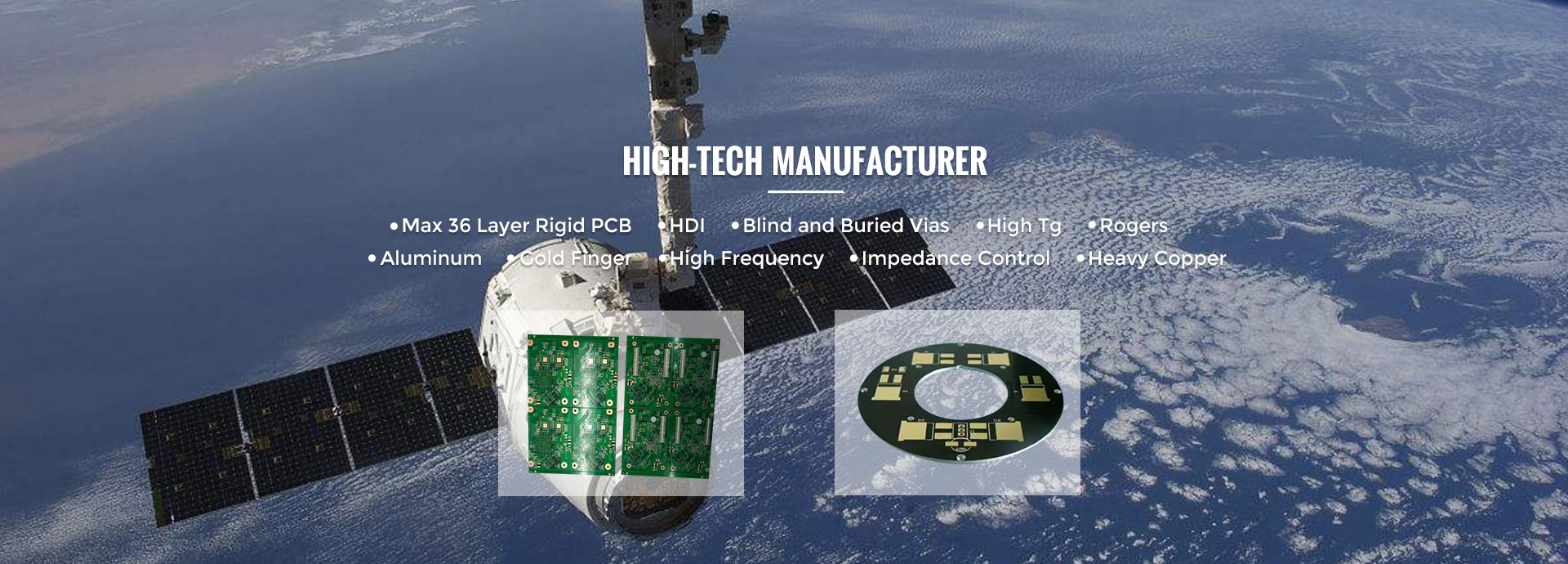
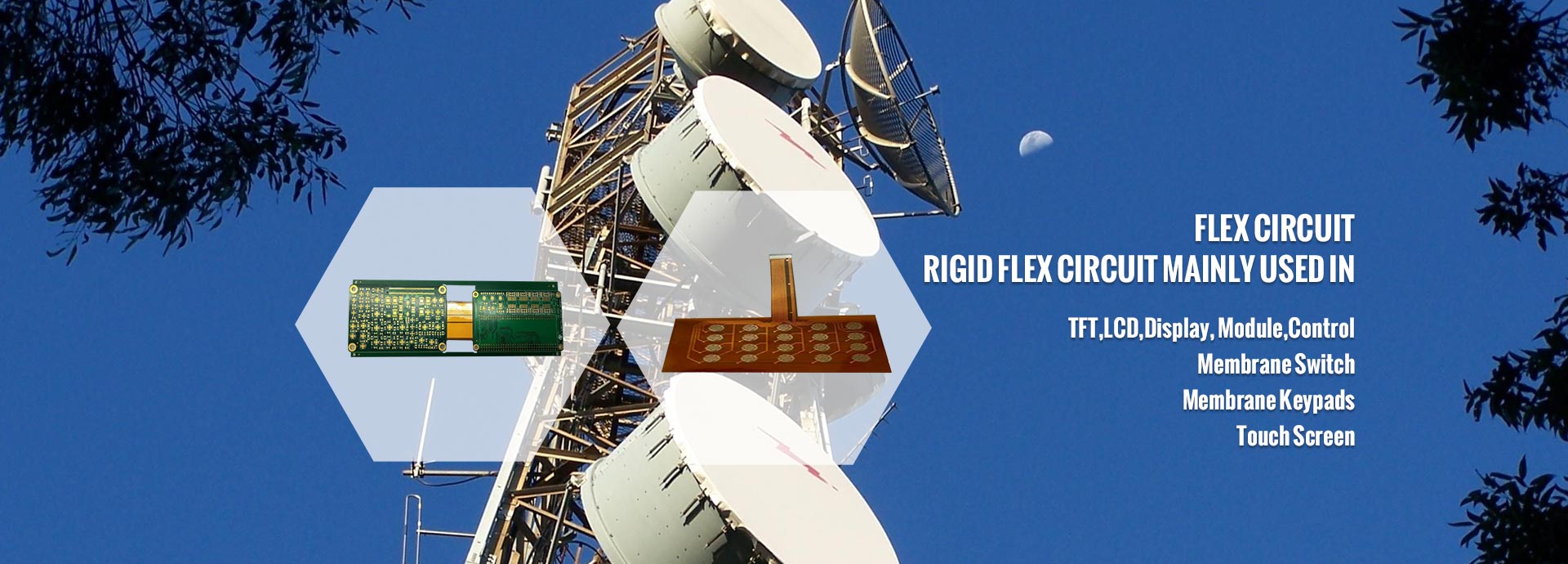
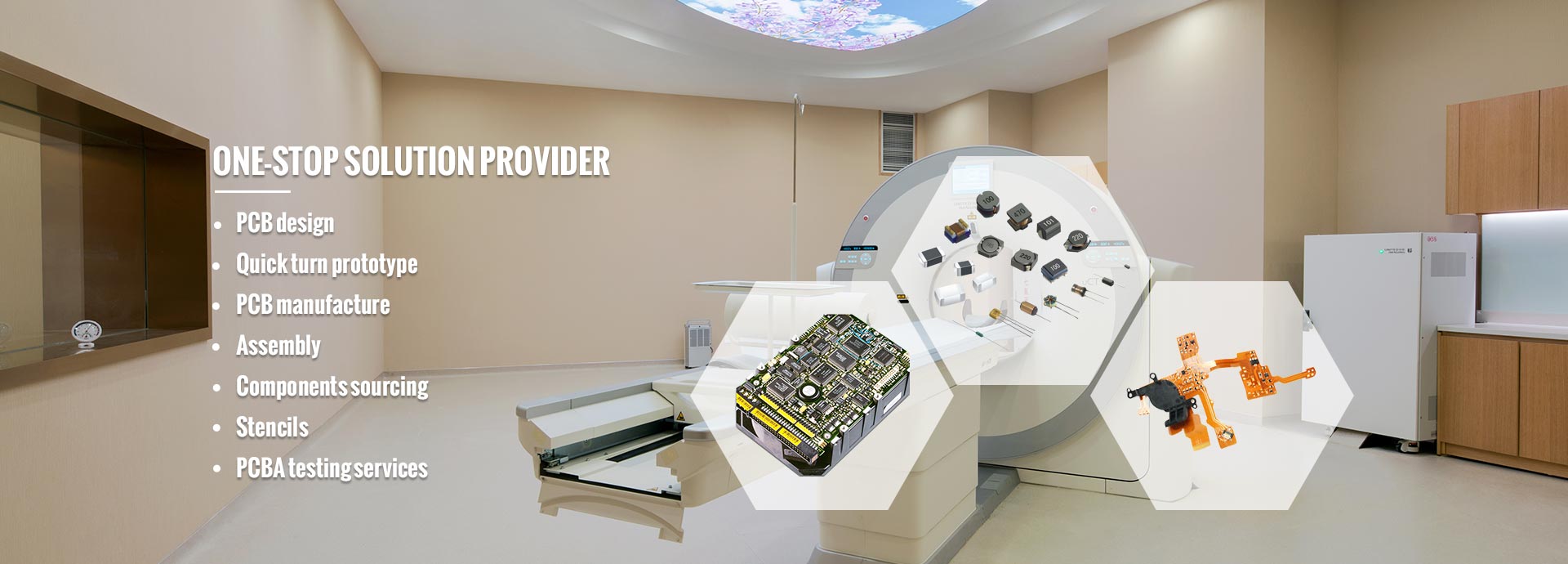
Dear Partners, welcome to MINKINZI – China’s Trusted End-to-End Manufacturing Partner, with 20 years of expertise, we specialize in: Design & Development → Max 58 Layer PCB Fabrication →Turnkey PCBA Assembly → Box-Build Assembly. ODM/OEM/Contract Manufacturing tailored to global standards. Support DFM. Welcome to send your NDA, PCB Gerber, BOM, so that we can provide quotation for you. .

  • High-Density Multilayer PCB for 5G Base Stations

  • High-Density Multilayer PCB for 5G Base Stations

  • High-Density Multilayer PCB for 5G Base Stations

  • High-Density Multilayer PCB for 5G Base Stations

  • High-Density Multilayer PCB for 5G Base Stations

High-Density Multilayer PCB for 5G Base Stations

  1. High-Frequency PTFE (Teflon) PCB,

  2. mmWave (Millimeter-Wave) PCB — 28 GHz / 39 GHz,

  3. Massive MIMO Antenna PCB,

  4. High-Layer Multilayer Backplane PCB (12–20 Layers),

  5.  Hybrid PCB (Mixed Dielectric Material),

Share

Description :

Comprehensive Guide to 5G Base Station PCBs |Minkinzi Professional Manufacturer


Overview of 5G Base Station PCBs

The 5G base station PCB (Printed Circuit Board) is a core electronic component within 5G communication base station equipment, responsible for critical functions such as RF signal transmission, power management, and digital signal processing. As a trusted telecom PCB manufacturer, we understand that compared to 4G base stations, 5G base stations impose significantly higher performance requirements on PCBs, particularly regarding high-frequency and high-speed transmission, high-density integration, excellent thermal dissipation, and long-term reliability and stability. Every 5G infrastructure PCB we produce is engineered to meet the rigorous demands of next-generation wireless networks.

Core echical Requirements for 5G Base Station PCBs

High-Frequency/High-Speed Materials Our high frequency 5G PCB solutions utilize low-loss (Low Df) dielectric materials such as PTFE, PPO, and hydrocarbon-based laminates to ensure superior signal integrity PCB performance across demanding operating conditions.

Multilayer Architecture Our base station PCB products typically range from 8 to 26 layers, with complex designs exceeding 30 layers for advanced applications.

High-Density Interconnect (HDI) We employ micro-vias (μVia), blind and buried vias, and Any-layer interconnect technology to maximize routing density in every wireless infrastructure PCB we build.

Low-Roughness Copper Foil We use low-profile copper foils (HVLP3, RTF) to minimize conductor loss and maintain excellent signal integrity at millimeter-wave frequencies.

Impedance Control Precision We deliver strict impedance matching within ±5% or even ±3%, ensuring the signal integrity PCB performance required for high-speed serial links and RF paths.

Thermal Management Design We integrate embedded metal blocks (Coin/Copper blocks), Metal-based (IMS) PCBs, and thermal via arrays to manage heat in high-power density designs.

CTE Matching Our laminates offer high compatibility with chip package CTE, ensuring soldering reliability for BGA, QFN, and large-die packages.

Application Scenarios for 5G Base Station PCBs

Application ModuleFunctional Description
AAU/RRU (Active Antenna Unit / Remote Radio Unit)RF signal transmission and reception; requires high-frequency/high-speed capabilities and superior heat dissipation. Includes Sub-6GHz PCB and 28GHz PCB variants.
BBU (Baseband Unit)Digital signal processing and protocol stack handling; requires high-layer-count, high-density PCBs with strong signal integrity PCB characteristics.
Power ModuleDC-DC conversion and power distribution; demands high reliability and effective heat dissipation.
Filter / Power AmplifierRF power amplifier circuitry; strict requirements for dielectric constant and insertion loss.
mmWave ModuleOperates in frequency bands above 24 GHz; includes specialized 28GHz PCB and high frequency 5G PCB designs with ultra-low-loss substrates.
Macro Base Station PCBHigh-power, outdoor macro cell deployment requiring robust thermal and RF performance.
Small Cell PCBCompact, high-density designs for urban indoor/outdoor small cell deployment.

Main Types of 5G Base Station PCBs (Key Product Examples)

The following are the 5G base station PCB product series that our factory is experienced in manufacturing:

AAU/RRU High-Frequency/High-Speed Multilayer Boards

  • Layer Count: 12–26 layers

  • Materials: Panasonic M6/M7, ITEQ IT-180A, Zhongying ZYF-25G, EMC EM-528

  • Features: Low loss, high layer count, mixed-material lamination structure

  • Applications: 64T64R and 32T32R Massive MIMO antenna units; ideal Sub-6GHz PCB platforms for macro base station PCB deployment

High-Layer-Count PCBs for BBU Baseband Processing

  • Layer Count: 16–30 layers

  • Materials: High-speed Mid-Loss / Low-Loss substrates

  • Features: High-density back-drilling, ±5% impedance precision, stacked blind/buried vias

  • Applications: Baseband processing boards, switching boards, clock boards — engineered as a true signal integrity PCB solution

5G mmWave PCBs

  • Layer Count: 4–10 layers

  • Materials: PTFE / Hydrocarbon / LCP

  • Features: Ultra-low dielectric loss (Df < 0.0025), high-precision etching

  • Applications: 24–52 GHz mmWave modules, including specialized 28GHz PCB designs and other high frequency 5G PCB configurations

Metal Coin (Copper Coin) Embedded PCBs

  • Structure: Copper or aluminum coin embedded locally within the PCB

  • Features: High heat dissipation, high mechanical strength, excellent CAF resistance

  • Applications: Power amplifier modules, heat-sensitive chip carriers within wireless infrastructure PCB assemblies

Metal-Based Substrates (IMS / MCPCB)

  • Structure: Aluminum-based / Copper-based substrates

  • Features: Excellent heat dissipation performance

  • Applications: Small cell PCB power modules, LED drivers, compact 5G power assemblies

Rigid-Flex PCBs

  • Layer Count: 4–16 layers

  • Features: 3D assembly, weight reduction, space saving

  • Applications: Internal interconnects for 5G miniaturized equipment, including small cell PCB and customer-premises designs

HDI Any-Layer Interconnect PCBs

  • Structure: N+M+N any-layer interconnection

  • Features: High routing density, laser micro-vias

  • Applications: AAU RF front-end, 5G CPE, advanced Sub-6GHz PCB modules

Hybrid PCBs (High-Frequency Mixed Lamination)

  • Structure: High-frequency materials laminated with FR-4

  • Features: Balance between performance and cost

  • Applications: RF + digital mixed circuits, ideal for cost-optimized high frequency 5G PCB builds


How 5G Base Station PCB Customers Select Partners

How to Choose a PCB Manufacturer

Key Evaluation Criteria:

Material Capabilities Experience processing high-frequency, high-speed materials (PTFE, PPO, hydrocarbon-based); established partnerships with mainstream material suppliers (Panasonic, ITEQ, EMC, Rogers).

Process Capabilities Multilayer board capacity (≥26 layers), trace width/spacing precision (≤50 μm), impedance control precision (±5%), back-drilling, buried/blind vias, and Any-layer technology for every base station PCB build.

Equipment Configuration Laser drilling machines (LPKF, ESI), vacuum presses, automatic lamination systems, AOI, X-ray, flying probe testers, and TDR impedance testers.

Quality Systems ISO 9001, IATF 16949, UL certification, IPC-A-600 / IPC-6012 Class 3 certification, and customer audit records from leading OEMs such as Huawei, ZTE, Ericsson, and Nokia.

Production Capacity & Lead Times Monthly capacity meeting demand, rapid prototyping (5–7 days), mass production cycles, and global delivery capabilities for any 5G infrastructure PCB program.

How to Select an EMS (Electronics Manufacturing Services) Provider

Key Evaluation Criteria:

  • One-stop service capabilities: PCB procurement + component sourcing + SMT assembly + final assembly & testing

  • Component supply chain: Stable channels with original manufacturers and distributors; ability to handle material shortages

  • SMT processes: BGA/QFN/QFP placement, 01005 component placement, 3D AOI, X-ray inspection

  • Testing capabilities: ICT, FCT, burn-in testing, RF testing, reliability testing

  • Quality control: ESD protection, ISO 13485 (medical), AS9100 (aerospace)

  • IP protection: NDA signing and information security systems

  • Global logistics: Support for DDP/DDU, cross-border customs clearance, after-sales support

How to Select an OEM/ODM Manufacturer

Evaluation AreaWhat to Look For
Technical CapabilitiesExperience in 5G product R&D; size and depth of the engineering team
Equipment InvestmentSMT machine brands (Siemens, Panasonic, Fuji); placement precision level
Production FlexibilitySmall-batch, high-mix capability, or large-batch standardized production
Delivery AssuranceOn-Time Delivery (OTD) rate; emergency response mechanism
Cost ControlBOM cost optimization; process-based cost reduction solutions
Compliance & CertificationPassed customer factory audits (VMI / JDM / ODM models)

How to Select a PCBA Turnkey Manufacturer

The turnkey manufacturing model is suitable for customers looking to reduce supply chain management costs. Selection criteria include:

  • BOM Quote Transparency: Clear component sourcing and distinction between original and alternative part options

  • Alternative Part Management: Second-source qualification and performance verification reports

  • Inventory & Stocking: Dedicated customer stock and VMI (Vendor Managed Inventory) services

  • Cost Structure: Clarity on VAT, tariffs, and logistics costs

  • Payment Terms: Flexible credit terms

  • Data Security: Encrypted transmission and storage of BOM files


Why Choose Our Factory?

Our Core Advantages

Comprehensive 5G Product Coverage We cover PCB requirements for all 5G base station scenarios, including AAU, BBU, mmWave, power amplifiers, and power supply units. Our portfolio supports 4–30 layer counts, with material options spanning FR-4, high-frequency/high-speed, PTFE, and metal-based substrates — making us a true one-stop source for every base station PCB5G infrastructure PCB, and wireless infrastructure PCB requirement.

Deep Expertise in the 5G Industry We serve global 5G communication equipment clients and possess in-depth understanding of supply chain standards for Huawei, ZTE, Ericsson, Nokia, and Samsung. We support the entire process from prototyping to mass production, including specialized Sub-6GHz PCB28GHz PCB, and macro base station PCB programs.


Welcome to contact our factory to manufacture your 5G base station PCBs:sales@minkinzi.com

Applications :

Minkinzi: A one-stop PCB and PCBA contract manufacturer serving the 5G base station PCB sector


I. Core Application Scenarios for 5G Base Station PCBs

The PCB requirements for 5G communication systems differ fundamentally from those of 4G; applications are primarily concentrated in the following modules:

Application ModuleCore FunctionPCB Performance Requirements
AAU PCB (Active Antenna Unit)RF signal transmission and receptionHigh-frequency / high-speed, low loss
RRU PCB (Remote Radio Unit)RF signal amplification and conversionHigh-frequency / low-loss, thermal stability
BBU PCB (Baseband Unit)Signal modulation / demodulation, data processingHigh layer count, high-density interconnect (HDI)
5G mMIMO Antenna PCB / Massive MIMO PCB64 / 128 / 256-channel antenna arrayHigh-frequency materials, mmWave compatibility
Small Cell / Micro Base StationIndoor / hotspot coverageHigh integration, miniaturization
Power Supply Unit (PSU)48V DC power conversionHigh heat dissipation, high reliability
Filter / Duplexer ModuleFrequency selectionHigh-frequency / low-loss, high consistency
mmWave ModuleFrequency bands above 24 GHzUltra-low loss, AiP (Antenna-in-Package) process

II. Main Types of 5G Base Station PCBs

Classification by Material System

  • High-frequency boards: PTFE, Rogers RO4000 / RO3000 series, hydrocarbon ceramic-filled substrates — widely used for RF microwave PCB and 5G antenna PCB applications.

  • High-speed boards: Low-Dk / Df modified FR-4 materials (e.g., IT-968, IT-988G, MEGTRON series) — ideal for network equipment PCB high-speed digital backplanes.

  • Hybrid PCBs: Lamination of high-frequency materials with FR-4 (the most common structure; balances performance and cost for telecom equipment PCB).

  • Metal-based substrates (IMS / MCPCB): Used for power amplifier heat dissipation.

Classification by Structure / Process

  • High-layer-count boards: 12–30 layers; core boards for BBU PCB (Baseband Unit).

  • HDI boards: Any-layer HDI / mSAP process; mainboards for micro base stations.

  • AiP antenna boards (Antenna-in-Package): Core structure for millimeter-wave module integration.

  • Embedded component boards: High power-density applications.

  • Back-drilled boards: Mitigating via stub effects on high-speed signals.


III. Core Requirements of 5G Base Station PCB Customers for Manufacturers

Material Capabilities

  • Established certification and stable supply channels for high-frequency / high-speed materials (Rogers, Taconic, Panasonic, EMC, Shengyi, Huazheng).

  • Hybrid lamination capability, including lamination matching for materials with different CTEs.

  • Mature processes for drilling and via metallization of soft materials such as PTFE — critical for RF microwave PCB reliability.

Process Capabilities

  • Trace width / spacing: Stable mass production at 2/2 mil (50/50 μm) or even 1.5/1.5 mil.

  • Impedance tolerance control: Within ±5% (±3% in specific scenarios such as Massive MIMO PCB signal channels).

  • Back-drill depth tolerance: Precision of ±0.05 mm.

  • HDI complexity: Mass-production experience with 3rd-order / 4th-order and any-layer HDI, suitable for compact 5G antenna PCB designs.

  • Warpage control for large-format boards (460 × 610 mm and larger).

AAU mainboards feature large dimensions (starting at 400 × 500 mm) and high layer counts (12–20 layers), presenting challenges in layer misalignment, warpage, and scrap-rate control — a key reason why leading operators screen their AAU PCB (Active Antenna Unit) suppliers very carefully.

Equipment and Manufacturing Processes

  • Laser Direct Imaging (LDI) exposure systems.

  • Vacuum lamination presses for high-frequency materials.

  • Flying probe testers combined with high-frequency TDR impedance testers.

  • Full-process closed-loop inspection: AOI + 3D X-Ray + Automated Optical Inspection.


IV. Quality Control System Requirements

System Certifications (Mandatory)

  • ISO 9001 + IATF 16949 (automotive-grade quality system; increasingly required for 5G projects).

  • UL certification (94V-0 flame retardancy).

  • AS9100 (military-grade derivative requirements from some operators).

  • ISO 14001 + RoHS / REACH environmental compliance.

Execution Standards

  • IPC-6012 — Rigid boards: Class 3 / Class 3A.

  • IPC-6013 — Specialized standard for high-frequency boards.

  • IPC-6018 — Standard for microwave boards.

  • IPC-A-610 — Electronic assembly, Class 3.

  • IPC-TM-650 — Test method standards.

Key Quality Control Points

Control ItemInspection MethodControl Standard
Line width / spacingAOI / SEMWithin ±10%
Impedance consistencyTDR testing±5% / ±3%
Hole wall qualityMicro-sectioningNo barrel cracks, no resin voids
Copper thickness uniformityThickness gaugeSurface copper ±2 μm
WarpageWarpage tester≤ 0.75% (IPC standard)
Ionic cleanlinessIonic contamination test≤ 1.56 μg/cm² NaCl equivalent
Solderability / ReliabilityReflow + aging testSolder coverage ≥ 95%
Thermal reliabilityTCT (-55 °C to 125 °C, 1000 cycles)No delamination, no cracking
Signal integrityVector Network Analyzer (VNA)Insertion loss & return loss meet specs

Key PCBA Quality Control

  • First Article Inspection (FAI) + Statistical Process Control (SPC).

  • BOM material verification (especially consistency of incoming high-frequency ICs and special packages for RRU PCB (Remote Radio Unit) and BBU PCB (Baseband Unit)).

  • Placement accuracy for 0201 / 01005 components; yield control for 0.4 mm pitch QFP / BGA.

  • Full-process testing: AOI + X-Ray + ICT + FCT.

  • Consistency of conformal coating and potting.


V. Why Choose Us for 5G Base Station PCBs

Comprehensive Material Portfolio. In-stock high-frequency materials from Rogers, Panasonic, and Shengyi; mature mixed-lamination capabilities covering every category of 5G antenna PCBRF microwave PCB, and telecom equipment PCB.

Precision Leadership. Stable impedance control within ±5%; mass-production capability for 2/2 mil fine-line circuitry — a competitive advantage for high-density Massive MIMO PCB and 5G mMIMO antenna PCB designs.

Superior Quality. Dual certification (IATF 16949 & IPC Class 3); monthly yield rate ≥ 99.5%.

Guaranteed Lead Times. Rapid turnaround — 5 days for high-frequency PCB prototyping, 10 days for mass production.

One-Stop PCBA Services. PCB fabrication, SMT assembly, testing, conformal coating, and full-unit delivery — fully supporting network equipment PCB programs from prototype to volume.

Contact Minkinzi for 5G base station PCB manufacturing:sales@minkinzi.com

Flow Chart :

5G Base Station PCB – From Prototype to Mass Production

I. Introduction: Why 5G Base Station PCBs Are Uniquely Demanding

The requirements for 5G base station PCBs far exceed those of conventional consumer electronics. These boards sit at the heart of mission-critical infrastructure, where any compromise in performance, reliability, or consistency can disrupt entire networks. Whether deployed as a multilayer 5G PCB in macro base stations, an HDI PCB for 5G in small-cell and mmWave modules, a high frequency circuit board in radar-assisted systems, or a heavy copper PCB in high-power amplifier sections, the engineering challenges are multidimensional. Four core pillars define every project: high-frequency and high-speed signal integrity, superior thermal dissipation, precision layer-to-layer registration, and mixed-material lamination compatibility.

A typical 5G AAU (Active Antenna Unit) module demands that the PCB deliver all of the following simultaneously:

  • Layer counts ranging from 12 to 22 layers, with the most advanced designs exceeding 28 layers

  • Hybrid PCB construction combining PTFE, PPO, and modified FR-4 dielectrics

  • Stable operation across Sub-6GHz through millimeter-wave bands (28GHz / 39GHz)

  • Long-term resilience under extreme thermal cycling from −40°C to 125°C

  • A service life exceeding 10 years with absolute batch-to-batch consistency

These specifications confirm that moving a custom 5G PCB from prototype to mass production is never a "copy-paste" exercise. It is a comprehensive system-engineering undertaking that bridges design, materials science, process engineering, and quality assurance.


II. The End-to-End Engineering Process

Phase One: Requirement Definition and Collaborative Design (DFM)

The journey begins with a deep exchange of technical intent. Customer inputs typically include signal data rates, proposed stack-up schemes, impedance budgets, and thermal design specifications. From this foundation, a formal Requirement Specification is generated. Engineering teams then conduct a thorough DFM (Design for Manufacturing) review, providing expert recommendations on trace width and spacing, annular ring dimensions, BGA pitch, and copper thickness — all captured in a DFM Check Report.

Material selection follows, drawing on a vetted library of high-performance cores, prepregs, PPO and PTFE laminates, copper foil types, and Tg-rated substrates. The output is a precise Material BOM tailored to the application's electrical and mechanical profile. Finally, stack-up design is refined through simulation and iteration, balancing dielectric layer thickness against impedance matching targets to deliver a robust Stack-up Diagram.

Core Value: Resolving the vast majority of potential issues during the design phase avoids the disproportionate cost of late-stage redesign — a principle especially critical for a multilayer high frequency PCB where every micron of dielectric variance affects performance.

Phase Two: Engineering Preparation and CAM Processing

Gerber or ODB++ data is imported and processed by experienced CAM engineers who execute panelization design optimized for both yield and manufacturability. Drill files are generated with clear differentiation between mechanical, laser, and back-drilled holes, each requiring distinct process control. Impedance trace compensation calculations account for dielectric thickness tolerances and etching factors, ensuring that the manufactured high speed PCB meets target electrical performance.

Production MI (Manufacturing Instructions) documents are then released, defining parameters and acceptance criteria for every downstream process step.

Industry Insight: A mature CAM team can elevate first-pass yield of initial samples by more than 30%, a decisive advantage when iterating on a radar PCB or other high-frequency design.

Phase Three: Sample Fabrication (Quick-Turn Prototype)

The prototyping phase compresses sophisticated manufacturing steps into a tight, controlled sequence. Inner layer imaging is performed using LDI (Laser Direct Imaging), achieving trace width precision of ±0.025mm — essential for the dense routing of an HDI PCB for 5G. Lamination uses a high-temperature vacuum press with customized heating profiles tailored to mixed-material layups, ensuring uniform cure across dissimilar dielectrics in a hybrid PCB stack-up.

Drilling leverages CO₂ and UV lasers to produce micro-vias below 0.1mm, with precision control for back-drilling to maintain signal path integrity. Electroless and electrolytic copper plating achieves barrel copper thickness of 25μm or greater, with differential plating applied to surface copper where thermal and current-carrying demands require it. Pattern transfer is executed through dry-film or wet-film processes integrated with the DES line, followed by controlled etching that ensures undercut remains below 20%.

Solder mask and legend application — including solder mask dams, clear legends, and QR-code traceability markings — is followed by surface finish selection from ENIG, Immersion Silver, OSP, or ENEPIG depending on the application's assembly and reliability profile. Routing and profiling use CNC or laser systems with precise V-cut control. Every prototype concludes with comprehensive inspection using AOI, AVI, and impedance TDR testing.

Delivery Lead Time: Standard samples of 12 to 16 layers are typically delivered within 5 to 7 working days.

Phase Four: Sample Testing and Reliability Verification

This phase represents the critical quality checkpoint for any high frequency circuit board destined for 5G deployment. Testing is mandatory and exhaustive:

Electrical Performance Testing covers impedance continuity verification via TDR, insertion loss and return loss measurement, and precision characterization of dielectric constant (Dk) and dissipation factor (Df) — all vital parameters for a multilayer high frequency PCB.

Thermal Reliability Testing subjects the boards to Temperature Cycling (TCT) from −55°C to 125°C for 1000 cycles, Interconnect Stress Testing (IST), and solder heat resistance at 288°C for 10 seconds across 3 cycles. These protocols are especially important for any high thermal conductivity PCB designed to survive years of operation in outdoor or thermally aggressive enclosures.

Mechanical and Chemical Testing includes peel strength evaluation of copper foil adhesion to substrate, thermal stress testing via 288°C solder dip, and CAF (Conductive Anodic Filament) testing to validate long-term insulation resistance under bias and humidity.

Specialized High-Frequency Testing employs Vector Network Analyzer (VNA) S-parameter measurement, eye diagram analysis, and jitter testing to confirm that the radar PCB or 5G RF section performs to specification.

Acceptance Criteria: A 100% pass rate across all test items is required before the design advances to customer certification.

Phase Five: Customer Certification and Design Freeze

The customer integrates approved samples into complete system modules, where joint Signal Integrity (SI) and Power Integrity (PI) testing validates real-world electrical behavior. Small-batch system-level integrated debugging confirms that the custom 5G PCB performs as expected within the broader platform. Customer issuance of a Design Freeze confirmation formally concludes the sample phase.

Phase Six: Pilot Run

Pilot production typically spans 50 to 500 units and serves three essential purposes. First, it verifies that mass-production processes are stable and consistent with prototype manufacturing. Second, it identifies yield bottlenecks and establishes SPC (Statistical Process Control) baselines for every critical parameter. Third, it stress-tests the supply chain — bulk raw material lead times, logistics routing, and inbound quality control — under conditions that mirror full-scale production.

Pilot run yield target: at least 95% for standard builds, and at least 90% for the most advanced high-end constructions.

Phase Seven: Mass Production

Entering mass production triggers a heightened set of control requirements:

Production Line Configuration relies on dedicated production lines to prevent cross-contamination between different multilayer 5G PCB programs. Automated logistics are tightly integrated with MES (Manufacturing Execution Systems), and critical processes such as auto-exposure and automated AOI are fully automated to remove variability.

Process Quality Control is anchored by real-time SPC monitoring of Cp and Cpk indices, FMEA (Failure Mode and Effects Analysis) reviews updated quarterly, and an 8D reporting mechanism that guarantees 24-hour response to anomalies and 72-hour resolution with corrective action.

Capacity Assurance delivers monthly output of 50,000 to 200,000 m² for 5G AAU PCBs, scaled according to layer count and complexity. Multi-site collaborative production compresses delivery lead time to 7 to 10 days, supported by a heavy copper PCB manufacturing capability for high-current sections of the system.

Shipment and Traceability is managed through unique QR codes and serial numbers on every PCB, with full-process data archiving retained for at least 10 years. Batch-level rapid traceability ensures that any field issue can be traced back to raw material lots, process parameters, and operator records within minutes.

Contact the Minkinz factory today for 5G base station PCB manufacturing: sales@minkinzi.com

Capability :

Minkinzi — Your Global One-Stop Partner for RoHS Compliant 5G PCB Fabrication, Assembly, and High-End PCBA Manufacturing

Empowering the Core Manufacturing of 5G Base Stations | Dual-Base Operations in China and Overseas | Tariff-Free Global Delivery


Why Choosing the Right Factory for 5G PCB Manufacturing Is Critical

Selecting the right 5G PCB fabrication partner is one of the most consequential decisions for any telecom equipment manufacturer. 5G base stations demand a fundamentally different level of engineering precision, material science, and quality discipline compared to legacy communication products. Choosing a substandard factory can result in signal loss, thermal failure, field returns, and costly project delays. A trusted custom high frequency PCB manufacturer must therefore demonstrate deep expertise across the following dimensions:

Advanced High-Frequency and High-Speed Material Processing Minkinzi works with the full spectrum of high-performance laminates required for modern 5G systems, including PTFE, RO4350B, RO4003C, Modified Epoxy, and other low-loss dielectric systems. Our engineers are experienced in handling the unique mechanical, thermal, and chemical behaviors of these materials throughout lamination, drilling, and plating.

High-Precision Lamination for High-Layer-Count Boards We routinely manufacture 12-layer and above multilayer boards, supporting back-drilling, mixed lamination, and stepped gold finger structures with exceptional flatness and registration accuracy — essential for 5G PCB design integrity at scale.

Strict Signal Integrity Control For 5G base station hardware, every decibel matters. We deliver impedance control within ±5% on high-frequency and high-speed boards, combined with rigorous insertion loss management, ensuring that the RF chain performs to the customer's system-level specifications.

Superior Thermal Dissipation and Long-Term Reliability Our capabilities include metal-core substrates (Al/Cu), embedded copper blocks, and stacked buried/blind via architectures engineered to manage the extreme thermal loads of active antenna units (AAU) and massive MIMO radio modules.

Long Product Lifecycle and Manufacturing Consistency 5G base station programs typically run for 10+ years. Minkinzi guarantees material, process, and supply continuity, providing the long-term consistency that global telecom OEMs and operators depend on.


Minkinzi Core Manufacturing Capabilities

High-End 5G PCB Fabrication Capabilities

Process ItemSpecifications
Layer Count2 – 32 layers
Board Thickness0.2mm – 6.0mm
Min. Line Width / Spacing2.5mil / 2.5mil (down to 2mil for high-frequency boards)
Min. Via DiameterMechanical drilling: 0.15mm; Laser drilling: 0.075mm
Impedance Tolerance±5% (high-frequency / high-speed boards)
Surface FinishENIG, OSP, Immersion Tin, Immersion Silver, Hard Gold, Soft Gold, Selective Gold Plating
Special ProcessesMixed lamination, PTFE lamination, back-drilling, stepped slots, embedded copper blocks, metal-core (Al/Cu)
Material SystemsRogers, Arlon, Taconic, Shengyi, ITEQ, Panasonic, and more

As a leading 5G PCB OEM and 5G PCB ODM partner, Minkinzi combines engineering depth with manufacturing flexibility, supporting both standardized and highly customized 5G PCB programs.

One-Stop Turnkey 5G PCB Assembly & Component Sourcing

As a true turnkey 5G PCB contract manufacturer, we provide closed-loop services that extend well beyond bare board fabrication:

  • SMT Assembly — Placement accuracy ±0.025mm; full support for 01005 and 0201 components, BGA, QFN, and PoP packages

  • AOI / AXI / X-Ray Inspection — Fully automated optical and X-ray inspection integrated at every critical stage

  • Conformal Coating — Engineered for outdoor 5G base station equipment exposed to humidity, salt fog, and thermal cycling

  • ICT and FCT — In-circuit test and functional test with in-house fixture development capabilities

  • Component Sourcing — Strategic partnerships with top-3 global distributors including Avnet, Arrow, and WPG, covering main chips, passives, RF components, and more

From 5G PCB prototyping through high-volume mass production, our turnkey model eliminates the friction of managing multiple vendors and accelerates time-to-market.


Global Supply Chain & Cost Advantages

  • Direct Sourcing from Global Manufacturers — Authorized partnerships with TI, ADI, Qualcomm, Xilinx, and other semiconductor leaders

  • Alternative Component Library — Pin-to-pin replacement solutions for scarce, EOL, or long-lead-time materials

  • Economies of Scale — Monthly procurement volume exceeding $10 million USD, translating into strong bargaining power and competitive pricing

  • Material Stocking Mechanism — Regular inventory of high-frequency and high-speed laminates, prepregs (PP), and copper foils from Shengyi, ITEQ, and other premium suppliers

  • VMI (Vendor Managed Inventory) — Dedicated safety stock programs established for key strategic customers


Comprehensive Quality Control System

System Certifications: ISO 9001:2015, ISO 14001, IATF 16949, UL, RoHS compliant 5G PCB manufacturing, and REACH compliance

Customer Audits Passed: System audits successfully completed by Huawei, ZTE, Ericsson, Nokia, Samsung, and other tier-one global OEMs

End-to-End Process Control:

  • IQC (Incoming Quality Control) → IPQC (In-Process Quality Control) → OQA (Outgoing Quality Assurance) → Reliability Testing

  • Flying probe test, impedance test, TDR test, thermal stress test

  • Cross-section analysis, metallographic microscopy, SEM/EDS failure analysis

In-House Reliability Laboratory:

  • Thermal shock testing from -40°C to +125°C

  • Constant temperature and humidity testing

  • Highly Accelerated Stress Test (HAST)

Full Quality Traceability: Every board carries a unique serial number, with complete process traceability managed through our MES system.


Proven 5G Base Station Project Experience

Case 1 — Major Carrier: 64TR Massive MIMO AAU

Product: 64-channel Active Antenna Unit (AAU) RF board Construction: 14-layer mixed-laminate PTFE high-frequency board Materials: RO4350B + RO4450F + FR4 Key Processes: Blind and buried vias, back-drilling, stepped gold plating, impedance tolerance ±5% Mass Production: 8,000 sets per month Results: Yield rate 99.2%; on-time delivery rate 98.5%

Case 2 — North American Supplier: 5G Small Cell

Product: 4T4R / 2T2R small cell mainboard Construction: 10-layer high-speed HDI board Key Processes: Any-layer HDI with embedded copper blocks for thermal management Mass Production: 15,000 pieces per month Results: Successfully passed the customer's full EMC and ESD qualification suite

Case 3 — Southeast Asian Customer: 5G mmWave Base Station

Product: 28GHz mmWave RF module Construction: 8-layer PTFE-based board Key Processes: Ultra-low roughness copper foil (HVLP3) combined with laser blind vias Results: Insertion loss performance met the customer's stringent system design requirements

Case 4 — Domestic Equipment Manufacturer: Baseband Processing Board

Product: Baseband processing unit mainboard Construction: 20-layer high-speed board Key Processes: Back-drilling with precise stub control and 100Ω differential impedance Mass Production: 20,000 pieces per month

Case 5 — Indian Equipment Manufacturer: 5G Macro Station Power Board

Product: 48V 5G power board Construction: 4-layer heavy copper board (3oz) Key Processes: Heavy copper lamination and thermal via array Results: MTBF exceeding 100,000 hours


Why Global Customers Choose Minkinzi for PCB Manufacturing 5G

✅ Dual-Base Manufacturing Strategy — Flexible production switching between our domestic and overseas facilities, providing resilience against geopolitical disruptions and tariff exposure

✅ One-Stop Turnkey Contract Manufacturing — A complete, closed-loop service covering PCB fabrication, PCBA assembly, component sourcing, and full system integration under a single quality umbrella

✅ Deep 5G Domain Expertise — A proven track record of more than 200 5G base station projects delivered, with extensive mass production experience across macro stations, small cells, mmWave, and baseband systems

✅ Truly Global Reputation — Trusted by clients across Asia, Europe, North America, South America, Southeast Asia, the Middle East, and Africa

✅ Flexible Production Capacity — Full-lifecycle support ranging from rapid 5G PCB prototyping (5–10 units) all the way to KK-level high-volume mass production

✅ Proactive Engineering Support — Complimentary DFM reviews, signal integrity and power integrity (SI/PI) simulation support, and alternative component recommendations provided as standard


Contact Minkinzi — Your Custom High Frequency PCB Manufacturer for 5G Base Station Programs

Email: sales@minkinzi.com

Advantages :

Minkinzi – Your Trusted 5G Base Station PCB Manufacturer & High-Frequency PCB Supplier

Minkinzi is a one-stop PCB and PCBA contract manufacturer specializing in 5G base station PCB and 5G communication PCB solutions. With deep expertise in high-frequency, high-speed materials and advanced fabrication technologies, Minkinzi serves as a reliable 5G PCB factory and 5G PCB supplier for leading telecom equipment vendors, antenna manufacturers, and RF module integrators worldwide. Whether you need a 5G PCB board for AAU/RRU mainboards or a custom 5G base station circuit board for next-generation network infrastructure, Minkinzi delivers end-to-end manufacturing excellence.


I. Core Manufacturing Advantages for 5G Base Station PCBs

As a leading high frequency PCB manufacturer, Minkinzi combines material expertise, advanced process capability, and engineering agility to meet the most demanding 5G applications.

Capability DimensionWhat Minkinzi Delivers
High-Frequency / High-Speed Material ProcessingProven lamination and processing expertise for low Dk/Df materials, including Rogers PCB laminates (RO4003C, RO4350B, RO4835), Taconic, PTFE, Panasonic Megtron 6/M7, Isola, and Nelco. Every 5G network PCB we produce is engineered for signal integrity at microwave and millimeter-wave frequencies.
Layer Count & Complex StructuresMultilayer backplanes, any-layer HDI, mSAP (Modified Semi-Additive Process), buried and blind vias, stepped gold fingers, and mixed lamination combining dielectrics with different Dk values.
Impedance PrecisionTight differential impedance tolerance with full-frequency TDR testing, ensuring every 5G base station circuit board performs to design specification.
Large-Format Board CapabilityProcessing of oversized panels to meet AAU/RU mainboard requirements for large-scale 5G deployment.
Thermal Management SolutionsMetal-based substrates (IMS), embedded copper blocks, embedded copper coins, copper-paste via filling, and thermoelectric separation processes for high-power RF applications.
Signal Integrity EngineeringSI/PI simulation support, glass weave effect control, and signal loss budget management for every 5G communication PCB.
Engineering ResponsivenessRapid CAM response, DFM/DFA optimization, stack-up design recommendations, and joint SI/PI review sessions.
Quality ControlIndustry-leading low DPPM, full-process MES traceability, and continuous quality improvement.
Delivery & FlexibilityFast-turn samples, accelerated mass production lead times, and seamless NPI-to-volume transition.
Supply Chain StrengthStrategic safety stock of high-frequency laminates, prepreg, and copper foil; Tier-2 supplier certification; multi-source qualification.

II. Inspection and Reliability Verification Equipment

Quality verification is built into every step of Minkinzi's 5G PCB board manufacturing process. Our inspection infrastructure covers bare-board fabrication, PCBA assembly, and long-term reliability validation.

PCB Inspection Equipment

  • Automated Optical Inspection (AOI): Defect detection for circuitry, solder mask, and silkscreen layers

  • X-Ray Drill Target Alignment / Cross-Sectional X-Ray Analysis: Inter-layer registration accuracy, internal barrel copper quality, BGA solder joint void ratio verification

  • Flying Probe Tester: Open/short circuit and insulation resistance testing for samples and small batches

  • TDR Impedance Tester: Full-frequency range differential and single-ended impedance testing up to high GHz bands

  • Metallurgical Microscope & Cross-Section Grinding System: Barrel copper thickness, surface copper thickness, and plating structure analysis

  • XRF Plating Thickness Tester: ENIG / ENEPIG / HASL plating thickness and composition analysis

  • Ionic Contamination Tester (ROSE): Surface cleanliness control

  • Dk/Df Test System: High-frequency material electrical performance verification for every high frequency PCB we produce

  • Adhesion Tester (Pull-off Force): Solder mask and plating adhesion strength

  • Thermal Stress Testing: Solder pot, TMA, and DSC for Tg, CTE, and thermal stability

  • SEM/EDX Scanning Electron Microscope: Microstructure and elemental analysis

  • 3D and 2D Video Measuring Systems: Dimensional accuracy control

  • Withstand Voltage / Insulation Resistance Tester: Electrical reliability verification

  • Solderability Tester: Wetting balance method testing

PCBA-Level Inspection Equipment

  • 3D Solder Paste Inspection (SPI)

  • Pre-reflow and Post-reflow AOI

  • In-Circuit Testing (ICT / Bed-of-Nails)

  • FCT (Functional Testing) Fixtures and Platforms

  • X-Ray BGA Inspection

  • Conformal Coating and Inspection

  • Environmental Reliability: Temperature & humidity cycling chamber, vibration table, and drop test

Laboratory and Reliability Testing

  • Aging Test (HTOL)

  • Temperature & Humidity Cycling (-40°C to 125°C)

  • HALT / HASS

  • Highly Accelerated Stress Testing (HAST)


III. International and Industry Standards

Minkinzi's 5G PCB factory operations are aligned with the full spectrum of global telecom electronics standards, ensuring every 5G base station PCB meets carrier-grade acceptance criteria.

IPC Standard System (5G Communication Baseline)

  • IPC-6012: Qualification and Performance Specification for Rigid Printed Boards (primarily Class 3)

  • IPC-6018: Qualification and Performance Specification for High-Frequency (Microwave) Printed Boards

  • IPC-A-600: Acceptability of Printed Boards

  • IPC-A-610: Acceptability of Electronic Assemblies (PCBA level)

  • IPC-TM-650: Test Methods Manual

  • IPC-2221 / IPC-2222: Generic and Rigid Board Design Standards

  • IPC-4552 / 4553 / 4554 / 4556: Surface finishes (ENIG, ENEPIG, OSP, Immersion Silver, etc.)

  • IPC-9701: PCB Reliability Test Methods

  • IPC-SM-840: Solder Mask Performance Standards

  • IPC-6015 / IPC-6013: Backplane and HDI Board Specifications

Other International Standards

  • UL 94 V-0: Flame retardancy rating

  • RoHS / REACH SVHC: Hazardous substance compliance

  • IEC 61249-2 / IPC-4101: Base material specifications

  • 3GPP TS 38 Series: 5G NR RF and baseband related

  • IEEE / MIL-STD: Selected military-grade standards

  • JEDEC JESD22: Semiconductor and component reliability test methods

Customer and Carrier Corporate Standards

  • Major equipment vendors' internal QPL/AVL requirements

  • Carrier corporate standards from China Mobile (CMCC), China Telecom (CTC), and leading European operators


IV. Essential Qualifications and Certifications

As an audited 5G PCB supplier, Minkinzi maintains the complete certification portfolio demanded by top-tier telecom OEMs and carriers.

Management Systems

  • ISO 9001 Quality Management System

  • IATF 16949 Automotive Quality System (widely referenced by telecom clients)

  • ISO 14001 Environmental Management System

  • ISO 45001 Occupational Health and Safety System

  • ISO/IEC 27001 Information Security Management (required by select top-tier clients)

Product Certifications

  • UL Certification (UL 94 V-0, UL 796, and related listings)

  • C-UL / CSA / CCC (for relevant export markets)

  • RoHS / REACH / PFAS / Halogen-free compliance documentation

Process and Laboratory Accreditation

  • ISO/IEC 17025 Laboratory Accreditation (CNAS)

  • NADCAP special process certifications (aerospace and high-end communications)

  • AS9100D Aerospace Quality Management System (for select high-end programs)

Client Supplier Status

  • Approved Vendor List (AVL/QPL) status with Huawei, ZTE, Ericsson, Nokia, Samsung, CommScope, Amphenol, Rosenberger, and Filtronic

  • Documented VQA/VQE audit track record

  • Qualified secondary and tertiary supplier for major antenna and RF module manufacturers


V. Contract Manufacturing and Material Sourcing Capabilities

Beyond bare-board fabrication, Minkinzi operates as a full-service 5G PCB manufacturer with turnkey PCBA and box-build capabilities for complete 5G modules and RF units.

Process StageCapability Description
Component SourcingAuthorized partnerships with Tier-1 global distributors including Avnet, Arrow, WPG, Digi-Key, and Yidianxin; strict batch and date code control
BOM Optimization and Alternative PartsAVL database management, EOL (End-of-Life) alerts, and cost-reduction engineering for every 5G base station circuit board program
Incoming Quality Control (IQC)X-ray inspection, decapsulation analysis, RoHS testing, solderability testing, and full batch traceability
SMT Production LinesYamaha, Panasonic, and Fuji high-speed mounters; placement capability for 01005, CSP, BGA, and QFN packages
DIP, Post-Soldering, and Selective Wave SolderingOdd-form components, connectors, and press-fit components
Box Build (System Assembly)Complete assembly of 5G modules, RF units, and full antenna systems
Test Program DevelopmentICT/FCT fixture design, boundary scan, and in-circuit programming
Conformal Coating, Potting, and ShieldingSpray coating, brush coating, and selective coating processes
Packaging and LogisticsMoisture-proof, anti-static, and ESD-protected packaging with domestic and international warehousing and distribution

Why Global Telecom Brands Choose Minkinzi as Their 5G PCB Partner

  • Specialized in 5G: As a dedicated 5G PCB factory, every process line, inspection tool, and engineering workflow is optimized for 5G base station PCB production.

  • Material Authority: Deep, proven expertise with Rogers PCB and other premium low-loss laminates positions Minkinzi among the most capable high frequency PCB suppliers in Asia.

  • Carrier-Grade Quality: IPC Class 3, low DPPM, and full MES traceability satisfy the strictest carrier and OEM acceptance requirements.

  • Speed and Flexibility: Rapid CAM response and short-turn sampling accelerate your time-to-market for 5G network PCB programs.

  • End-to-End Service: From material sourcing and PCB fabrication to PCBA, box build, and logistics, Minkinzi is a true one-stop 5G PCB manufacturer and 5G PCB supplier.


Ready to launch your next 5G base station PCB program?

Contact the Minkinzi factory today for a quotation, technical consultation, or DFM review.  Email: sales@minkinzi.com

Materials :

Your Trusted One-Stop Partner for 5G RF, Microwave, and Millimeter Wave PCB Solutions

Leveraging deep expertise in PTFE PCB fabrication and precision PCBA assembly for the 5G telecommunications sector, Minkinzi delivers end-to-end solutions spanning high-frequency laminate PCB design, manufacturing, component sourcing, and full box-build integration. Our capabilities are engineered to meet the stringent performance, thermal, and reliability demands of next-generation 5G infrastructure — from Sub-6 GHz and mmWave RF front-ends to baseband processing units and massive MIMO antenna systems.


Comprehensive PCB Manufacturing Capabilities

High-Frequency & High-Speed Laminate PCBs for 5G RF Applications

Minkinzi specializes in the production of high-frequency laminate PCB solutions optimized for 5G RF, microwave PCB, and millimeter wave PCB applications. Our portfolio of advanced substrate materials includes PTFE (Teflon)-based laminates such as the Rogers RO4003, RO4350, RO5880, and the full RT/duroid series — engineered for superior signal integrity and minimal insertion loss at high frequencies. We also fabricate ceramic-filled PCB substrates including Rogers RO4835, Taconic PCB families (TLX, TLY, TLC), Isola I-Tera MT40, and the F4B series, all of which deliver excellent Dk stability and thermal performance. For high-speed digital applications, our low-loss PCB solutions feature industry-leading CCL materials such as Mitsubishi CCL-HL832NX, Panasonic Megtron 6 and Megtron 7, as well as the S1000-2M high-speed version. These substrates are ideally suited for 5G mmWave PCB front-ends, Sub-6 GHz RF modules, and AAU/RRU antenna units where every fraction of a dB matters.

High-Layer-Count Multilayer PCBs

Our high-layer-count PCB manufacturing capabilities span 12, 16, 20, 24, and even higher layer counts. These complex multilayer boards are purpose-built for 5G BBUs (Baseband Units), core network equipment, and high-speed backplane architectures, supporting the dense routing and signal integrity requirements of modern telecom hardware.

Hybrid Dielectric & HDI PCBs

Minkinzi produces advanced hybrid multilayer PCBs that combine PTFE with FR-4 substrates, as well as mixed-dielectric constructions featuring materials with varying dielectric constants. These hybrid designs are ideal for antenna modules that integrate RF and digital circuitry on a single board. Our HDI capabilities include 1st, 2nd, and 3rd-order HDI structures with laser blind vias and via-filling plating, as well as any-layer interconnection via the mSAP (Modified Semi-Additive Process). These are particularly well suited for 5G small cells, micro base stations, and compact RF modules.

High-Speed Backplanes & Midplanes

We manufacture high-speed backplane and midplane PCBs that support 25 Gbps, 56 Gbps, and 112 Gbps SerDes channels. These boards serve as the backbone of 5G core switching equipment, DU (Distributed Unit), and CU (Centralized Unit) platforms, where high-bandwidth signal transmission is non-negotiable.

Metal Core & Embedded Copper PCBs for Thermal Management

Thermal reliability is critical in 5G power amplifier (PA) designs. Minkinzi produces aluminum-based and copper-based metal core PCBs, as well as copper coin and embedded copper block PCB constructions, to deliver superior heat dissipation for high-power PAs in AAU/RRU modules.

mmWave Antenna Array & AiP Substrate PCBs

We fabricate millimeter wave PCB antenna array substrates for 64T64R and 128T128R Massive MIMO antennas, along with Antenna-in-Package (AiP) substrate-type PCBs that enable highly integrated RF front-end packaging.

Rigid-Flex & Flex PCBs

Our rigid-flex and flex PCB capabilities support the space-constrained internal layouts of modern AAU designs, including RF connector replacement solutions and compact module interconnections.

Heavy Copper PCBs for Power Distribution

Minkinzi manufactures heavy copper PCBs in 3 oz, 4 oz, 6 oz, and heavier copper weights — engineered for 5G base station power modules, high-current distribution networks, and rugged power conversion systems.

IC Substrate & SLP (Substrate-Like PCB)

Through the mSAP process, we produce Substrate-Like PCBs (SLP) tailored for 5G RF front-end module packaging, supporting the integration of PA, LNA, Filter, and Switch functions into a single compact package.


Full-Spectrum PCBA Assembly Capabilities

High-Precision SMT Placement

Our SMT lines are equipped for 01005 and 0201 micro-component placement with ±25 μm accuracy at 3σ (Cpk ≥ 1.33). We routinely assemble fine-pitch BGA, CSP, QFN, QFP, WLP, and PoP packages, including components with pitches as tight as 0.3 mm or less.

RF & Microwave Assembly Expertise

Minkinzi provides specialized RF assembly for PA, LNA, Filter, Switch, and Duplexer components. We also support MMIC (Monolithic Microwave IC) chip placement using both eutectic bonding and solder paste processes — critical for 5G microwave PCB and mmWave module integration.

Advanced Thermal Management Assembly

For high-power 5G devices, we provide thermal pad processing, Thermal Interface Material (TIM) application, and direct soldering of power devices onto PCBs with embedded copper blocks — ensuring optimal heat transfer in demanding operating environments.

Conformal Coating & Environmental Protection

Our protective processes include conformal coating (spray and selective coating), BGA/CSP underfill reinforcement, and full potting. These treatments safeguard outdoor 5G base station electronics against moisture, salt spray, and mold ingress.

Mixed Technology Assembly

We combine SMT, manual soldering, press-fit, and threaded fastening operations to deliver fully integrated AAU/RRU modules — all under one roof, with full traceability.

RF Testing & Tuning

Every RF assembly undergoes rigorous testing using Vector Network Analyzers (VNA), antenna VSWR testing, and Over-The-Air (OTA) performance validation to ensure compliance with design specifications.

Box Build & System Integration

Minkinzi offers complete box-build assembly services for AAU/RRU systems, BBUs, and small cells, including structural component integration, cable harnessing, and system-level burn-in testing.

EMS / ODM Services

Our turnkey EMS/ODM offerings include component procurement with BOM sourcing and AVL (Approved Vendor List) management, strategic stocking of long-lead-time materials, and full DFM/DFT (Design for Manufacturability and Testability) engineering support.


Quantifiable Capability Specifications

Capability DimensionKey Parameters & Experience
Layer Count2–32 layers (High-layer-count multilayer PCBs)
MaterialsPTFE / Rogers / FR-4 / High-frequency laminate PCB materials / Megtron PCB / Metal-based substrates
Trace Width / Spacing2 mil / 2 mil (50 μm / 50 μm)
Minimum Hole Size0.15 mm (mechanical drilling); 0.075 mm (laser drilling)
Impedance Control±5% (Standard); ±3% (High-precision)
Placement Accuracy±25 μm @ 3σ (Cpk ≥ 1.33)
CertificationsUL, ISO 9001, IATF 16949, AS9100, IPC-A-610 Class 3

Build Your Next 5G Innovation with Minkinzi

Whether you are developing a 5G RF PCB for a massive MIMO antenna array, a low-loss PCB backplane for core network switching, or a fully integrated mmWave PCB module with box-build assembly, Minkinzi has the engineering depth, manufacturing capacity, and quality certifications to bring your design to production — faster, and with confidence.

Contact our factory today for a quote on Load Board Cards, PTFE PCB fabrication, and full PCBA manufacturing services: sales@minkinzi.com

Materials :

Minkinzi — Your Global One-Stop Smart Manufacturing Partner for High-End PCB & PCBA Solutions

Looking to buy 5G base station PCB from a trusted manufacturer with proven expertise in high-frequency, high-reliability electronics? Minkinzi is a leading 5G PCB China supplier delivering end-to-end PCB fabrication, component sourcing, and smart assembly services to telecom, automotive, aerospace, and industrial customers worldwide. As the best 5G PCB supplier for OEM/ODM projects, we combine 20+ years of engineering know-how with AI-driven smart factories to offer competitive 5G PCB wholesale pricing, fast-turn 5G PCB quotation, and globally certified quality.


Comprehensive PCB Material Portfolio for Every Application

Standard FR-4 Series

Minkinzi supplies a full range of FR-4 laminates engineered for consumer, industrial, and high-reliability applications. Our standard and high-Tg materials support lead-free reflow and are widely used in communication infrastructure — including the 5G base station PCB products we ship to global telecom OEMs.

  • FR-4 Standard Tg (130–140°C) — Consumer electronics, industrial control, security systems

  • FR-4 Mid-Tg (150°C) — Communication equipment, automotive electronics

  • FR-4 High-Tg (170–180°C) — Automotive electronics, power modules, 5G AAU

  • FR-4 High-Tg (≥180°C, lead-free compatible) — Lead-free soldering, high-reliability products

  • FR-4 High-frequency modified epoxy — High-speed signal transmission

High-Frequency / High-Speed Materials

For RF, microwave, and high-speed digital designs, Minkinzi partners with world-class material brands to deliver signal-integrity-optimized laminates — the foundation of every premium 5G base station PCB we manufacture.

  • Rogers RO4350B / RO4003C — 5G base stations, radar, antennas

  • Rogers RT/duroid 5880 — Millimeter-wave, satellite communication

  • Taconic TLY / TLX Series — RF power dividers, filters

  • PTFE (Teflon) substrate — Microwave devices, aerospace

  • Isola I-Speed / I-Tera MT40 — 100G+ high-speed optical modules, servers

Special Function Materials

Beyond conventional laminates, we offer specialty substrates for LED, power, flexible, and ultra-high-density designs — all competitively priced for our 5G PCB wholesale customers.

  • Metal-based substrate (Aluminum-based) — LED lighting, power modules

  • Copper-based substrate — High-power power supplies, automotive-grade applications

  • Ceramic substrate (Al₂O₃ / AlN) — Power semiconductors, IGBTs

  • Polyimide (PI) flexible boards — Foldable screens, wearables

  • LCP / MPI flexible boards — 5G mmWave antenna modules

  • Embedded capacitor/resistor laminates — High-Density Interconnect (HDI)

  • High-Tg prepreg (PP) — Multilayer board lamination

  • Low-loss CCL (Mid-Tg, high-speed) — Routers, switches

  • Halogen-free eco-friendly boards — Europe exports, RoHS-certified products

  • Ultra-thin core boards (≤0.05mm) — Any-layer HDI


Complete Electronic Components & Materials Sourcing

As a true one-stop turnkey provider, Minkinzi sources, inspects, and traces every component category needed for your 5G base station PCB assembly and full box-build.

  • Active components (ICs) — MCU, CPU, SoC, FPGA, ASIC, Power Management IC

  • Passive components (R, C, L) — SMD resistors, capacitors, inductors, ferrite beads

  • Discrete components — Diodes, transistors, MOSFETs, TVS

  • RF components — PA, LNA, filters, switches, Bluetooth/WiFi modules

  • 5G communication modules — Baseband chips, RF front-end, antenna modules

  • Connectors — BTB, Board-to-Wire, FPC, Type-C, HDMI

  • Crystal oscillators / Resonators — SMD crystals, TCXO, temperature-compensated oscillators

  • Optical components — Optical modules (10G/25G/100G/400G), LEDs, photodiodes

  • Sensors — Temperature & humidity, pressure, IMU, ToF, Hall effect, ambient light

  • Power modules — DC-DC, LDO, isolated power supplies, PoE modules

  • Memory devices — NOR/NAND Flash, eMMC, EEPROM, LPDDR

  • Relays / Switches — Signal relays, power relays, tactile switches

  • Fuses / ESD protection — Resettable fuses (PTC), ESD diodes, gas discharge tubes (GDT)

  • Transformers / Magnetic components — Power transformers, common mode inductors, planar transformers

  • Batteries / Energy storage — BMS components for lithium battery protection, supercapacitors

  • Thermal management materials — Thermal grease, thermal pads, vapor chambers (VC)

  • Shielding / Structural components — Shielding cans, shielding frames, copper foil, conductive fabric

  • Enclosures / Fasteners — Metal enclosures, PCB screws, nuts, rivets

  • Wire harnesses / Ribbon cables — FFC/FPC ribbon cables, UL-certified harnesses, custom harnesses

  • Adhesives / Chemicals — Conformal coating, UV adhesive, potting compound, solder paste, solder


Minkinzi Smart Factory — Core Capabilities

Smart Factory

Our fully automated production lines span material cutting, drilling, plating, etching, screen printing, AOI, lamination, and routing. AI-powered visual inspection uses deep-learning AOI/AXI to automatically detect opens, shorts, and solder-joint defects. A digital twin of every production line enables real-time OEE and yield monitoring, while Class 10,000 / Class 100,000 cleanrooms satisfy the demanding requirements of 5G, optical modules, and automotive-grade PCBA.

Smart Warehouse

Our WMS (Warehouse Management System) integrates electronic storage racks with AGV-based intelligent storage and retrieval. Every reel is tracked by Lot No., MSL rating, and expiration date, with FIFO automatic material retrieval to prevent expired components from entering production. MSL-sensitive parts are protected in nitrogen or climate-controlled cabinets.

MES — Manufacturing Execution System

End-to-end data capture covers every station: Loading → Solder Paste Printing → SPI → SMT Placement → AOI → Reflow → ICT → FCT → Burn-in → Shipping. Real-time error prevention triggers automatic alarms for wrong materials, reversed polarity, misalignment, or missing components. All process parameters — stencil temperature, placement pressure, and reflow profiles — are digitally locked for full traceability. Customers can view real-time production progress and yield rates through a customizable client portal.

Full Traceability

Every PCB receives a unique QR code or laser-engraved serial number at the cutting stage. A single scan reveals the board material batch, chemical parameters, drilling data, lamination parameters, impedance reports, AOI/AXI images, SMT programs, component lots, BOM versions, test data, and QC reports. Forward and backward traceability lets you trace from finished product down to individual components — or from a material batch back to every affected assembly. This system is fully aligned with IPC-A-610, IATF 16949 PCB, AS9100, ISO 13485, and RoHS/REACH requirements.


Production Capacity Overview

PCB Manufacturing Capacity

Minkinzi operates a high-volume Mainland China headquarters plant producing 800,000–1,200,000 m² per year with capabilities for 1–30 layers, HDI, Any-layer, Rigid-Flex, and high-frequency/high-speed materials. Our overseas PCB plant adds 300,000–500,000 m² per year of mid-to-high-end multilayer and HDI capacity — giving global customers a flexible, dual-region supply chain.

Advanced Manufacturing Capabilities

  • Line width / spacing: 2/2 mil (50 μm)

  • Drilling: Mechanical ≥ 0.15 mm · Laser ≥ 0.075 mm

  • Layer count: Up to 30 layers

  • Board thickness: 0.2 – 6.0 mm

  • Copper thickness: Inner layers 1–6 oz · Outer layers 1–12 oz

  • Impedance control: ±5% typical, ±3% high-end

  • Surface finish: ENIG, OSP, Immersion Tin/Silver, Hard Gold, HASL, HASL-LF


Certified Quality You Can Trust

When you choose Minkinzi as your 5G PCB China supplier, you partner with a manufacturer whose quality systems are independently audited and globally recognized:

  • UL certified 5G PCB — safety and flammability compliance for North American markets

  • ISO 9001 5G PCB — internationally certified quality management

  • IATF 16949 PCB — automotive-grade quality system for automotive electronics

  • IPC Class 3 PCB — highest level of PCB fabrication for high-reliability products

  • RoHS / REACH — environmental compliance for global exports

  • AS9100 / ISO 13485 — available for aerospace and medical applications


Why Global Buyers Choose Minkinzi

  • Best 5G PCB supplier with proven telecom deployments

  • Transparent 5G base station PCB price with no hidden costs

  • Scalable 5G PCB wholesale programs for OEMs and EMS partners

  • Rapid 5G PCB quotation / quote — typically within 24 hours

  • AI-driven smart factory ensuring consistent yield and on-time delivery

  • End-to-end traceability from raw material to finished assembly

  • Dedicated English-speaking engineering and account management support


Get Started Today

Ready to buy 5G base station PCB or request a tailored 5G PCB quotation for your next project? Our engineering team is standing by to support your design-for-manufacturing review, material selection, and volume ramp-up.

Email:  sales@minkinzi.comMinkinzi Smart Factory — Your trusted 5G PCB China supplier for high-end PCB & PCBA.


Knowledge

Contact Us

Telephone: +86 0769 3320 0710

Cel/What's app: +86 134 6956 5519

sales@minkinzi.com

www.minkinzi.com

Address 1:Songshan Lake International Creativity Design Industry Park,No. 10, West Industrial Road,Songshan Lake High-Tech Dist.,Dongguan,China.523808. Address 2:No. 18, Zhenyuan East Road, Chang 'an Town, Dongguan City, Guangdong Province.523000.

Copyright ©Minkinzi Circuit Technology Co., ltd. All Rights Reserved | Sitemap