What is fpc? What application for fpc?
A flexible circuit board (Flex PCB) is a printed circuit board designed to be flexible. Unlike traditional rigid circuit boards, flexible circuit boards are made of thin, flexible materials such as polyimide. These materials allow boards to fit into a variety of shapes and fit into tight Spaces, making them ideal for applications that require flexibility and space constraints. A flexible printed circuit board (Flex PCB) consists of a flexible substrate and conductive traces printed on one or both sides. The conductive trace is usually made of copper and covered with a protective insulating material. The flexibility of the substrate allows the PCB to be bent and folded without damaging conductive traces or components.
Flexible circuit board structure?
The substrate of a flexible circuit board is usually a flexible polymer, such as polyimide or polyester. Polyimides are favored for their excellent thermal stability and mechanical properties, while polyesters are used in cost-sensitive applications. Conductive layer The conductive layer in a flexible circuit board is usually made of copper. Copper is chosen for its excellent electrical conductivity and flexibility. Depending on the complexity of the circuit design, the copper layer can be single-sided, double-sided, or multilayered. Adhesive bonding layers are used to bond conductive copper layers to flexible substrates. The adhesive must be flexible and durable to maintain the integrity of the flexible PCB under bending and twisting conditions. A covering film is a protective layer applied to conductive trace lines to protect them from environmental factors such as moisture, dust, and mechanical damage. The covering film is usually made of the same material as the substrate, such as polyimide.
Types of flexible circuit boards?
Single-sided flexible circuit boards
Single-sided flexible circuit boards have a layer of conductive material on one side of the flexible substrate. They are used in simple applications that require only one layer of circuitry.
Double-sided flexible
PCB Double-sided flexible circuit boards have conductive layers on both sides of the flexible substrate. They are used in more complex applications that require additional circuits.
Multilayer flexible circuit board
A multilayer flexible circuit board consists of multiple layers of conductive material with an insulating layer in the middle. They are used in highly complex applications that require multiple layers of circuits.
Rigid flexible PCB
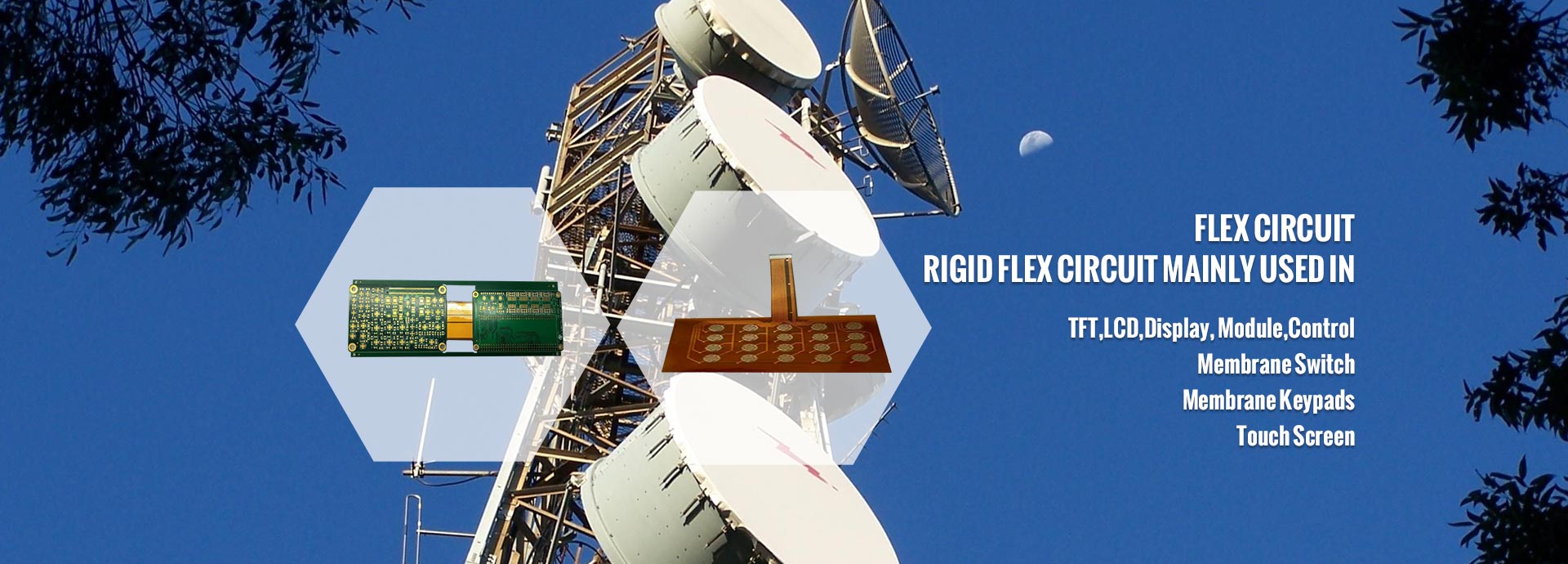
Rigid flexible PCB combines rigid and flexible substrate in a single PCB. They are used in applications that require a combination of flexibility and rigidity, such as complex electronic devices with multiple interconnected components.
Flexible PCBS are used in a wide range of applications in various
Industries: 1. Consumer electronics: Flexible PCBS are commonly used in smartphones, tablets, laptops and wearables, where space is limited and flexibility is required. 2. Medical devices: Flexible circuit boards are used in medical devices such as hearing AIDS, pacemakers, and implantable devices, where their flexibility and compact size are essential. 3. Automotive: In the automotive industry, flexible PCBS are used in applications such as dashboard displays, sensors and control modules, where they must be able to withstand harsh environments and continuous vibration. 4. Aerospace: Flexible PCBS are used in aerospace applications such as satellites, aircraft and missiles, where their lightweight and compact size is critical. 5. Industrial: Flexible circuit boards are used in industrial applications such as robotics, automation and process control, where their flexibility and durability are important.
Design considerations for Flexible PCB
Design for Flex PCB requires careful consideration of several factors: 1. Material selection: The choice of substrate depends on the application and the desired level of flexibility. Polyimide is the most commonly used material for flexible circuit boards because of its excellent thermal and mechanical properties. 2. Bending radius: The bending radius refers to the minimum radius that the flexible circuit board can bend without damaging the conductive trace or component. The bending radius depends on the thickness of the substrate and copper trace. 3. Copper thickness: The thickness of the copper trace affects the flexibility and current carrying capacity of the flexible circuit board. Thinner copper threads are more flexible, but have lower current-carrying capacity. 4. Adhesive selection: The adhesive used to bond the flexible circuit board layer must be flexible and able to withstand the expected environmental conditions. 5. Component placement: Components must be placed in an area where the flexible circuit board will not be subjected to excessive bending or stress. 6. Reinforcement: Reinforcement can be added to flexible PCB areas that require additional support or rigidity, such as connector areas or component mounting locations.
Manufacturing process for flexible circuit boards
The manufacturing process for flexible circuit boards is similar to that for rigid circuit boards, but there are some additional steps: 1. Substrate preparation: Clean and treat the flexible substrate to improve copper trace adhesion. 2. Copper lamination: A thin layer of copper is laminated to the substrate by heat and pressure. 3. Patterning: The required circuit pattern is transferred to the copper layer by the lithography and etching process. 4. Covering film application: A layer of protective insulation material called covering film is applied to the copper trace lines to protect them from damage. 5. Lamination: Multiple layers of the flexible circuit board are laminated together by heat and pressure to form the final circuit board. 6. Cutting and drilling: The flexible PCB is cut to the desired shape and size, and any necessary holes are drilled for component installation or interconnection. 7. Surface treatment: Exposed copper threads are coated with a protective coating, such as gold or silver, to prevent oxidation and improve weldability. 8. Assembly: Attach the components to the flexible circuit board using a welded or conductive adhesive.
Faqs about Flexible circuit Boards
What is the difference between flexible circuit boards and rigid circuit boards? The main difference between flexible circuit boards and rigid circuit boards is their flexibility. Flexible circuit boards are designed to be flexible and can bend and adapt to a variety of shapes, while rigid circuit boards are solid and cannot be bent. Flexible boards are typically thinner and lighter than rigid boards, and can replace multiple rigid boards and connectors in a design. Flexible boards offer several advantages over rigid boards, including flexibility, space and weight savings, and improved durability. However, they also have some limitations, such as high initial costs and complex design and manufacturing processes. The choice of flexible or rigid circuit board depends on the specific requirements of the application. What are the materials used to make flexible PCBS? The most commonly used materials for flexible circuit boards are polyimide and polyester film. Polyimide is the material of choice because of its excellent thermal and mechanical properties. The conductive trace on a flexible circuit board is usually made of copper and covered with a protective insulating material. Can flexible circuit boards be used in high temperature applications? Yes, flexible circuit boards can be used for high temperature applications. Polyimide, the most commonly used substrate for flexible circuit boards, has a high glass transition temperature and can withstand temperatures up to 300°C. However, the maximum operating temperature of the flexible circuit board also depends on the temperature grade of the components and materials used in the assembly.
How do I connect a flexible circuit board to another circuit board or component?
Flexible circuit boards can be connected to other circuit boards or components by a variety of methods such as: • Zero insertion force (ZIF) connectors • Flexible Printed circuit (FPC) connectors • Welding • Conductive adhesive • Mechanical fasteners The choice of connection method depends on the application, the number of connections required and the expected environmental conditions.