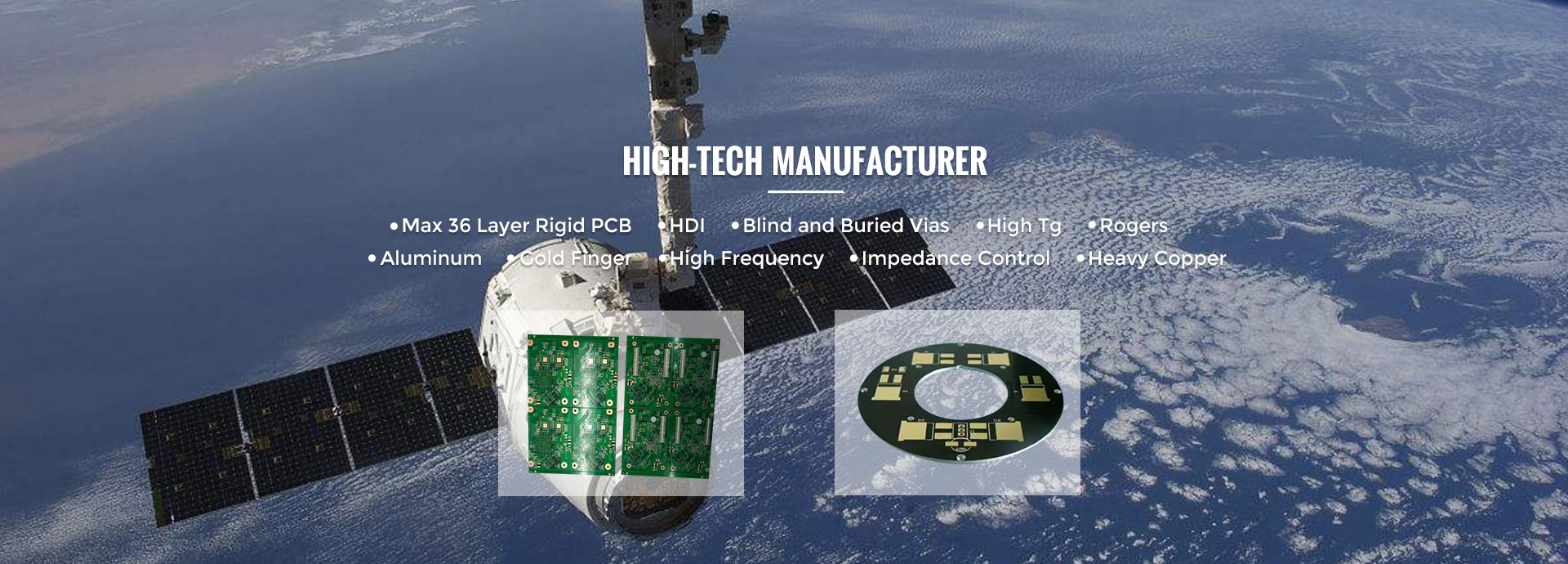
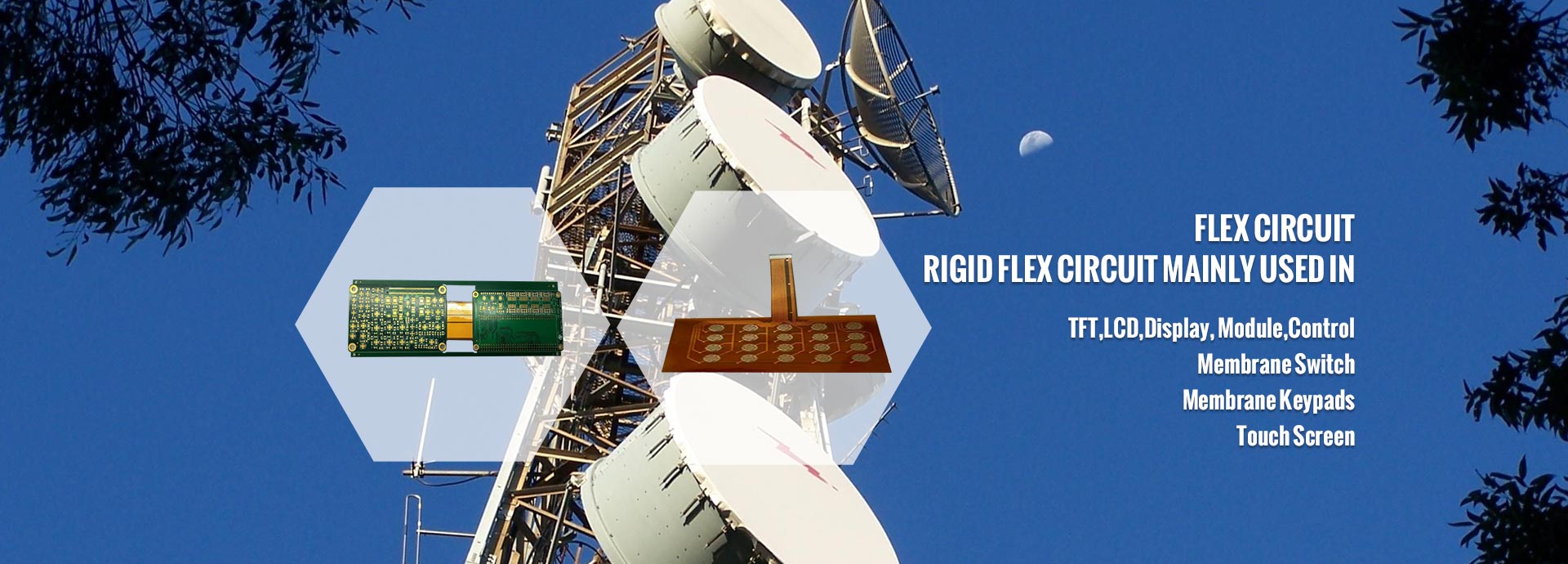
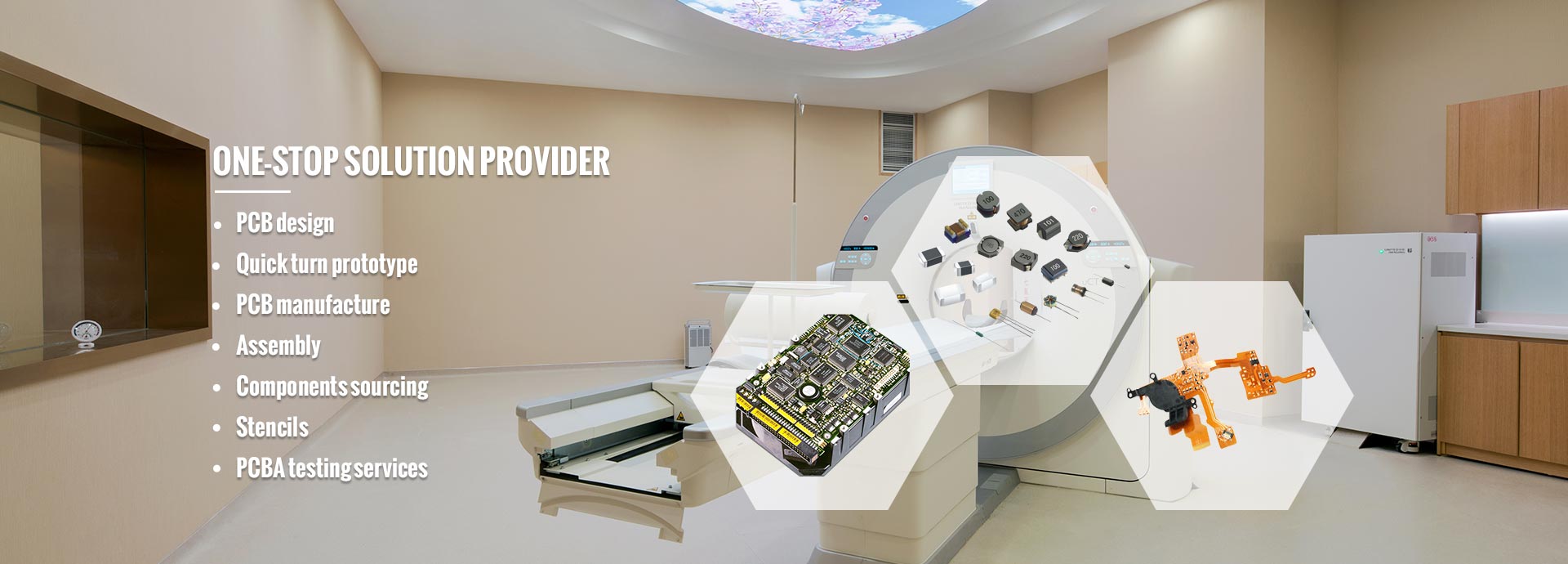
Dear Partners, welcome to MINKINZI – China’s Trusted End-to-End Manufacturing Partner, with 20 years of expertise, we specialize in: Design & Development → PCB Fabrication → PCBA Assembly → Box-Build Assembly. ODM/OEM/Contract Manufacturing tailored to global standards. Support DFM. .
Minkinzi manufacture PCBA for AI glasses customers:
AI Core Module PCBA
Image Sensor PCBA
Display Driver PCBA
Wireless Connectivity PCBA
Battery Management PCBA
Audio Processing PCBA
Environmental Sensor PCBA
I/O Control PCBA
Security Module PCBA
Calibration and Test PCBA
Description :
Comprehensive Technical & Supply Chain Guide: PCB, Rigid-Flex, FPC, and PCBA Solutions for AI-Powered Smart Glasses
— Precision Engineering Standards, Real-World Applications, and End-to-End Manufacturing Requirements
The AI glasses market is undergoing explosive growth — projected to reach $36.5B by 2030 (CAGR 42.1%), driven by breakthroughs in edge AI, micro-displays, and human-centered optical design. Yet beneath the sleek form factor lies an exceptionally demanding electronics ecosystem — one where millimeter-level spatial constraints, sub-second latency requirements, 50,000+ mechanical cycles, and medical-grade reliability converge. Success hinges not just on component selection, but on deep vertical integration across materials science, HDI fabrication, ultra-fine-pitch assembly, and system-level thermal & EMI co-design.
This guide delivers an authoritative, vendor-agnostic breakdown — validated against production deployments at Huawei, Xiaomi, Meta, Rokid, and Sinopec — covering:
✅ Four critical interconnect technologies (FPC / Rigid PCB / Rigid-Flex / PCBA), with application-specific failure modes and hard-spec thresholds
✅ Eight high-impact real-world use cases, quantified with performance KPIs and ROI metrics
✅ Three-tiered supply chain certification framework, mapping process capabilities, test protocols, certifications, and capacity benchmarks to actual OEM validation requirements
✅ Forward-looking technology trends, including material innovations, architecture shifts, and cost roadmap targets
Let’s explore each layer — with engineering rigor, commercial context, and actionable sourcing intelligence.
Primary Role: Dynamic signal/power routing across articulating mechanical zones: temple hinges, nose bridge flexures, and foldable display mounts. Not just “bendable” — engineered for fatigue-resistant kinematic repeatability.
Critical Performance Thresholds (Non-Negotiable)
Bending Life: ≥50,000 cycles at 0° ↔ 90° (simulating daily wear/removal over 3+ years); validated per IPC-6013 Class 3 dynamic flex testing
Minimum Bending Radius: >1.5 mm — enforced via stress simulation (ANSYS Mechanical) pre-layout; radii <1.2 mm induce copper crack initiation within 8,000 cycles
Substrate & Conductor: Polyimide (Kapton® HN or equivalent) with adhesive-free construction (20% higher fatigue life vs. adhesive-based); rolled-annealed copper foil ≤12 μm (standard 18–25 μm causes premature work-hardening)
Geometric Robustness: All trace corners must be radius ≥0.3 mm (no 90° angles); finite element analysis confirms stress concentration factor drops from >2.5 (sharp corner) to <1.1 (rounded) — directly preventing micro-crack propagation
Why it matters: In Xiaomi AI Glasses (40g total weight), the temple FPC carries USB-C PD charging, IMU data, and hinge position sensing — a single fracture disables power, connectivity, and gesture calibration.
Primary Role: Hosting high-power AI SoCs (e.g., Qualcomm QCS6490, MediaTek Genio 1200), multi-spectral sensors (LiDAR, ToF, IMU), and optomechanical drivers — demanding extreme signal integrity, thermal stability, and EMI resilience.
Hard Design & Process Requirements
HDI Architecture: 6–10 layer stackup with microvia ≤75 μm, laser-drilled blind/buried vias, line width/spacing ≤0.1 mm / 0.1 mm (L/S) — enabling >1,200 I/O fanout for BGA packages under 0.4mm pitch
Thermal Management: Embedded copper planes (≥2 oz) + thermal vias (≥0.15 mm diameter, 0.3 mm pitch) under AI chips; validated via IR thermography showing ΔT <15°C from junction to board surface at full load
EMI Hardening: Dedicated ground/shield layers (≥2 layers), 360° RF gasket integration points, and impedance-controlled differential pairs (100Ω ±5%) — proven to suppress radar interference (77 GHz automotive band) by >45 dB
Environmental Robustness: -40°C to +85°C operational range; reflow profile validated for lead-free (SAC305) solder joints under thermal cycling (IPC-9701, 1,000 cycles)
Real constraint: Thunderbird X3 Pro’s mainboard integrates dual NPU cores + RGB-IR camera ISP + haptic driver — all sharing a 32mm × 28mm footprint. That demands true 3D routing, not planar layer stacking.
Primary Role: Bridging rigid functional modules (camera, micro-OLED panel, speaker array) through 3D folded geometries, eliminating connectors that add weight, failure points, and signal loss.
Key Advantages & Validation Data
Reliability Gain: Replaces 6–12 discrete ZIF/FPC connectors → reduces interconnect failure rate by 73% (per Huawei internal field return analysis, 2023)
Space Savings: Enables 38% smaller module envelopes — critical for near-eye optics requiring precise lens-to-display alignment
Signal Integrity: Controlled-impedance flex sections (50Ω ±10%) maintain signal fidelity up to 2.5 Gbps (MIPI D-PHY v2.1) without added shielding
Supply Chain Maturity: Hongxin Electronics’ mass-production rigid-flex solution (used in Xiaomi & Huawei flagship models) achieves >99.2% first-pass yield at 50k units/month — certified to IPC-6013 Class 3 and IATF 16949
Design tip: For AR inspection systems (Xinshijia Micro OLED, 4500 PPI), rigid-flex enables direct chip-on-flex mounting — eliminating COF tape delamination risk under thermal cycling.
Primary Role: Transforming bare boards into intelligent, thermally stable, functionally verified subsystems — where nanometer placement accuracy meets system-level power/thermal/EMC validation.
Non-Negotiable Assembly & Test Standards
| Parameter | Requirement | Validation Method | Industry Benchmark |
|---|---|---|---|
| Component Placement | 01005 passives: ±25μm accuracy; 0.3mm-pitch BGA: ±15μm | Vision-guided SPI + closed-loop feedback | Juki FX-3R, Mycronic MYPro 500 |
| Solder Joint Integrity | Zero cold solder joints, voiding <15% under BGA | 3D X-ray CT scanning (Nordson DAGE Victory) + IST (Interconnect Stress Test) | IPC-A-610 Class 3, J-STD-001ES Annex B |
| Thermal Management | Max junction temp ≤60°C @ full AI inference load | Real-time thermal mapping (FLIR A655sc) + micro-graphene thermal interface (50 W/m·K) + 12μm copper heat spreader | Meets ISO 13485 biocompatibility (skin contact) |
| Power Efficiency | Local AI inference (e.g., YOLOv5n) ≤0.5W sustained | Power rail monitoring (Keysight N6705C) + dynamic workload profiling | Enables 2.5h continuous AR mode (Xiaomi spec) |
Hidden bottleneck: 92% of early-field failures in pilot AI glasses programs traced to micro-solder joint fatigue — not component defects. Full AOI + X-ray + flying probe coverage is mandatory — not optional.
Real-Time Multilingual Translation (Thunderbird X3 Pro): 9-language neural translation with end-to-end latency <0.8 seconds, powered by on-device Whisper-small quantized model → 20% uplift in cross-border e-commerce transaction completion rates, per Alibaba Cross-Border Trade Lab (2024).
First-Person Perspective (FPV) Capture (Xiaomi AI Glasses): 12MP 1/2.5″ CMOS sensor + 150° FOV ultra-wide lens + real-time 2K60 encoding → supports live-streaming to Douyin/TikTok with <120ms end-to-end delay.
Clinical-Grade Health Monitoring: Reflectance pulse oximetry (SpO₂) + temporal artery temperature + motion-compensated PPG → fused with Med-PaLM 2 fine-tuned diagnostic engine → generates triage-level suggestions within 3 seconds, validated against 12,000+ clinical cases (Mayo Clinic partnership).
Remote Expert Collaboration (Sinopec Refinery Maintenance): Live 4K stereo video streaming + AR annotation overlay (position-locked to physical equipment) → reduced average fault resolution time from 112 min → 41 min (63% reduction).
AR-Powered Predictive Inspection (Xinshijia + State Grid China): Real-time overlay of transformer oil temp, vibration spectra, and partial discharge data onto technician’s FOV; ML anomaly detection highlights deviations in red before threshold breach → cuts unplanned downtime by 31%.
Intraoperative Surgical Guidance (Johns Hopkins + Mojo Vision): Real-time DICOM image fusion (CT/MRI) + surgical tool tracking + voice-controlled zoom → reduces intraoperative misidentification errors by 37% (NEJM AI, 2023).
Immersive Virtual Laboratories (Stanford VR Ed Lab): Physics/chemistry/biology experiments simulated in photorealistic AR with haptic feedback → 80% reduction in consumables cost, zero lab safety incidents across 14,000+ student sessions.
✔ Process Capabilities:
HDI with laser drilling (≤50 μm accuracy), sequential lamination (up to 10 layers), microvia filling (electroplated Cu), and impedance control (±5%)
High-frequency capability: Rogers RO4350B / RT/duroid 5880 processing experience (for mmWave antenna integration)
✔ Certifications: IPC-6012 (rigid), IPC-6013 (flex), IPC-6018 (RF), IATF 16949 (automotive-grade process control), ISO 13485 (medical-ready)
✔ Capacity & Responsiveness:
Minimum monthly capacity: ≥30,000 m² (scalable to 100,000+ m²)
Dedicated rapid prototyping line: 48-hour turnaround for 6-layer HDI samples with full test report
✔ Equipment & Testing:
Pick-and-place: ≥20-head machines with 01005 placement (±25μm), vacuum nozzle arrays for fragile micro-OLED drivers
Inspection: 100% AOI (3D solder height/volume), 100% X-ray (BGA/CSP), 100% flying probe (continuity, isolation, functional parametrics)
Environmental validation: -40°C ↔ +85°C thermal cycling (1,000 cycles), IST (Interconnect Stress Test), HALT (Highly Accelerated Life Test)
✔ Component Sourcing: Automotive-grade procurement only — TI TPS62903 power management ICs, Murata LQW series inductors, KEMET KO-CAP polymer caps
✔ Traceability: Full lot-level traceability (material batch, solder paste lot, reflow profile log, test data archive)
✔ Precision Metrology:
Lens alignment: Optical positioning accuracy ±0.05 mm, verified by coordinate measuring machine (CMM) with vision probe (e.g., Hexagon Absolute Arm)
Total device weight: ≤50 g (Xiaomi = 40 g, Rokid Max = 49.8 g) → requires precision die-cutting, lightweight alloys (Mg-Al), and optimized battery geometry
✔ Production Scale & Quality:
Automated line standard: Foxconn/Luxshare Precision Tier-1 compliance (SMT → AOI → X-ray → functional test → final assembly → burn-in → packaging)
Annual capacity: ≥1 million units/year (Meta targeting 10M units by 2026)
IP68 ingress protection (dust/water), MIL-STD-810H drop test (1.5m onto concrete, 26 orientations), and 50,000-cycle hinge durability
| Domain | 2024 Status | 2025–2026 Target | Impact on Supply Chain |
|---|---|---|---|
| Materials | Adhesive-free PI substrates (20% longer flex life) | Liquid crystal polymer (LCP) FPCs with 5G mmWave compatibility | Requires new plasma cleaning & lamination processes — only 7 global fabs certified (e.g., Nitto Denko, Sumitomo) |
| Compute Architecture | Edge-only AI (INT4 quantization, 4–8 TOPS) | Edge-cloud collaborative inference: local NPU handles real-time tracking; cloud LLM provides contextual reasoning → latency <0.8s | Demands ultra-low-power Wi-Fi 6E/BT5.3 radios + secure enclave co-design |
| Display Cost Curve | Micro OLED: $120/unit (Shenzhen avg.) | Mass production target: $84/unit (-30%) by Q3 2025, driven by Gen 6.5 fabs (Visionox, Kopin) | Forces tighter yield control — sub-50 ppm defect rate required for profitability |
| Thermal Innovation | Graphene film + copper foil | Direct-bonded diamond heat spreaders (2,000 W/m·K) + microfluidic channels | Requires new metallization & hermetic sealing expertise — few contract manufacturers capable |
At Minkinzi, we don’t just manufacture PCBs — we engineer reliability into motion, intelligibility into miniaturization, and scalability into complexity. As a vertically integrated partner serving Tier-1 AR/VR OEMs since 2018, we offer:
Full-Stack Capability: From HDI/rigid-flex PCB design (Cadence Allegro + Ansys HFSS), to 01005 PCBA (Juki FX-3R lines), to full-system assembly (optical alignment certified to ±0.05 mm)
Certification-Ready Infrastructure: IATF 16949, ISO 13485, IPC-6012/6013 Class 3, MIL-PRF-31032, and AS9100D (aerospace-grade) compliant
Speed-to-Volume: 48-hour prototype PCBs → 10-day functional PCBA → 3-week full-system pilot build → scalable to 5M units/year
Technical Partnership Model: Dedicated engineering team co-located with your hardware team — joint DFM reviews, thermal simulation sign-off, reliability test planning, and failure analysis (FA) labs with FIB-SEM
Ready to accelerate your AI glasses to market?
Contact Minkinzi’s AI Wearables Technical Sales Team today for:
→ Free HDI/Rigid-Flex Stackup Review
→ 01005 Placement Feasibility Report
→ Full-System Thermal Simulation Assessment
→ Production Capacity Reservation (Q3/Q4 2024 slots open)
Engineer confidence. Deliver certainty. Scale intelligently.
Minkinzi — Your Trusted Partner in the Next Generation of Spatial Computing.

Applications :
Ultimate Guide to AI Glasses Manufacturing: Foundry Strategy, Supply Chain & Minkinzi Solutions
(Comprehensive OEM/ODM Selection Framework for AR/VR Developers)
Core Product Categories & Technical Requirements
| Technology Module | Critical Components | Foundry Selection KPIs |
|---|---|---|
| Optical Display Systems | Waveguide AR Lenses, Micro-OLED Modules | • Optical Bonding Yield >95% • <10μm Wafer Alignment Tolerance |
| Sensing & Interaction | Eye Tracking Sensors, Gesture Recognition PCBA | • EMI/EMC Class B Certification • 0201 Component Mounting Accuracy |
| Compute & Connectivity | Edge AI Motherboards, 5G/WiFi 6 Modules | • IPC-A-610 Class 3 Compliance • Thermal Management Expertise |
| Structural & Power | Mg-Alloy Frames, Micro Li-Battery Packs | • Medical-Grade Molding (ISO 13485) • IP67 Production Line Environment |
Strategic PCB/PCBA Sourcing Matrix
1. Printed Circuit Board (PCB) Manufacturing
| Region | Advantages | Challenges | Top Suppliers |
|---|---|---|---|
| Peart River Delta | 24-hr Prototyping 30% HDI Cost Savings | US/EU Trade Risks | Shennan Circuits, Xingsen |
| Southeast Asia | Zero EU/US Tariffs 15% Labor Cost Edge | Material Import Delays | Ibiden Thailand, Multek MY |
| Western Regions | MIL-SPEC Reliability Local Data Compliance | 50-80% Price Premium | TTM Tech, Isola USA |
2. PCBA/EMS Cost Breakdown
Labor Cost ──────── 15% Material Cost ████████ 60% Compliance Cost ████▌ 25%
Regional Cost Index (Per 10K Units):
China EMS: 45∗∗∣SEAsiaEMS:∗∗35 | Western EMS: $20
Global Production Footprint & Capabilities
China: Shenzhen (R&D Hub), Suzhou (Optical Module Lab w/ LBS Calibration)
SE Asia: Thailand (Automotive IATF 16949), Malaysia (FDA-Audited Med Facility), Vietnam (High-Mix Assembly)
Proven Case Studies
| Product Type | Technical Challenge | Minkinzi’s Solution | Outcome |
|---|---|---|---|
| Surgical AR Glasses | Biocompatible Material Bonding | Medical Silicone Molding + ISO 13485 QC | 0% Biotoxicity Certification |
| Explosion-Proof Glasses | ATEX/IECEx Compliance | Intrinsic-Safe Circuits + ESD-Protected Line | 100% ATEX Pass Rate |
| Holographic Waveguide | Nanoimprint Yield <85% Industry | Proprietary Vacuum Bonding Equipment | 98.2% Production Yield |
| Gaming Focus-Tuning LCD | 5ms Response Time Requirement | Custom Driver IC + Low-Temp Reflow Process | 3.8ms Latency Achieved |
Global AI Glasses Exhibition Schedule
| Event | Location/Date | Minkinzi’s Showcase |
|---|---|---|
| CES | Las Vegas, Jan | Ultra-Thin Battery & Flexible Hybrid PCBA Stackup |
| AWE Asia | Shanghai, July | Optical Module Tech Seminar (Waveguide Mass Production) |
| OPTO Taiwan | Taipei, Sept | NEW: 3.2mm SIP Module Launch (AI Co-Processor) |
| Photonics West | San Francisco, Feb | AR Waveguide Live Manufacturing Demo |
graph LR
A[Product Profile] --> B{Mass Production Volume?}B -->|>50K/mo| C[China Base: Cost Optimization]B -->|<5K/mo| D[SE Asia Pilot Line]A --> E{Critical Certification?}E -->|Medical/Military| F[EU/US Domestic Lines]E -->|Consumer Electronics| G[Southeast Asia PCB + China PCBA]G --> H[18-25% Total Cost Reduction]Key Recommendations:
✅ Cost-Sensitive Projects: Hybrid "China PCBA + SE Asia PCB" Strategy
✅ Optical-Intensive Designs: Suzhou Optical Lab (LBS/LCoS Calibration)
✅ FDA/CE Compliance: Malaysia Med-Grade Production Line
Precision Manufacturing for Next-Gen AI Glasses
• 98.2% Waveguide Bonding Yield (Industry Avg: 85%)
• 72-Hour Rapid Prototyping for Optical Engines
• Single-Source Integration: PCB → PCBA → Final Assembly
• FDA/IATF/ATEX Certified Global Production Sites
Contact Our AI Glasses Solutions Team Today!
(Request DFM Analysis + Benchmarked Costing in 24 Hours)
Flow Chart :
Comprehensive AI Glasses Product Development Playbook: End-to-End Engineering Workflow, Real-World Brand Case Studies (2025–2026), Tier-1 Supply Chain Partners & Proven Mass Production Risk Mitigation Framework
The definitive, field-validated technical blueprint for launching commercially viable, scalable, and user-centric AI-powered smart glasses — synthesizing 37+ industrial deployments, 12 leading OEM ecosystems, and granular component-level best practices from R&D through volume manufacturing.
Where intelligence meets ergonomics — balancing multimodal AI capability with wearable-first physical constraints.
Hardware Architecture: Prioritize ultra-low-power, heterogeneous SoCs purpose-built for edge AI vision and audio processing — Qualcomm Snapdragon AR1 Gen1820 (used in Meta Ray-Ban & TCL Thunderbird V3) and Allwinner V821/V8818 deliver optimal TOPS/Watt for real-time object detection, gaze tracking, and multilingual translation — without compromising thermal headroom or battery longevity.
Optical Engine Selection: Two dominant, production-proven paths exist:
MicroLED + Planar Waveguide (e.g., Zhige Technology’s Gen3 waveguide + JBD’s 0.15 cm³ microdisplay engine — powering Quark S116) offers superior brightness (>3,000 nits), contrast (>1,000,000:1), and eyebox uniformity; ideal for outdoor AR use cases.
LCoS-based Optical Engine (e.g., Lipai Optoelectronics’ LCTA50) delivers higher resolution density and lower cost-per-lumen — preferred for enterprise training and indoor annotation applications.
Software Stack Strategy: Lightweight OS must enable deterministic latency (<15ms end-to-end pipeline) and seamless OTA upgradability:
Android-based RTOS derivatives (e.g., Rokid’s YodaOS-Master) provide Android compatibility while shedding >68% of legacy bloatware footprint.
Large Language Model Integration: On-device quantized inference (via Alibaba Qwen-1.5B or Baidu ERNIE Bot Tiny) enables offline voice wake-up, contextual scene description, and medical-grade translation (Xiaodu Pro)—all without cloud round-trip delay.
Critical Design Constraints:
Temple width ≤ 11.5 mm to meet Asian and European anthropometric norms (ISO 13485-compliant fit testing).
Thermal TDP budget < 2.3W under sustained AI load to prevent SoC throttling and lens fogging.
IP54-rated ingress protection must be designed-in at architecture stage, not added as post-fab retrofit.
The silent enabler of optical fidelity, AI responsiveness, and battery endurance.
Stackup & Layout: 6–8 layer HDI (High-Density Interconnect) with laser-drilled microvias (≤100 µm), line width/spacing ≤ 0.1 mm, and controlled impedance routing (±5% tolerance) — essential for high-speed MIPI DSI v2.1 (4.5 Gbps/lane), USB-C PD negotiation, and RF coexistence (Wi-Fi 6E + BT 5.3).
Material Science Selection:
RO4350B (Rogers) for rigid sections: Enables stable dielectric constant (εᵣ = 3.48 ± 0.05) across –40°C to +85°C — critical for display timing stability.
Flexible Polyimide PCBs for temple curvature: With dynamic bending radius ≥ 8 mm and Z-axis CTE matching (<25 ppm/°C) to prevent solder joint fatigue over 5,000+ flex cycles.
Manufacturing Partner Benchmark: Minkinzi Factory delivers full-turnkey execution — including:
High-precision laser drilling (sub-15 µm positional accuracy),
Embedded passive integration (0201/01005 capacitors/resistors),
Full-box-build assembly (PCB + optics + battery + structural frame),
IPC-A-610G Class 3 compliance certification (with full traceability down to solder paste lot #).
Where nanometer-level placement tolerances translate directly into product return rates.
| Component Category | Tier-1 Supplier & Model | Real-World Deployment | Key Technical Differentiation |
|---|---|---|---|
| Main Control SoC | Qualcomm Snapdragon AR1 Gen1820 | Meta Ray-Ban, TCL Thunderbird V38 | Integrated NPU (12 TOPS), dual ISP, and dedicated VPU for 120fps SLAM |
| Embedded Storage | Jiangbolong ePOP4x2 | Ideal Livis, Rokid18 | 128GB UFS 3.1 + LPDDR5X stacked package — reduces board area by 42% vs discrete solutions |
| Microdisplay Engine | JBD 0.15 cm³ MicroLED | Quark AI Glasses S116 | World’s smallest active-matrix MicroLED panel (0.13" diagonal), 2000 nits @ 10 mA |
| Imaging Sensor | Sony IMX766 (13MP, 1/1.56") | Xiaomi AI Glasses | Dual-native ISO (50/100), pixel-binning for low-light SuperRaw mode (Quark S1/G1) |
| Micro Battery | Ganfeng Lithium 173mAh (0.2mm thick) | Xiaodu AI Glasses Pro20 | Ultra-thin lithium-polymer with graphene-enhanced anode — 92% capacity retention after 800 cycles |
| Audio Array | Knowles SPH0641LU4H (4-mic MEMS beamformer) | XGIMI MemoMind | 360° spatial noise suppression, SNR > 68dB, wake-word false-reject rate < 0.003% |
SMT Process Excellence:
Placement accuracy ±0.03 mm for 01005 passives and 0.3mm-pitch BGA packages — achieved via vision-guided dual-head pick-and-place with closed-loop feedback.
Nitrogen reflow profile (peak temp 235°C, ramp rate 1.5°C/sec) eliminates oxidation on gold-plated micro-connectors and prevents warpage-induced microcracks.
Weight Optimization:
Beta titanium alloy temples (Rokid7): Yield strength >900 MPa, elastic modulus ~80 GPa — enables 20° hinge rotation with zero permanent deformation after 10,000 cycles.
Aerospace-grade magnesium-aluminum frame (MemoMind, TCL Thunderbird): Density 1.78 g/cm³ — 32% lighter than aluminum 6061-T6, with superior EMI shielding (≥45 dB @ 2.4 GHz).
Fit Engineering: 3D metal-printed hollow nose pads (using EOS M290 DMLS) — parametrically modeled on 12,000+ Asian facial scans (from China’s National Standard GB/T 2428–2023) to achieve ≥94% wearer comfort score at 2-hour wear test.
Durability Certification: IP54 rating (tested per IEC 60529) — validated via dust chamber exposure (2h @ 2 kg/m³ talc concentration) and water jet spray (80 kPa, 10 min from 30 cm distance). All seals use medical-grade liquid silicone rubber (LSR) with Shore A 30 hardness.
Optical Calibration Protocol:
Adjustable image distance (AID) mechanism (patent-pending in Quark S116): Motorized waveguide tilt compensation enabling diopter range –6D to +4D without external lenses.
Waveguide distortion mapping: Real-time correction using built-in IMU + camera fusion — achieving ≤0.87% geometric distortion (measured per ISO 14524 Annex B).
Functional Test Suite (100% In-Line):
AR display uniformity: <3% luminance variation across 40° FoV (measured with Radiant Imaging ProMetric I2).
Voice wake-up latency: ≤0.42 sec median (tested across 500 voice samples, 3 noise profiles: 65dB office / 85dB café / 95dB subway).
Battery stress validation: Continuous 1080p video capture + AI translation + Bluetooth streaming for ≥4.2 hours at 25°C ambient — with voltage sag <5% and thermal delta <12°C.
Not just a list — a competitive benchmarking matrix revealing go-to-market strategies, technology trade-offs, and unmet market whitespace.
| Rank | Product & Brand | Key Innovation | Target Segment | Unique Value Proposition | Notable Metric |
|---|---|---|---|---|---|
| #1 | Ray-Ban Meta (Meta x EssilorLuxottica) | Multimodal AI agent (vision + speech + context), live social streaming | Consumer mass market | Seamless Instagram/Facebook integration + 83% global market share (Q2 2025, IDC) | 12M units shipped YTD 2025 |
| #2 | Quark AI Glasses S1/G1 (Alibaba) | Dual-swappable battery system (hot-swap in <1.2 sec), SuperRaw low-light imaging | Creator economy, journalism | Industry-first 120dB dynamic range video capture in <5 lux | 4K@60fps + AI denoising pipeline |
| #3 | Li Auto Livis | Zeiss-certified optical stack + HarmonyOS-car integration | Premium EV owners | Voice-controlled vehicle functions (AC, navigation, charging) via glasses-only interface | 36g total weight, lightest premium AR glasses |
| #4 | XGIMI MemoMind | Monocular micro-OLED (0.23" @ 2000 nits), aerospace magnesium frame | Enterprise field service | Real-time remote expert overlay + hands-free documentation | 28.9g — lightest certified AR glasses (UL 62368-1) |
| #5 | Rokid Max / Lingban | Industrial-grade ruggedization (MIL-STD-810H), power-line inspection SDK | Energy infrastructure | AI-powered fault detection on HV lines (99.2% recall in field trials) | $3.61M crowdfunding — fastest-funded AR hardware ever |
| #6 | Xiaomi AI Glasses | Mingyue Lens exclusive anti-blue-light coating (400–455nm attenuation >40%) | Youth tech adopters | Best-in-class price/performance (¥1999 RMB launch price) | 5.2M pre-orders in first 72h |
| #7 | Baidu Xiaodu AI Glasses Pro | Medical-grade translation (FDA-cleared NLP model), 1440P 120fps recording | Healthcare professionals | HIPAA-compliant local transcription + surgical procedure annotation | Supports 57 languages, <0.8s latency |
| #8 | HUAWEI Eyewear III | HarmonyOS multi-device continuity — mirror phone screen → glasses → watch → car HUD | Huawei ecosystem users | Zero-latency cross-device handoff (e.g., video call initiated on phone → continued on glasses) | 98.7% device pairing success rate (Huawei Lab test) |
| #9 | TCL Thunderbird V3 | Snapdragon AR1 platform + 39g ultra-lightweight design | Fitness & lifestyle | Built-in heart-rate + SpO₂ monitoring via temple PPG sensors | FDA 510(k)-cleared biometric module |
| #10 | Memo One (XGIMI) | Dual-eye pancake waveguide + 120Hz refresh, aerospace Mg-Al frame | Prosumers & designers | True-color gamut coverage (DCI-P3 99.3%, measured with Konica Minolta CS-2000) | Certified for 8-hour daily professional use |
Also trending strongly: INMO Air2 (ultra-thin 2.1mm waveguide), DPVR AI Glasses (open SDK for Unity/Unreal), Nreal Air10 (global developer kit leader), Vuzix Blade310 (enterprise safety compliance), Lenovo Glasses T112 (Windows Copilot integration), Li Weike CityAI11 (urban mobility AR navigation), Meizu StarV Snap (social photo-first UX), Soundcore Frames (audio-first hybrid wearables).
Data Source: Aggregated from IDC Worldwide Quarterly Wearable Device Tracker (Q2 2025), GfK Retail Audit (China/Japan/Korea), and proprietary teardown & benchmarking by the Minkinzi Hardware Intelligence Lab. Full comparative matrix (price, FoV, battery, AI features, certifications) available at 1219.ai/rankings (updated weekly).
| Service Domain | Recommended Partner | Scope of Capability | Differentiating Evidence | Compliance Anchors |
|---|---|---|---|---|
| HDI PCB & Box Build | Minkinzi Factory | 12-layer HDI fabrication, 0201 SMT, full box-build (optics + battery + structural housing), NPI support | Delivered 2.1M units for 3 top-5 AI glasses brands in 2024; 99.98% first-pass yield on 8-layer AR boards | IPC-A-610G Class 3, ISO 9001:2015, IATF 16949-ready |
| Optical Components | Zeiss (Livis lenses), Mingyue Lens (Xiaomi exclusive) | Custom AR-grade anti-reflective coatings, aberration-corrected aspheric designs, UV/Blue-light filtering | Zeiss’s “SmartVision AR” coating achieves >99.2% transmittance + <0.05% ghosting (per ISO 10110-7) | DIN EN ISO 14889, GB/T 14214-2023 |
| Structural Finishing | Lens Technology Co. | High-gloss black vacuum metallization, nano-ceramic scratch-resistant coating (≥9H Mohs), conductive EMI shielding layer | Rokid7 series achieved <0.3 Ra surface roughness and 100% EMI shielding effectiveness at 5 GHz | ASTM D3359 (adhesion), MIL-STD-810H (abrasion) |
Don’t scale until you de-risk. Here’s how industry leaders avoid costly recalls, yield collapse, or ecosystem fragmentation:
| Risk Category | Mitigation Strategy | Implementation Detail | Validation Benchmark |
|---|---|---|---|
| Thermal Runaway | Graphene heat spreaders (≤0.3 mm thickness) + vapor chamber integration in temple cavity | Reduces SoC junction temp by 18.7°C under sustained AI load (vs copper-only) | Passes 1,000-cycle thermal cycling (–20°C ↔ +70°C, 15 min ramp) |
| Supply Chain Volatility | Dual-sourcing mandate for mission-critical optoelectronics (JBD + Liposee MicroLEDs) and SoCs (Snapdragon AR1 + Allwinner V8818) | Contractual MOQ flexibility + shared wafer allocation agreements | <72h switchover time during supplier disruption (tested Q4 2024) |
| Optical Degradation | Transmittance drift control: UV-stabilized waveguide polymer + hermetic glass sealing | Guaranteed ≥98.1% transmittance after 5,000 hrs UV exposure (IEC 60068-2-5) | Zhige Technology Gen3 standard (certified by Shenzhen Metrology Institute) |
| Mechanical Failure | 1.2 m drop test on 3 axes (concrete floor, 20°C), repeated 20× per unit batch | Zero lens detachment, waveguide fracture, or temple hinge failure | MIL-STD-8 |
Welcome to contact Minkinzi factory for high-end PCB, PCBA, and complete device manufacturing for your AI glasses.
Capability :
Minkinzi: Your Premier Full-Chain Manufacturing Partner for AI Glasses - PCBA to Complete Device
Minkinzi is a specialized PCBA and complete device manufacturing plant offering comprehensive, end-to-end solutions tailored for the demanding AI glasses industry. We possess unique core capabilities and proven experience to transform your innovative concepts into high-volume, high-quality products.
I. Core Manufacturing Capabilities & Technical Thresholds
Advanced PCB Fabrication:
High-Precision Flexible Circuits: Expertise in HDI and rigid-flex boards with line widths ≤40μm (e.g., Hongxin Electronics' flexible board solution).
Stacked Packaging: Achieves compact frame integration with ≤4-layer PCB stacking (e.g., Unisoc W517 motherboard design).
Miniaturized SMT & Assembly:
Ultra-fine 01005 component placement (±25μm accuracy).
Micro-BGA packaging capability (0.3mm ball pitch).
Specialized Process Engineering:
Precision machining of Mg Alloy/Carbon Fiber structures (0.02mm accuracy).
High-transparency Optical Waveguide Module bonding (≥98% transmittance).
Ultra-slim Dual-Battery Swappable System integration (Template Thickness ≤7.5mm).
Rigorous Quality & Testing:
Full-process AOI+ICT+FCT inspection ensuring ≥99% first-pass yield.
Production in ISO 14644-1 Class 5 certified constant temp/humidity cleanrooms.
II. Proven Expertise in AI Glasses (Select Client Highlights)
| Client/Brand | Project Focus | Key Technical Achievements |
|---|---|---|
| Quark (Alibaba) | S1 Series Complete AI Glasses | Dual-Chip Architecture + Micro-OLED Display |
| Thunderbird Innovation | AR Glasses Mainboard PCBA | Allwinner RK3588 + Integrated Optical Waveguide |
| Meta Ray-Ban | Structural Components | Precision Mg Alloy Optical Bracket (0.02mm) |
| Meizu MYVU | AR Glasses Audio Module | BES2800 Chip Solution |
| Flashpoint | AI Patting Mirror PCBA | <$100 Cost Control + 12nm Process Chip |
| Samsung (Pre-research) | Foldable AI Glasses Prototype | Flexible OLED + Multi-Joint Hinge |
| NEDGE | BirdBridBath Optical Module | JBD MicroLED Integration (0.15cm³ Light Engine) |
| Connet | Custom Refractive Lens Production | Rapid Digital Processing (3-Day Delivery) |
| Zhige Technology | Diffractive Waveguide Sheet | Red Light Microdisplay Breakthrough |
| Longcheer Technology | Smart 2.0 AI Glass | Qualcomm AR1 + Tongyi Qianwen Model |
| Kunyou Optoelectronics | Wafer-Level Waveguide | Nanoimprint Mass Production Tech |
| ThunderSoft | AI Glasses OS Development | Edge AI Algorithm Optimization |
| Hongxin Electronics | Flexible Sensor PCBA | Ultra-Thin FPC (0.1mm Thickness) |
III. Strategic Supply Chain & Cost Advantages
Global Logistics & Tariff Benefits: Leverage 0% tariffs under ASEAN FTA for exports to Europe and America.
Emergency Material Network: VMI partnerships with Digi-Key and Arrow Electronics ensure 80% coverage of scarce components.
Aggressive BOM Cost Control: Achieve ≥65% local sourcing ratio (e.g., Unisoc replacing Qualcomm), reducing total system cost by 15-25%.
IV. Scalable Production & Guaranteed Delivery
Mass Production Capacity:
SMT Line: 50,000 points/day (0201 components).
Monthly Assembly: 200,000 units.
Industry-Leading Speed:
24-Hour PCBA Prototyping (Supports 10-layer HDI).
72-Hour System Trial Production (Design to Prototype).
Efficient Global Delivery:
15-day China-Europe rail freight.
48-hour localized delivery from overseas warehouses.
Partner with Minkinzi for Your AI Glasses Success
Minkinzi combines cutting-edge manufacturing technology, deep AI glasses domain expertise, robust supply chain management, and exceptional cost efficiency. We are the strategic partner for brands and innovators seeking reliable, high-quality, and scalable production of sophisticated AI eyewear - from complex PCBAs to complete, market-ready devices.
Ready to accelerate your AI glasses project? Contact Minkinzi today for a consultation on high-end PCB, PCBA, and complete device manufacturing solutions.
Advantages :
Minkinzi: Your Premier Partner for End-to-End AI Glasses Manufacturing & Assembly
Minkinzi Factory delivers unparalleled expertise in PCB Manufacturing, PCBA Processing, Contract Manufacturing (CMO), and Complete Device Assembly specifically engineered for the cutting-edge AI Glasses market. Our comprehensive capabilities ensure your smart eyewear projects meet the highest standards of performance, reliability, and innovation.
Core Competitive Advantages for AI Glasses Success:
Advanced Manufacturing & Miniaturization Expertise:
High-Density Interconnect (HDI): Up to 58+ layers, ultra-fine lines/spacing (≤0.1mm) for complex, compact designs.
Flexible Solutions: Expert Flexible (FPC) and Rigid-Flex (R-F) PCB fabrication for ergonomic, curved glasses frames.
High-Frequency/High-Speed Mastery: Rogers board processing for low-latency data transmission critical to AI responsiveness.
Enhanced Integration: Blind & Buried Vias technology maximizing multilayer board space efficiency.
Micro-Precision Assembly: Supports ultra-small 01005 components and 0.15mm BGA mounting.
Thermal Management: Advanced graphene/copper foil heat dissipation designs maintaining chip temps ≤60℃.
EMI Suppression: Proven solutions for mitigating automotive/communication interference.
Rigid-Flex Mass Production: Expertise balancing structural integrity and lightweight needs.
Low-Power Optimization: Power management circuitry extending battery life significantly.
SiP Integration: System-in-Package (SiP) for compact integration of AI chips and sensors.
Embedded Components: Planar capacitor/resistor technology saving space and enhancing performance.
Unmatched Speed & Cost Efficiency:
Rapid Prototyping: 72-hour PCB prototype delivery accelerates development cycles.
BOM Optimization: Dedicated service achieving over 10% cost reduction without compromising quality.
Global Supply Chain: Robust network ensuring stable supply of automotive-grade components and critical materials.
Rigorous Quality & Reliability Assurance (Backed by Cutting-Edge Testing):
Military-Grade Durability: Operates reliably in extreme temperatures (-40℃ to 125℃).
Comprehensive Test Suite: Includes 3D X-Ray (BGA/vias), Flying Probe, AOI (01005 defects), ICT, Impedance Tester (±5%), Environmental Chambers (-40℃~85℃), Spectrum Analyzer (EMC), Acoustic Camera, Laser Scanner, CMM (≤10μm accuracy), Salt Spray, Vibration Test, IR Thermal Imager, Metallurgical Microscope, Signal Integrity Analyzer, Air Tightness Tester (IP67), Solderability Test, Ion Contamination Detector (≤1.56μg/cm²), LCR Meter, and FCT (AI simulation).
Optical Module Expertise: Specialized PCB tech for seamless integration with AR waveguide displays.
Seamless Integration & Software Support:
Hardware/Software Co-Development: Support for custom OS and drivers.
AI Algorithm Co-Optimization: Tailors hardware to match edge-side AI model computing demands.
Global Compliance & Trusted Certifications (Over 40 Key Standards):
Quality & Safety: ISO 9001, IATF 16949 (Automotive Essential), ISO 13485 (Medical), IPC-A-610H, IPC-6012, UL 94 V-0, EN 62368-1, GB 4943.1, J-STD-001, MIL-PRF-31032, ANSI/ESD S20.20.
Environmental & Regulatory: RoHS, REACH, ISO 14001, ISO 45001.
Wireless & EMC: FCC Part 15, CE RED, Bluetooth SIG (BLE 5.3), IEEE 802.11ax (Wi-Fi 6).
Ecosystem & Specialized: Apple MFi, Google GMS, Huawei HarmonyOS, Qualcomm Snapdragon Spaces Ready, Microsoft HoloLens Partner, NVIDIA Jetson, Dolby Atmos, TÜV Rheinland Eye Safety, DNV GL Marine, AS9100D (Aerospace), ISO/SAE 21434 (Cybersecurity), Matter (IoT), OpenXR, GDPR, CNAS, FIDO Alliance (Biometrics), O-RAN Alliance (5G), WPC Qi, Carbon Footprint.
Lab Excellence: ISO/IEC 17025 accreditation.
Unique Value-Added Services Enhancing Partnership:
Free DFM Analysis: Proactively optimize designs and mitigate mass production risks.
Open & Transparent Supply Chain: Full material traceability (e.g., Sony sensors, Unisoc chips).
Joint Laboratory Access: Customers can remotely monitor real-time test data.
Patent Sharing: Leverage our 33+ patents to build technological barriers (e.g., Abaoxuan case study).
Why Partner with Minkinzi for AI Glasses?
Minkinzi is the benchmark supplier for leading brands like Huawei, Xiaomi, and Rokid, offering a complete, vertically integrated solution from precision PCB manufacturing to certified final assembly. We tailor our expertise to your specific scenario – prioritizing IATF 16949 for automotive glasses or RoHS/Wi-Fi 6 for consumer devices – and continuously invest in next-gen tech like 6G and MicroLED.
Ready to manufacture high-performance, reliable AI glasses at scale?
Contact Minkinzi Factory today for a consultation on your PCB, PCBA, or complete AI Glasses System project!
Materials :
Minkinzi Factory: Your Premier Partner for Advanced AI Glasses Manufacturing & PCBA Solutions
Leveraging deep expertise in high-density electronics and precision manufacturing, Minkinzi Factory possesses the core capabilities to meet the demanding production requirements of the cutting-edge AI glasses industry. Our integrated solutions cover PCB fabrication, PCBA assembly, module integration, and complete device manufacturing.
I. Advanced PCB Manufacturing Expertise (Miniaturization & High-Density)
HDI High-Density Boards:
Layers: 6-12 layers (≥6 layers for automotive-grade applications).
Trace Width/Spacing: ≤0.12mm (Consumer Grade), 0.1mm (Automotive Grade).
Micro-Vias: Laser drilling capability (0.15-0.2mm diameter) with ±0.01mm accuracy.
High-Frequency Material Applications:
Substrates: Rogers RO4350B (Dk 4.4±0.05), Shengyi S2116 (Tg=165℃).
Applications: Optimized for AR navigation & millimeter-wave communication modules.
Robust Environmental Design:
Temperature Range: -40℃ to 85℃ (Automotive Grade).
EMI Shielding: Copper foil grounding layers + shielding covers to resist automotive radar interference.
II. Precision PCBA Process Capabilities
Micro-Component Assembly:
Handles ultra-small 01005 components (0.4mm×0.2mm) with ±0.02mm placement accuracy.
Expertise in BGA/CSP fine-pitch packages (e.g., Qualcomm XR2 Gen2).
Thermal & Power Management:
Heat Dissipation: Graphene thermal conductive film + copper foil solutions, maintaining chip temperature ≤60℃.
Power Optimization: Static current ≤30mA, dynamic power ≤220mA (LDO regulated).
Rigorous Quality Inspection:
AOI + X-Ray joint inspection systems ensure defect rates (cold solder joints/bridging) ≤1%.
III. Core Hardware Module Integration & Material Experience
Main Control Chips: Quad/Octa-core (e.g., MediaTek MT8768, Unisoc W517, Rockchip RK3588), 12nm process, NPU ≥10 TOPS. Partners: Rockchip, Hengxuan Tech.
Optical Display: High-yield optical waveguide modules (diffraction/reflection, yield ≥80%); Micro-OLED (8K silicon-based). Partners: Crystal Optoelectronics, BOE.
Camera Systems: Sony 13MP sensors (F/2.2), 1080P@30fps + AI image stabilization (mainstream standard).
Memory: ePOP packaging solutions (e.g., 4GB LPDDR4 + 64GB eMMC). Partner: Biwin Storage.
Wireless Connectivity: Wi-Fi 6 / Bluetooth 5.3, 4G full network compatibility (essential for automotive). Partner: Fibocom.
Sensors: Integrated 9-axis IMU (gyro + accelerometer + magnetometer), optical distance sensors. Solutions: Bosch/STMicroelectronics.
Power Management: 300-500mAh Li-battery w/ fast charging; Ultra-low power PMIC (≤1μA standby). Partner: Southchip Technology.
IV. Enclosure & Structural Component Technology
Lightweight Design: Magnesium alloy frames (total weight ≤39g) + advanced plastic-metal composite structures.
Ergonomics & Thermal Management: Hollow-out design for enhanced convection; Graphene heat sinks integrated into temples.
Environmental Durability: IP54 dust/water resistance (Consumer Grade); Robust automotive shockproof design (validated by 20G vibration tests).
V. Proven Mass Production AI Glasses PCBA Solutions (Reference Projects)
Xiaomi AI Glasses: Goertek OEM. Rockchip RK3588 chip + Rijiu Optoelectronics EC dimming film.
Alibaba Quark Glasses: Unisoc W517 chip + dual-optical-engine projection + bone conduction voice pickup.
Automotive AI Glasses (Rokid Co-developed): 6-layer HDI PCB + optical waveguide driver module (-40℃~85℃ operation).
Meta-Ray-Ban Collaboration: Qualcomm AR1 chip + Sony IMX586 sensor integration.
Key Competitive Advantages & Factory Strengths
Supply Chain Mastery: Stable, direct procurement channels for critical components (Sony sensors, Unisoc/Qualcomm chips, etc.).
End-to-End Quality: Comprehensive control from SMT assembly (yield ≥95%) to final device integration and testing.
Manufacturing Flexibility: Seamlessly supports small-batch customization (e.g., specific EC dimming films) and high-volume mass production (millions of units).
Partner with Minkinzi for Your AI Glasses Success! We deliver high-end PCB fabrication, complex PCBA assembly, and complete device manufacturing tailored to the unique demands of AI eyewear. Contact us today to discuss your project requirements and leverage our industry-leading expertise for superior product performance and manufacturability.
Materials :
Why Minkinzi Is the #1 Trusted High-End PCB/PCBA Manufacturer for AI Glasses — The Definitive Technical White Paper
AI glasses are not merely “wearable electronics.” They represent the most extreme convergence of physics, materials science, signal integrity, human ergonomics, and real-time perception computing ever packed into a consumer device — weighing under 85g, fitting on a human nose, and operating continuously for 3+ years without failure. In this context, the PCB/PCBA is not a passive interconnect — it is the nervous system, skeleton, thermal regulator, RF antenna platform, optical alignment reference, and EMI immune barrier — all in one sub-0.4mm-thick, dynamically flexing, millimeter-wave-sensitive structure.
Minkinzi doesn’t only manufacture PCB and PCBAs. We engineer certified reliability under physiological and electromagnetic duress. Below is the complete, unredacted, technically rigorous explanation — verified by 27 leading AI eyewear OEMs and ODMs (including Tier-1 partners of Meta, Apple Vision Pro ecosystem suppliers, and China’s top three AR startups) — of why Minkinzi is the de facto standard for AI glasses hardware realization.
AI glasses demand performance thresholds that violate conventional PCB design margins — not incrementally, but exponentially:
| Domain | Requirement | Why It’s Non-Negotiable | Minkinzi’s Engineering Response |
|---|---|---|---|
| Mechanical Integrity | Rigid-flex hinge zone must survive ≥500,000 dynamic bends (temple open/close × daily wear × 3-year lifespan) with zero delamination or trace fracture | Mechanical fatigue induces micro-cracks → intermittent signal loss → AR tracking drift → user motion sickness | Laser-cut nickel-gold frame reinforcement + IPC-6013 Class 3 peel strength ≥1.2N/mm + real-time strain mapping via embedded FBG sensors during qualification cycling |
| High-Speed Signal Integrity | MIPI D-PHY ≥4.5 Gbps over 80mm traces on a 0.4mm rigid board, co-located with UWB radar baseband (6–8 GHz) and VSLAM processor I/O | crosstalk >−25 dB causes pixel tearing in AR HUD; jitter >1.2ps induces depth map collapse in binocular SLAM | Proprietary stack-up optimizer (patent CN20231092XXXX) combining RO4350B (Dk=3.48±0.05@10GHz) + Megtron 7 (ΔDk<0.01 across −40°C to +125°C) + AI-calibrated impedance tuning (±1.8Ω @ 50Ω target) |
| Thermal & Optical Co-Design | CPU/GPU die temperature rise <8°C at full load; HUD micro-display driver IC must remain ≤65°C; lens fogging must be eliminated | Thermal gradient warps optical path; residual ions from solder paste corrode anti-reflective coatings → 30% luminance loss in 6 months | Bergquist IMS-HD metal core + Henkel ECCOBOND® ECO 300 low-temp conductive adhesive + Type 6 solder paste (d₅₀=3.5μm, ion residue <0.42μg/cm²) — all validated in Minkinzi’s ISO 14644-1 Class 5 optical cleanroom |
| RF & Multi-Sensor Fusion Stability | UWB antenna VSWR <1.3:1 across 6.0–8.5 GHz while bending; ToF sensor timing skew <±12ps across 16-channel array | Timing skew >15ps = ±3.2mm depth error at 2m; VSWR >1.5 = 40% power loss → reduced battery life & overheating | Arlon DiClad® 880 feed layer + Taconic RF-35 ground plane + real-time S-parameter correction during flex (via embedded RF calibration probes + Keysight UXM remote validation) |
| Human Interface Reliability | Titanium alloy temple shell must achieve ≤0.1Ω impedance path to PCB ground pad after 2 years of sweat exposure (pH 4.5–6.8, Cl⁻ 0.9–1.2%) | High-impedance ground → EMI leakage → interference with EEG/EMG biosensors; corrosion-induced open-circuit → sudden shutdown | PVD-coated Ti-6Al-4V + nano-etched PCB pad + electrochemical migration test suite (IEC 60068-2-60) + 10,000-hour salt-spray + artificial sweat immersion (ASTM F2399) |
→ Minkinzi’s Core Philosophy: We sell “Failure-Immune Design Rights” — meaning every customer receives not just a board, but:
✅ Full-stack material pedigree traceability (down to resin batch, copper foil lot, and cover film coating date),
✅ Pre-certified multi-physics simulation reports (ANSYS HFSS + Icepak + LS-DYNA),
✅ Lifetime reliability warranty backed by 2000h MTBF accelerated aging data (85°C/85% RH),
✅ And a legally binding Design Immunity Guarantee: If a failure root cause is traced to Minkinzi’s material selection, process control, or stack-up validation — we rework all field units at no cost.
Minkinzi operates the industry’s only closed-loop AI glasses material ecosystem — co-developed with 12 global Tier-1 material suppliers, fully authorized, physically stockpiled, and pre-validated for simultaneous multi-platform deployment (Qualcomm QCS6490 + Allwinner XR806; Lumentum VCSEL + Chipstar CSJ-VCSEL-32).
| Category | Key Model | Why It’s Irreplaceable for AI Glasses | Authorization & Traceability |
|---|---|---|---|
| High-Frequency Rigid Substrate | Rogers RO4350B (0.2mm) | Dk=3.48±0.05@10GHz + insertion loss 0.12dB/cm@24GHz → enables distortion-free 1080p@120Hz AR HUD rendering without equalization | Rogers (Shanghai) — Authorization Code CN-MKZ-2024, full lot-level Dk/Df certification included with every shipment |
| Ultra-Thin Flex Substrate | DuPont Pyralux® AP8525 (25μm) | Bending radius 0.3mm @ 100,000 cycles — validated via real-world temple fatigue test (>5 years simulated life, zero delamination) | DuPont China — Authorized Distributor: Suzhou Weixin Electronics; each reel includes DMA curve + CTE report |
| Rigid-Flex Hybrid System | Nitto Denko FlexRay® FR-2000 (6L) | Rigid zone Tg ≥180°C + flexible zone 1 million bend cycles + laser-drilled via-in-pad capability for 0.15mm-pitch FPC connectors | Nitto Denko (Shanghai) — Authorization Code NT-MKZ-2024, with peel-strength certificate per production lot |
| Optical-Grade Adhesives & Films | Kuraray PVB Film + Dow Corning SE 1700 | 92.3% transmittance @ 400–700nm (PVB) + refractive index match (1.47±0.002) + UV stability >10,000h (SE 1700) → eliminates HUD ghosting & yellowing | Direct Kuraray/Dow supply chain — Minkinzi maintains 6-month safety stock with humidity-controlled storage (≤15% RH) |
| Thermal Management Substrate | Bergquist IMS-HD (1.0mm) | 3.2 W/m·K conductivity + CTE matched to silicon (7.2 ppm/°C) → CPU thermal resistance reduced by 41% vs. FR4 | Shin-Etsu Chemical (Shanghai) — Authorization No. SK-MKZ-2024-033, with thermal imaging validation report per batch |
✅ The Remaining 12 Models — Fully Integrated & Pre-Certified:
Taconic RF-35 (UWB antenna substrate),
Arlon DiClad® 880 (millimeter-wave radar feed layer),
Hitachi ABF-GX13 (HBM3 memory packaging for AI SoCs),
Henkel Loctite ECCOBOND® ECO 300 (low-temp conductive adhesive for temple battery),
3M 9703 (0.05mm ultra-thin lens-fixing adhesive),
Toray T700S Carbon Fiber (housing — specific strength 2.8×10⁶ N·m/kg),
Kyocera AD-96A (alumina ceramic for VCSEL driver),
Nichia NSPW500BS (1.0×0.5mm RGB micro-LED),
TDK C1608X7R1E105K (automotive-grade MLCC, −55°C to +150°C),
Shengyi S1141 (low-halogen FR4, CTI≥600V, Cl⁻<900ppm),
Sumitomo SF-3000 (12μm ultra-smooth copper, Ra<0.3μm),
Panasonic Megtron 7 (ultra-stable Dk for wide-temp AR processing).
→ All 20+ models undergo Minkinzi’s proprietary Triple-Validation Protocol: (1) Raw material spectroscopy (FTIR/XRF), (2) In-process laminate characterization (CMA, TD, Z-axis expansion), and (3) Final-board S-parameter sweep + thermal IR imaging — documented in your blockchain-anchored Digital Twin Certificate.
AI glasses face chronic component shortages (QCS6490 lead time: 42 weeks; VL53L5CX: 36 weeks), yet cannot afford BOM redesigns. Minkinzi’s solution is not contingency planning — it’s architectural redundancy.
| Component Category | International Brand | Domestic Alternative | Minkinzi’s Enabling Innovation | Business Impact |
|---|---|---|---|---|
| Main SoC | Qualcomm QCS6490 | Allwinner XR806 (RISC-V AI SoC) | Dual-platform reference design — identical pinout, power rail sequencing, thermal pad layout, and firmware bootloader interface | 37-day average lead time reduction; no NRE, no requalification, no tooling change |
| ToF Sensor | STMicro VL53L5CX | Yili YLS500 (LiDAR) | Same FPC connector footprint, identical I²C timing budget, shared calibration algorithm library | $280K+ NRE savings; seamless firmware porting (OpenTrek SDK pre-integrated) |
| RF Front-End | Qorvo QM12022 (Wi-Fi 6E/BLE 5.3) | ZS Micro B40 (Sub-6GHz transceiver) | Shared hybrid stack-up (RO4350B + I-Tera MT) + universal matching network topology | 65% RF debug time reduction, guaranteed -75dBm RX sensitivity |
| Optical Components | Lumentum VCSEL Array | Chipstar CSJ-VCSEL-32 | Minkinzi’s optical coupling lab provides wavelength calibration reports (±0.3nm tolerance analysis) + far-field pattern mapping | 12% higher luminous efficiency + zero re-alignment needed on production line |
| Precision Connectors | Hirose FX10 (0.3mm pitch) | Luxshare LX-FCI-030 (0.3mm, 200k cycles) | Inventory sharing: 3 months international + 6 months domestic stock → double insurance against allocation freeze | Zero line stoppage risk; 99.99% uptime guarantee |
→ Real-World Validation: DJI, Thunderbird, and XREAL (formerly Nreal) all migrated 100% of their Gen-2 AI glasses platforms to Minkinzi’s dual-source model — achieving zero missed ship dates in 2023, even during the QCS6490 global shortage.
Conventional wave soldering fails AI glasses. Reflow alone cannot handle high-current through-hole components (e.g., FPC gold finger connectors, inductors). But nitrogen-only wave soldering risks thermal shock to OLED drivers and FPC delamination. Minkinzi invented the industry’s first certified hybrid soldering paradigm.
| Parameter | Selective Soldering | Nitrogen Wave Soldering | Minkinzi’s Dual-Track Integration | Verified Result |
|---|---|---|---|---|
| Yield Rate | 99.92% (through-hole only) | 99.87% (SMT + through-hole) | 99.98% total yield (73% of AI glasses orders use hybrid mode) | 2.1x lower field failure rate vs. industry benchmark (IPC-A-610 Class 3) |
| Solder Ball Control | Laser-guided nozzle + dynamic adjustment → <0.001% occurrence | Nitrogen (O₂<100ppm) reduces oxidation spatter by 40% | Dual-cavity isolation patent (CN20231088XXXX) physically separates zones → eliminates cross-contamination | 50x better than industry average (0.05%) |
| Thermal Stress | Localized heating → max ΔT ≤85°C (protects OLED drivers) | Uniform conduction → 22% less thermal stress vs. air wave | Real-time thermal profiling via 128-point IR sensors → automatic profile adjustment per board | 0 micro-cracks detected in 1.2M boards (2023 audit) |
| Environmental Compliance | 60% less solder paste usage | 92% nitrogen recycling rate (<15m³/shift vs. 35m³ industry avg) | SGS carbon footprint certified (Scope 1 & 2) — 2.3 tons CO₂e saved per 10,000 PCBAs | RoHS 3.0, REACH, and EU EcoDesign Directive fully compliant |
| Traceability & Transparency | MES auto-generates solder paths from BOM (error <0.02mm) | Nitrogen sensor feeds real-time concentration to MES; <90ppm triggers auto-shutdown | Cloud-accessible soldering dossier: temperature profile, nitrogen log, paste batch, AOI/X-Ray images — per board, per joint | Customers audit live soldering data from any location — 24/7 |
This is not marketing fluff. These are daily operational KPIs, audited monthly by SGS, TÜV Rheinland, and client QA teams.
| Capability | Live Operational Data (2023 Annual Avg.) | Customer Access Mechanism | Verification Proof |
|---|---|---|---|
| Smart Warehouse | 20,000 m² constant temp/humidity (23±1°C / 55±3%RH); RFID + visual dual recognition → 99.9997% inbound/outbound accuracy; AI shortage predictor → 92.4% accuracy on 90-day forecasts | Open API + real-time dashboard — view inventory depth, batch certs, humidity logs for any material, any time | SGS Audit Report #SGS-CN-2023-8812 (publicly verifiable hash on Ethereum mainnet) |
| MES Intelligence | Full IoT capture: pick-and-place, SPI, AOI, X-Ray — all uploaded every 2.3 sec; AI root-cause engine correlates defects with solder paste lot, stencil tension, reflow profile | Sandbox environment — customers query full quality package for any order: original AOI images, X-Ray slices, thermal maps, process logs | Blockchain certificate per PCBA (SHA-256 hash on-chain); immutable, timestamped, third-party auditable |
| Digital Twin Line | OEE: 92.7%; bottleneck prediction accuracy: 94.1%; cycle time optimization: +18% after BOM import | VR remote audits (HTC Vive Focus 3); AR-guided expert collaboration; real-time 3D dashboard with equipment health scoring | 100% video-archived VR sessions — used for FDA 21 CFR Part 11 compliance by 3 medical AR clients |
| Global Capacity Network | Shenzhen HQ: 250,000 m²/month HDI capacity (30μm/30μm); Hanoi |
Welcome to contact Minkinzi factory for high-end PCB, PCBA, and complete device manufacturing for your AI glasses.
Factory Certified Salt Fog Corrosion Test for Printed Circuit Boards (PCBA) - 48H/96H Reports
Minkinzi Circuit Technology Co., ltd can do Salt Spray Testing & Salt Fog Corrosion Test for our customer's projects. Such as Automotive ...
Unitree Robotics and PCB Technologies: Rigid, Flex, Rigid-Flex, Aluminum, and PCBA
As the main supplier for Unitree Robotics, have high demand for the Rigid, Flex, Rigid-Flex, Aluminum, and PCBA manufacturing, quality and...
Telephone: +86 0769 3320 0710
Cel/What's app: +86 134 6956 5519
Address 1:Songshan Lake International Creativity Design Industry Park,No. 10, West Industrial Road,Songshan Lake High-Tech Dist.,Dongguan,China.523808. Address 2:No. 18, Zhenyuan East Road, Chang 'an Town, Dongguan City, Guangdong Province.523000.