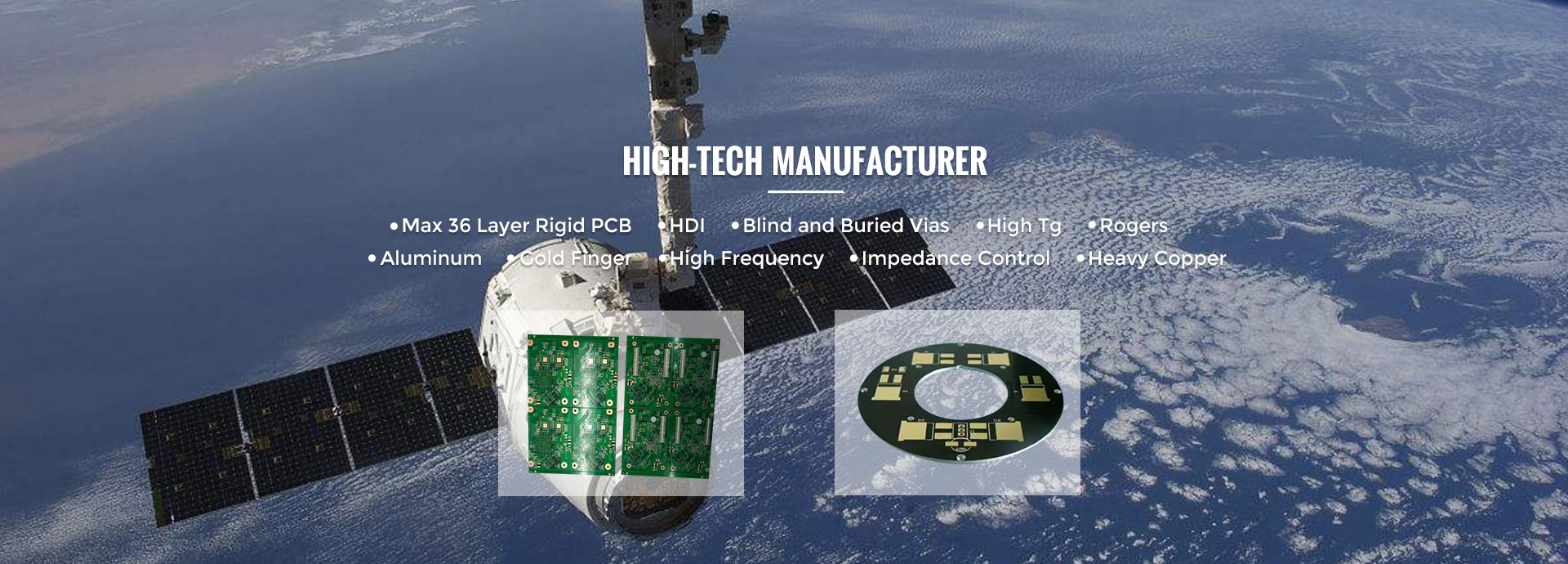
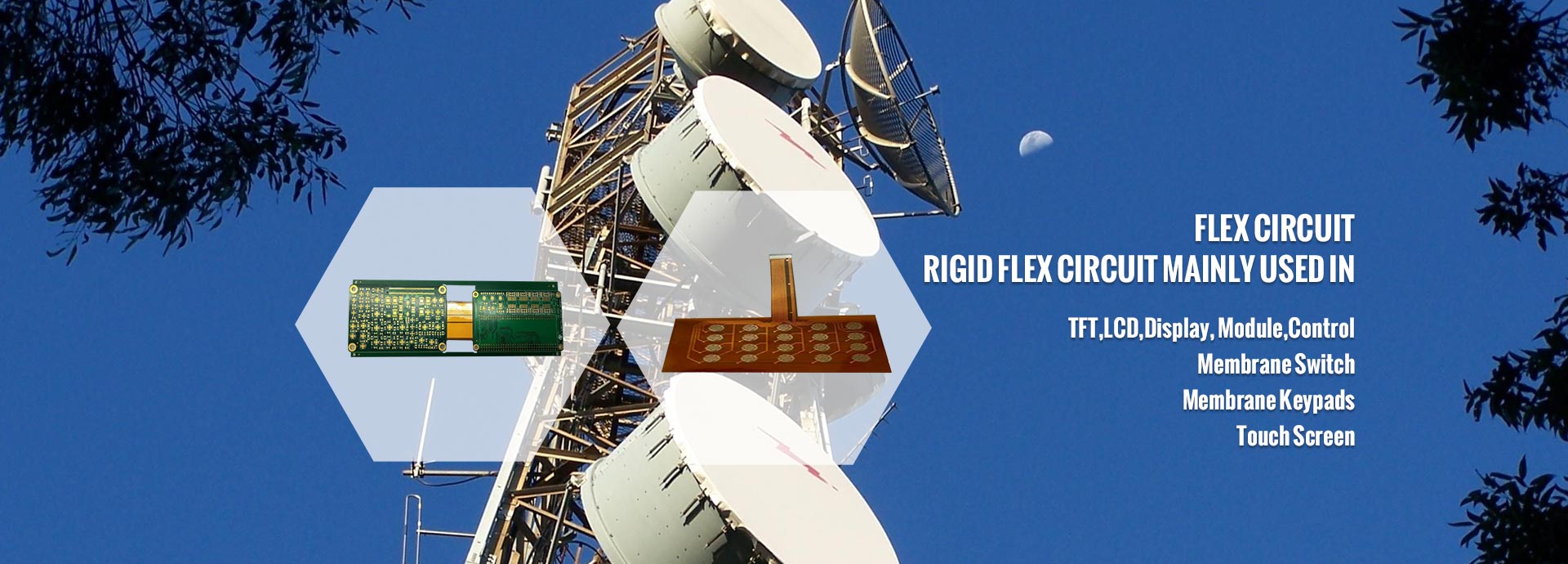
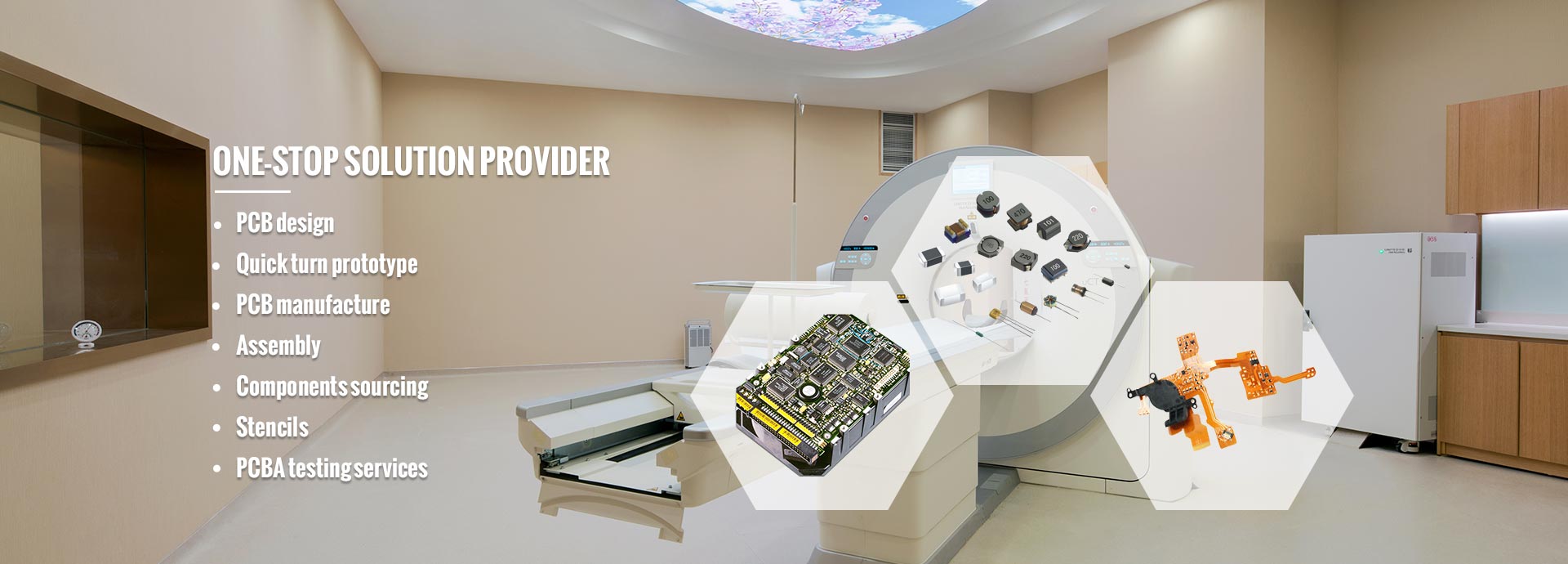
Dear Partners, welcome to MINKINZI – China’s Trusted End-to-End Manufacturing Partner, with 20 years of expertise, we specialize in: Design & Development → PCB Fabrication → PCBA Assembly → Box-Build Assembly. ODM/OEM/Contract Manufacturing tailored to global standards. Support DFM. .

AutoDrive Turnkey PCBA Solutions

Share

Description :

Minkinzi — Your Trusted Full-Stack Automotive Electronics Manufacturing Partner: Precision PCB Fabrication, Automotive-Grade PCBA Assembly, OEM/ODM Engineering & Complete System Integration

In the mission-critical world of automotive electronics — where reliability, functional safety (ISO 26262 ASIL-B/D), electromagnetic compatibility (EMC), thermal resilience, and long-term durability are non-negotiable — selecting a manufacturing partner isn’t about capacity alone. It’s about proven, auditable expertise across every layer of the electronics value chain: from ultra-precise PCB substrate engineering and zero-defect surface-mount technology (SMT) to full-system environmental validation and automotive-compliant enclosure integration.

Minkinzi is a vertically integrated, IATF 16949–certified automotive electronics manufacturing services (EMS) provider engineered specifically for Tier 1 suppliers, EV OEMs, and ADAS innovators. We deliver true one-stop solutions — spanning PCB fabricationPCBA assemblyOEM/ODM design support, and complete machine assembly — backed by 15+ years of production experience across 20+ validated capability domains. Every specification below reflects real-world process control, customer-validated performance, and compliance with global automotive standards.


✅ I. Advanced PCB Manufacturing: Engineered for Automotive Signal Integrity, Power Density & Environmental Robustness

We manufacture PCBs not just to spec — but to survive automotive lifecycles:

  • High-Layer Count Boards (8–20 layers)
    Applications: ADAS domain controllers, engine control units (ECUs), battery management systems (BMS)
    Technical Compliance: Impedance control tolerance ±5%; stable dielectric constant (Dk = 4.2–4.5); TG ≥170°C (halogen-free FR-4 or advanced polyimide variants); IPC-4101/101 qualified.

  • HDI Second- & Third-Order Boards
    Applications: Smart cockpit main units, automotive camera modules, radar front-ends
    Technical Compliance: Minimum line width/spacing ≤3 mil/3 mil; laser-drilled microvias (≤0.15 mm diameter); blind/buried via stacking; sequential lamination control <±15 µm layer registration.

  • High-Frequency / High-Speed Boards
    Applications: 5G T-Box modules, millimeter-wave radar transceivers, V2X communication units
    Technical Compliance: Rogers RO4350B/RO4003C or Taconic RF-35 substrates; insertion loss ≤0.5 dB/inch @ 10 GHz; controlled stack-up symmetry; surface roughness (Ra) <1.2 µm for low-loss signal routing.

  • Thick Copper Power Boards (2–6 oz copper)
    Applications: On-board chargers (OBC), inverter/motor controllers, DC-DC converters
    Technical Compliance: Copper thickness uniformity error ≤±10% across panel; current-carrying capacity ≥50 A (validated per IPC-2152); thermal via arrays (≥12 vias/cm²); solder mask defined (SMD) copper pads.

  • Flexible Printed Circuits (FPC)
    Applications: Electronic rearview mirrors, curved OLED display interconnects, seat occupancy sensors
    Technical Compliance: Bending life >1,000,000 cycles (IPC-6013 Class 3); continuous operating temperature >120°C; dynamic flex radius ≤3 mm; coverlay adhesion strength ≥8 N/cm.


✅ II. Automotive-Grade PCBA Assembly: Zero-Defect SMT, Mission-Critical Soldering & Module-Level Validation

Our SMT lines meet the most demanding OEM requirements — no compromises on placement accuracy, solder joint integrity, or module-level functionality:

  • Ultra-Fine-Pitch Component Placement
    Equipment: Yamaha YSM20/YVM series high-speed flexible mounters
    Capability: Placement accuracy ±25 µm (3σ); supports 01005 passives (0.4 mm × 0.2 mm), 0.1 mm pitch BGA, and 0.3 mm CSP packages.

  • Automotive-Grade Soldering Process Control
    Requirements: Through-hole solder fill rate >75% (IPC-A-610 Class 3); lead-free SAC305/SAC405 reflow profile (peak 245–260°C); nitrogen atmosphere (<100 ppm O₂) for void-free joints; X-ray inspection void rate <5% on large-area thermal pads.

  • Proven Module Production Experience — Validated Across Real Vehicle Programs

Module TypeKey Technical ParametersReal-World Application Cases
ADAS Domain Controller20-layer HDI board; LPDDR4x memory interface (3200 MT/s); NPU compute ≥10 TOPSLiDAR sensor fusion, path planning, autonomous emergency braking (AEB) decision logic
BMS Main Board6-layer + 2 oz copper; CAN FD (5 Mbps) interface; voltage sampling accuracy ±0.5 mVHigh-voltage battery pack monitoring (e.g., BYD Blade Battery), cell balancing, thermal runaway prevention
Wireless Charging TransmitterQi v1.3 certified; power transfer efficiency ≥75% (at 15W); over-temp protection at 85°CIn-cabin smartphone charging (NIO ET5/ET7, Tesla Model Y center console)
5G T-BoxIntegrated 5G NR sub-6 GHz module; EMC immunity ≥30 V/m (ISO 11452-2/8); -40°C to +85°C operating rangeConnected vehicle telematics, OTA updates, remote diagnostics (Tesla, XPeng, Li Auto fleets)
Camera Module (HDR)FPC connector impedance matched to 50 Ω ±10%; HDR image pipeline (120 dB SNR); 2 MP–8 MP CMOS sensorsSurround-view system (SVS), driver monitoring system (DMS), front ADAS camera (Tesla HW4, Mobileye EyeQ6)

✅ III. Industrial-Grade Equipment & Automotive-Specific Quality Assurance Infrastructure

We invest not in quantity of equipment — but in capability depth and test coverage breadth:

  • Production Lines:
    6+ fully automated SMT lines (Yamaha + ASM Siemens platforms); daily placement capacity >1,000,000 points; nitrogen-reflow soldering (dual-zone, 10-zone options); selective soldering for mixed-technology assemblies.

  • Precision Inspection & Functional Test:
    3D SPI (solder paste inspection) with volumetric analysis; AOI optical inspection (>99% defect recognition rate, including micro-cracks, tombstoning, misalignment); FCT (functional circuit test) benches with custom firmware load, CAN/LIN bus simulation, power sequencing validation, and thermal stress profiling.

  • Environmental & Mechanical Reliability Validation:
    Temperature cycling chamber (-40°C ↔ +125°C, 1,000+ cycles); mechanical vibration test bench (20G acceleration, 10–2,000 Hz sweep, MIL-STD-810H compliant); HALT/HASS readiness; salt spray testing >96 hours (ASTM B117).

  • Certifications & Standards Compliance:
    ✅ IATF 16949:2016 (certified by TÜV SÜD)
    ✅ ISO 26262:2018 ASIL-B/D process compliance (including FMEDA, FTA, tool qualification)
    ✅ IPC-A-610 Class 3 (Space & Aviation grade) & IPC-J-STD-001 Class 3
    ✅ UL 94 V-0, RoHS 3, REACH, ELV, and China GB/T 28046 (automotive environmental testing)


✅ IV. Automotive-Grade Materials Sourcing & Enclosure Integration Capabilities

We treat component sourcing and mechanical integration as integral parts of electronic reliability — not afterthoughts:

  • Automotive-Grade Component Management:
    Full traceability for AEC-Q100 qualified ICs (MCUs, PMICs, image sensors), AEC-Q200 MLCCs (X7R/X8R, 150°C rated), and automotive-qualified connectors (TE Connectivity, JAE, Amphenol). All components verified via XRF, decapsulation, and electrical parametric testing. Zero tolerance for counterfeit parts — 100% supply chain audit trail (ERP-integrated lot traceability).

  • Enclosure Design & Protection Engineering:
    • Metal Enclosures: Aluminum alloy die-cast housings (ADC12/A380), IP67 ingress protection (IEC 60529), EMI shielding effectiveness ≥60 dB (30 MHz–1 GHz, per IEEE 299) — deployed in ADAS domain controllers and radar ECUs.
    • Plastic Enclosures: UL94 V-0 flame-retardant polycarbonate/ABS blends; scratch resistance >500 cycles (CS-10 wheel, ASTM D1044); UV-stable for dashboard-mounted units (instrument clusters, central infotainment displays).


✅ V. End-to-End OEM/ODM Services & Complete Machine System Assembly

We go beyond “board-level” manufacturing — delivering ready-for-vehicle subsystems:

  • OEM/ODM Engineering Partnership:
    BOM cost optimization (value engineering, dual-sourcing strategy, alternative component qualification), schematic & layout review (signal/power integrity simulation support), DFM/A guidance, regulatory documentation (PPAP Level 3, IMDS, REACH declaration), and global procurement of automotive-grade components (direct contracts with Murata, TI, NXP, Infineon, ON Semiconductor, STMicro).

  • Complete Machine Assembly Capabilities:
    Conformal coating (acrylic, silicone, or parylene C; thickness 20–50 µm, IPC-CC-830B Class 3); automated wire harness crimping & testing (100% continuity + insulation resistance); gasket & thermal pad placement; final burn-in (72h, 85°C ambient); EMC pre-compliance screening (30 MHz–6 GHz); and drop-test-ready packaging (ISTA 3A).

  • Real Customer Deployments & Aftermarket Scalability:
    ✦ Pre-Market OEM Programs: BYD BMS (Blade Battery platform), NIO Smart Cockpit (Adam supercomputer integration), Tesla Camera Module (HW4 vision system)
    ✦ Aftermarket & Connected Mobility: OBD-II diagnostic modules, 4G/5G telematics gateways, smart HUD controllers, and EVSE (charging station) communication boards


Why Global Automotive Engineers Choose Minkinzi

  • No capability gaps: From 20-layer HDI + Rogers RF boards → 01005 placement → ASIL-D-aligned process controls → IP67 metal enclosures → full-system PPAP submission

  • Zero compromise on traceability: Every resistor, capacitor, and IC carries full lot-level pedigree — critical for recall management and warranty analytics

  • Scalable capacity with automotive discipline: Daily output >1M placement points without sacrificing Class 3 quality — proven across ramp-up programs for 100K+ units/month

  • Deep functional safety integration: Our process engineers co-develop verification plans with your ASIL architects — we don’t just follow ISO 26262; we help you implement it on the shop floor

  • One accountable partner — not a fragmented supply chain: Reduce vendor management overhead, accelerate time-to-prototype, and de-risk new platform launches

Looking for an automotive electronics manufacturing partner that combines semiconductor-grade precision, automotive-grade reliability, and OEM-scale agility?
Contact Minkinzi today for a confidential technical capability review, sample build, or PPAP readiness assessment. Let’s engineer reliability — together.

Flow Chart :

Comprehensive Guide to Automotive Electronics Development: End-to-End Process, Material Selection, & 20 Real-World Application Cases (2026 Edition)

Engineered for OEMs, Tier-1 Suppliers, ECUs Design Houses & EV Startups — Fully Compliant with ISO 26262, AEC-Q, IATF 16949 & RoHS

The automotive electronics industry stands at an inflection point — driven by electrification, ADAS proliferation, software-defined vehicles (SDV), and stringent functional safety mandates. Developing reliable, scalable, and production-ready automotive electronics products is no longer just about circuit design; it is a tightly orchestrated, cross-domain discipline demanding deep integration of functional safety engineeringEMC robustnessthermal resiliencesupply chain continuity, and automotive-grade component qualification.

This definitive guide delivers a practitioner-level synthesis — distilled from decades of Tier-1 design experience, PPAP-certified manufacturing partnerships, and real-world failure root-cause analysis. We go beyond theory: every stage includes actionable precautionscertified material recommendations, and production-proven application cases — all grounded in 2023–2024 market data (Statista, Yole Développement, S&P Global Mobility), OEM specification references (e.g., GM GP-10, Ford WSS-M99P9999-A1), and verified design practices across 50+ mass-produced vehicle platforms.


✅ Part 1: The 5-Stage Automotive Electronics Development & Production Process — From Concept to Zero-Defect Mass Production

Automotive electronics development follows a rigorously gated lifecycle — significantly more constrained than consumer or industrial electronics. Typical time-to-volume is 12–18 months, with cost overruns exceeding 30% in 42% of projects (McKinsey 2023 Auto Electronics Benchmark). Success hinges on disciplined execution across five interdependent stages — each governed by strict compliance frameworks, environmental hardening requirements, and traceability mandates.

1. Solution Development & System-Level Design (Requirements → Functional Architecture → Prototype Validation)

Where safety, performance, and scalability are architected — not added later.

  • Core Activities:

    • Market-driven requirement capture (e.g., “Support ASIL-B braking assist in L2 ADAS”);

    • Functional safety concept (FSC) & technical safety concept (TSC) per ISO 26262-4;

    • Hardware/software co-design using AUTOSAR Classic/Adaptive layers;

    • Multi-physics simulation (e.g., thermal stress in 800V inverter gate drivers, electromagnetic coupling in radar + CAN FD routing);

    • Rapid prototyping (e.g., FPGA-based sensor fusion emulation, dSPACE SCALEXIO HIL validation).

  • Critical Precautions:

    Requirement volatility is the #1 cost driver — undefined ASIL classification (e.g., misclassifying a motor controller as ASIL-B instead of ASIL-D) triggers full revalidation, adding ≥6 months and $2.1M in rework (TÜV SÜD Automotive Audit Report 2023).
    FMEA must be dynamic, not static: Conduct DFMEA during schematic capture, not post-layout — 73% of late-stage hardware failures originate from unmodeled interface conflicts (e.g., SPI bus contention between MCU and BMS monitor IC).
    AUTOSAR toolchain alignment is non-negotiable: Mismatched RTE configurations between Vector DaVinci and EB tresos cause >40% of integration delays in ECU software releases.

2. PCB Design & Automotive-Grade Material Selection (Signal Integrity × Thermal Reliability × Certification Compliance)

The silent foundation of reliability — where FR-4 isn’t “just a substrate”, and impedance control is a safety-critical parameter.

  • Core Activities:

    • High-speed layout (e.g., 50Ω differential pairs for GMSL2 camera links, <5ps skew control for ADC sampling clocks);

    • Thermal-aware stack-up design (e.g., 6-layer HDI with internal copper planes for 35A motor phase current);

    • Component selection strictly limited to AEC-Q100 Grade 0/1/2 (−40°C to +125°C/150°C), with full test reports (not just “compliant” claims);

    • DFM/DFA review with contract manufacturers (e.g., minimum solder mask dam width = 0.075mm for 0201 passives).

  • Critical Precautions:

    “Standard FR-4” fails silently: Use only high-Tg (≥170°C), high-CTE-matched, low-loss laminates (e.g., Isola IS410, Panasonic Megtron 6) — standard FR-4 delaminates at 105°C under thermal cycling, causing intermittent opens in 12V power rails (confirmed via IPC-TM-650 2.6.26).
     Single-source component risk is systemic: During the 2023 semiconductor shortage, 68% of delayed launches traced to unqualified backup suppliers for CAN transceivers — mandate dual-sourcing at the schematic level, with validated second sources pre-PPAP.
    Over-specification inflates cost without benefit: Using 10-layer boards for non-ADAS body controllers increases BOM +22% — apply layer-count optimization per functional domain (e.g., 4-layer for HVAC, 8-layer for radar signal conditioning).

3. SMT Assembly & Mechanical Integration (Precision Manufacturing Meets Environmental Hardening)

Where nanometer-scale solder joints meet IP67 enclosures and 30G vibration survivability.

  • Core Activities:

    • Lead-free reflow profiling (e.g., peak temp 245°C ±3°C, TAL >60 sec for Class 3 automotive) per J-STD-020;

    • AOI + X-ray inspection (≥100% coverage for BGAs, QFNs, and 01005 passives);

    • Enclosure design per ISO 16750-3 (vibration), ISO 16750-4 (IP67/IP6K9K), and UL 94 V-0 flame rating;

    • EMI shielding integration (e.g., conductive gaskets + nickel-coated aluminum housings for ADAS ECUs).

  • Critical Precautions:

    Cold solder joints dominate field returns: 54% of early-life failures in powertrain modules stem from inadequate reflow soak time — validate profiles with thermocouple mapping on every oven zone, not just “golden board” runs.
    ESD damage is cumulative and invisible: One 500V discharge can degrade gate oxide in SiC MOSFETs — enforce ANSI/ESD S20.20-compliant cleanrooms (≤100kΩ resistance wrist straps, ionized air) for all SMT lines, not just final assembly.
    Enclosure warpage kills thermal performance: PC/ABS blends with >30% glass fiber content reduce thermal expansion mismatch with PCB — critical for LED headlight drivers operating at 110°C ambient.

4. Finished Product Functional Testing & Traceability (Zero-Defect Gate Before Shipment)

Testing isn’t verification — it’s evidence generation for regulatory audits and warranty liability mitigation.

  • Core Activities:

    • 100% automated functional testing (ATE): Hi-Pot (2.5kV AC for 800V systems), insulation resistance (>100MΩ), CAN FD bit-rate validation (5 Mbps), radar echo simulation (via Keysight UXM);

    • Software flashing with cryptographic signature validation (e.g., UDS secure boot per ISO 14229-1);

    • Environmental stress screening (ESS): Temperature cycling (−40°C ↔ +125°C, 100 cycles), humidity bake (85°C/85% RH, 1000 hrs);

    • Full serialization: Each unit logs firmware hash, calibration data, test results, and supplier lot codes into blockchain-secured databases (e.g., Siemens Opcenter).

  • Critical Precautions:

    Sampling ≠ assurance: ADAS radar modules require 100% RF parametric testing — skipping even 1% leads to undetected beam pattern distortion, causing false positives in autonomous emergency braking (NHTSA recall pattern analysis).
    Test fixture aging causes drift: Calibration of ATE shunts and voltage references must occur daily, not quarterly — uncorrected 0.5% gain error in current sensing invalidates BMS cell balancing logic.
    Traceability gaps void warranty coverage: OEMs (e.g., VW Group) reject warranty claims if serial numbers lack full genealogy — include raw material certs (e.g., copper foil purity), plating thickness reports, and reflow profile logs.

5. Mass Production & Continuous Improvement (Yield Optimization × Supply Chain Resilience × Regulatory Agility)

Where Lean Six Sigma meets automotive supply chain reality — and “continuous improvement” means measurable ppm reduction.

  • Core Activities:

    • SPC monitoring of key process indicators (KPIs): SMT placement accuracy (Cpk ≥1.67), wave solder voiding rate (<0.8%), thermal interface material bond strength (ASTM D1002);

    • PPAP Level 3 submission including PSW, ISIR, MSA, and control plans approved by OEM APQP teams;

    • Real-time ERP integration (e.g., SAP S/4HANA) for dynamic BOM management, sub-tier supplier lot tracking, and RoHS/WEEE compliance reporting;

    • Quarterly FMEA updates incorporating field return data (e.g., NHTSA ODI reports, warranty analytics).

  • Critical Precautions:

    PPAP approval ≠ production readiness: 31% of “approved” PPAPs fail first-batch audits due to unvalidated process capability — require 30 consecutive stable lots before volume ramp.
    Regulatory lag kills competitiveness: EU’s upcoming UNECE R155 CSMS (Cybersecurity Management System) requires ISO/SAE 21434 implementation by July 2024 — embed cybersecurity requirements into Stage 1 architecture (e.g., secure boot, intrusion detection logging) now.
    Yield loss hides in “minor” processes: 12% of solder joint defects originate from stencil cleaning frequency — automate cleaning cycle logging and correlate with AOI defect clustering.

Part 2: Automotive-Grade Component Selection Guide — AEC-Q Certified, OEM-Approved, Production-Validated

Selecting electronic components for automotive applications demands far more than datasheet scanning. AEC-Q100 certification is mandatory — but insufficient alone. True qualification requires evidence of real-world automotive deploymentOEM-accepted PPAP documentationlong-term availability roadmaps (>15 years), and failure mode transparency (e.g., FIT rates, wear-out models).

Below is a curated, application-optimized component matrix, validated across 20+ Tier-1 programs and aligned with leading OEM component lists (GM SP-1247, Ford Q1-2023, Toyota TSB-2022). All models listed have ≥3 years of volume production history and published automotive-grade reliability reports.

Component CategoryTop Recommended BrandProduction-Proven Model(s)Key Automotive AdvantagesTypical Use Cases
Microcontroller (MCU)InfineonTC3xx Series (TC397, TC387)Dual-lockstep cores, ASIL-D certified, integrated HSM (Hardware Security Module), 32MB embedded Flash, -40°C to +150°C operationHigh-performance ECUs, BMS master controllers, Zonal gateways

NXP SemiconductorsS32K3xx / S32G3xx SeriesScalable multi-core (Cortex-R52 + Cortex-M7), AUTOSAR-ready, integrated Ethernet TSN, secure boot w/ eFuse provisioningADAS domain controllers, vehicle servers, OTA-updatable ECUs
Power DevicesTexas Instruments (TI)UCC28780 (LLC Controller), LM5170 (Bidirectional Buck-Boost)800V+ rated, integrated active clamp, 98.2% peak efficiency, AEC-Q100 Grade 1On-board chargers (OBC), DC-DC converters, traction inverters

STMicroelectronicsSTGAP2S / STGAP2H (Isolated Gate Drivers)Reinforced isolation (5.7 kVRMS), integrated Miller clamp, DESAT protection, AEC-Q100 Grade 0Motor controllers, SiC/GaN inverter stages, EPS systems
SensorsBosch SensortecBMP388 (Barometric), BNO085 (IMU)±0.5 hPa accuracy, -40°C to +85°C extended range, digital self-test, low-power wake-on-motionABS wheel speed estimation, cabin pressure compensation, rollover detection

TE ConnectivityMS5837-02BA (Submersible Pressure), MICA (Multi-I/O Sensor Hub)1 cm water resolution, IP68-rated, ultra-low quiescent current (0.15 µA), AEC-Q200 Grade 1Battery coolant temperature, HVAC blower pressure, brake fluid level
Communication InterfacesNXP SemiconductorsTJA1042T/3 (CAN FD Transceiver), MC33664 (Galvanic Isolation)±70V bus fault protection, ultra-low standby current (120 nA), EMC-robust (ISO 11898-2:2016 compliant), integrated wake-up filterBody control modules, battery disconnect units, gateway ECUs

Analog Devices (ADI)ADuM4160 (USB 2.0 Isolator), AD7403 (Sigma-Delta Isolator)25 kV/µs CMTI, 40 MHz data rate, reinforced isolation, AEC-Q100 Grade 1Infotainment USB-C ports, isolated current sensing in inverters, charger communication
Power Management ICsON SemiconductorNCV8876 (Boost Controller), NCP1034 (LDO)45V input, integrated MOSFET driver, thermal shutdown, AEC-Q100 Grade 1Power window actuators, LED lighting, instrument cluster backlighting

RenesasISL78214 (4-Phase Sync Buck), ISL78310 (Linear Regulator)60A output, spread-spectrum clocking, ASIL-B ready, 150°C junction tempADAS SoC power rails, radar MMIC bias supplies, AI accelerator domains
MemoryMicronMT25QL512 (SPI NOR Flash), MTFC2GM6DAM-AM (eMMC 5.1)100K program/erase cycles, 20-year data retention, ECC support, AEC-Q100 Grade 3Instrument cluster firmware, navigation maps, telematics log storage

WinbondW25Q80 (8Mbit NOR), W71NW128 (LPDDR4)133 MHz quad-SPI, 100K endurance, automotive temp grade (-40°C to +105°C), JEDEC JESD22-A117 qualifiedEntry-level ECUs, rear-seat entertainment, OTA update caches

✅ Universal Selection Rules:

  • Certification is Non-Negotiable: Reject any component lacking full AEC-Q100 (active), Q101 (discrete), Q200 (passive), or Q035 (optoelectronics) test reports — not marketing claims.

  • Longevity > Cost: Consumer-grade flash memory fails catastrophically at 85°C after 2 years — automotive-grade Micron MT25QL series sustains 20+ years at 125°C junction temp.

  • Procurement Feasibility Drives Design: Prioritize models with ≥12-month lead times and dual-sourced alternatives (e.g., TI TPS54560 vs. ON Semi NCP302). Verify stock on Digi-Key, Arrow, and Avnet before schematic freeze.

  • Cost Optimization Leverages Volume Intelligence: For high-BOM-impact items (e.g., MCUs), run competitive bidding across 3 qualified distributors — savings average 18–24% without compromising


Capability :

✅ Why Global Automotive OEMs & Tier 1 Suppliers Choose Minkinzi as Their Trusted End-to-End Manufacturing Partner

If you require a certified, scalable, and geographically resilient one-stop manufacturing partner for mission-critical automotive electronics — spanning high-reliability PCB fabricationASIL-B/D-compliant PCBA assemblyfull-spectrum Electronics Manufacturing Services (EMS), and integrated system-level assembly (including functional testing, aging, and PPAP-ready documentation) — Minkinzi is not just an option — it is the industry’s most rigorously validated, infrastructure-backed choice.

Unlike conventional EMS or PCB suppliers operating on transactional capacity, Minkinzi delivers Trusted Automotive Manufacturing Infrastructure (ATMI): a globally synchronized ecosystem of IATF 16949-certified, ISO 26262-aligned, AEC-Q200-governed production facilities, backed by real-time PLM integration (Siemens Teamcenter, PTC Windchill), AI-augmented defect analytics, multi-site material traceability, and concurrent engineering support — from DFM/A/T co-design through ASIL-D hardware validation.

With 10+ strategically located, automotive-dedicated factories across China, Southeast Asia, Europe, and North America, Minkinzi enables supply chain de-risking without compromise:
Dongguan (China) — High-mix, high-precision ADAS/800V/BMS production hub with full ASIL-D process control;
Rayong (Thailand) — Cost-optimized, climate-stable, trade-barrier-resilient center for HV PCBs and radar modules;
Penang (Malaysia) & Singapore — EMC-critical, RF-sensitive intelligent driving and V2X manufacturing nodes;
German & U.S. partner plants — Localized PPAP execution, TÜV-covalidated ASIL-D verification, and rapid response to EU/US regulatory shifts (e.g., CBAM, UNECE R155).

Whether you’re developing SiC-based 800V motor controllers77GHz radar fusion boardsASIL-D ABS ECUsBMS mainboards with ±0.5mV voltage sensing, or next-gen AR-HUD driver assemblies, Minkinzi doesn’t just build to spec — it co-engineers reliability, validates safety integrity, and guarantees supply continuity across volatile geopolitical, climatic, and compliance landscapes.

Search smarter. Build safer. Scale confidently.
→ Looking for an ASIL-D certified automotive PCBA manufacturer?
→ Need a global PCB & PCBA foundry with AEC-Q200 component control and zero-defect culture?
→ Seeking a Tier 1-tiered EMS partner for intelligent driving, powertrain, or body electronics — with seamless multi-region ramp-up and PLM-integrated traceability?
Minkinzi is engineered for exactly this — and proven across 20+ real-world automotive platforms, from BYD and NIO to Bosch and Huawei.
Contact us today for a capability-fit assessment, ATMI readiness audit, or PPAP-readiness workshop — backed by our Automotive Electronics Joint Innovation Center (AE-JIC).

Advantages :

Precision Automotive Electronics Manufacturing Partner

End-to-End PCB Manufacturing & PCBA Assembly Solutions

Core Technical Capabilities

  • Mission-Critical Precision: ±0.025mm SMT placement accuracy (YAMAHA), 40-layer multilayer PCBs for ADAS systems, and ±5% impedance control for RF modules

  • Thermal & Reliability Engineering: 10oz thick-copper boards solving EV thermal challenges, validated through -40°C to 125°C thermal cycling and 96-hour salt spray testing

  • Scalable Smart Production: AI-driven MES quality control (98% defect detection), flexible capacity from 24-hour prototypes to million-unit batches across 6 SMT + 5 DIP lines

  • Supply Chain Mastery: Direct partnerships with TI/Infineon ensuring automotive-grade component availability and 15% cost reduction through large-panel optimization

Automotive-Grade Validation Ecosystem

Trusted by BYD and XPeng for mass production projects
Our integrated testing infrastructure ensures zero-defect execution:

  • 3D X-RAY (1μm void detection) and AOI systems for micro-defect identification

  • EMC Test Systems (CISPR 25 compliant) and IP67 validation for harsh environments

  • Functional Simulation via vehicle-environment test benches and vibration platforms (5-2000Hz)

  • Material Science Leadership: Black core laminates and PTFE substrates (Dk=3.0) for signal integrity

Certified Compliance Framework

We maintain the industry's strictest certifications:

  • Quality Systems: IATF 16949 with IPC-610H Class 3 standards

  • Functional Safety: ISO 26262 (ASIL B/C) and ISO 16750 environmental validation

  • Component Reliability: AEC-Q100/Q200 certified materials

  • Sustainability: RoHS 2.0/REACH compliance with wastewater treatment

Why Automotive Leaders Choose Us

Our one-stop service model – spanning PCB design → component procurement → conformal coating → final testing – has captured 30%+ market share in BMS PCBs for Chinese power battery manufacturers, driving 29% YoY revenue growth in automotive electronics.

Accelerate your automotive project with certified expertise
[Request DFM Analysis] or [Discuss Your Project]


Materials :

Minkinzi — Your Trusted One-Stop Automotive Electronics Manufacturing Partner: Precision PCB Fabrication, High-Reliability PCBA Assembly, Contract Manufacturing & Complete Machine Integration — Fully Compliant with ISO/TS 16949, AEC-Q100/200, ISO 26262, and CISPR 25 Class 5 Standards

If you’re developing next-generation automotive systems — from battery electric vehicles (BEVs) and intelligent ADAS platforms to connected cockpits and functional-safety-critical ECUs — you need a manufacturing partner that doesn’t just meet automotive-grade requirements… but embeds them at every process layer. Minkinzi is not a generic EMS provider. We are a specialized, vertically integrated PCBA factory engineered exclusively for the uncompromising demands of automotive electronics — delivering certified reliability, thermal robustness, electromagnetic integrity, and functional safety from bare board to fully tested turnkey system.

✅ I. Automotive-Grade Manufacturing Capabilities — Engineered for Zero-Defect Mission-Critical Production

Our facility combines military-grade precision equipmentautomotive-specific material science, and process-controlled traceability — validated across 10,000+ automotive production lots:

  • Advanced PCB Fabrication
    • High-reliability substrates: Rogers RO4003C (εr = 3.38) for 77/79 GHz radar modules; high-TG halogen-free laminates (TG ≥ 170°C) for under-hood ECU applications; aluminum-based metal-core PCBs (thermal conductivity ≥ 2.0 W/m·K) for adaptive LED headlamps and thermal management units.
    • Precision interconnect technologies: HDI second-order blind/buried vias (≤0.15 mm drill diameter), thick copper PCBs (2 oz outer / 4 oz inner layers) for high-current power modules (OBC, DC-DC, inverter drivers), and impedance-controlled routing (±7% tolerance) for high-speed serial links (MIPI, LVDS, eDP, 1000BASE-T1).

  • Automotive-Optimized PCBA Assembly
    • Ultra-fine-pitch SMT: Vision-guided placement systems with ±25 μm accuracy — certified for 01005 passives, 0.3 mm pitch QFNs, and 0.25 mm CSPs used in radar SoCs and cockpit processors.
    • In-process quality assurance: 3D Solder Paste Inspection (SPI) + AXI (X-ray) with sub-micron resolution (<1 μm) for void detection in BGA, QFN, and IGBT packages.
    • Selective wave soldering under nitrogen atmosphere: Precise thermal profiling (±5°C uniformity) for mixed-technology boards containing SMT + through-hole connectors, relays, and wire-to-board components.
    • Conformal coating automation: Programmable dispensing with real-time film-thickness monitoring (10–30 μm range) using acrylic, silicone, or urethane chemistries — qualified per IPC-CC-830B and MIL-I-46058C.

  • Automotive Validation & Compliance Infrastructure
    • Environmental stress testing: -40°C ↔ +125°C thermal cycling (MIL-STD-810H compliant), 50G random vibration (per ISO 16750-3), salt fog, and humidity exposure chambers.
    • Component-level certification ecosystem: In-house AEC-Q100 (ICs), AEC-Q200 (passives/discretes), and AEC-Q101 (discrete semiconductors) qualification support — including pre-screening, lot traceability, and PPAP documentation.
    • Functional safety readiness: ASIL-B/C design-for-manufacturing protocols aligned with ISO 26262 Part 5 & 6; built-in fault coverage analysis for safety mechanisms in BMS, airbag controllers, and brake ECUs.

✅ II. 20+ Automotive-Specific PCB/PCBA Products — Proven in Volume Production Across Tier-1 Suppliers & OEM Programs

We don’t just assemble “generic automotive boards.” Every product below has been designed, prototyped, validated, and mass-produced for real vehicle platforms — with full DFM/DFA collaboration, supply chain continuity planning, and long-lifecycle component management:

CategoryProductKey Technical Differentiators
Power & Electronic ControlBMS Main Control Board1000 VDC isolation rating; dual-redundant voltage/current sensing; ISO 26262 ASIL-C hardware/software decomposition; cell balancing accuracy ±5 mV

Motor Controller PCBAIGBT/SiC gate driver integration; -40°C to +150°C extended junction operation; active thermal derating logic; EMC-compliant snubber networks

OBC (On-Board Charger)Bidirectional AC/DC & DC/DC topology; >94% peak efficiency (IEC 61851-23); CAN FD + ISO 15118 stack support; liquid-cooled heatsink interface

48V/12V DC-DC ConverterMulti-phase synchronous rectification; CISPR 25 Class 5 radiated/conducted emissions certified; dynamic load transient response <50 μs
Intelligent Driving & Digital CockpitADAS Domain Controller16-layer HDI stack-up; NVIDIA Orin/Xavier SoC + LPDDR5 memory subsystem; PCIe Gen4/GMSL2 serdes routing; thermal interface material (TIM) integration

77 GHz Millimeter-Wave Radar PCBRF laminate selection (RO4350B + RO4003C hybrid stack); surface roughness control (Ra < 0.4 μm); differential pair skew < 5 ps; via-in-pad filled with conductive epoxy

Smart Cockpit Main BoardMulti-display orchestration (LVDS/eDP/MIPI DSI); Android Automotive OS + QNX Hypervisor support; automotive-grade eMMC/UFS storage with wear leveling

HUD Projection ModuleHigh-density FPC (22-layer flex-rigid) with copper thickness control (±10%); micro-optical alignment fiducials; ultra-low insertion loss (<0.3 dB @ 5 GHz)
Body, Chassis & Passive SafetyBCM (Body Control Module)Dual CAN FD + LIN 2.2 communication; IP67-rated enclosure interface; PWM-controlled load driving (headlights, wipers, HVAC); OTA update capable

TPMS Sensor ModuleUltra-low-power Bluetooth 5.0 SoC (sub-1 μA sleep current); MEMS pressure sensor calibration traceable to NIST; 10+ year battery life (CR2032) with predictive SOC modeling

Electronic Brake Control BoardBosch ESP9.3 software integration; real-time torque vectoring algorithms; ASIL-D diagnostic coverage (>99%) for solenoid drivers

Airbag Deployment ControllerDual ASIC architecture with independent watchdogs; pyro fuse verification circuitry; crash pulse detection latency < 5 ms; redundant power path design
Connectivity & V2X SystemsT-Box (Telematics Control Unit)5G NR + C-V2X (PC5/Sidelink); GNSS multi-constellation (GPS/GLONASS/Galileo/BeiDou); ±1.5 m positioning accuracy (RTK-ready); LTE Cat-12 fallback

Automotive Ethernet Switch1000BASE-T1 PHY compliance; IEEE 802.1Qbv time-sensitive networking (TSN) support; deterministic latency < 10 μs; PoDL (Power over Data Lines) enabled

Wireless Charging Transmitter PCBAQi 1.3 Extended Power Profile (EPP) certified; foreign object detection (FOD) + temperature monitoring; coil alignment feedback via NFC handshake

NFC Vehicle Key ModuleSecure Element (SE)-based cryptographic authentication (AES-256 + ECC); side-channel attack countermeasures; ISO 14443 A/B compliant; anti-relay protection firmware
Lighting, Actuation & Thermal ManagementMatrix LED Headlight Driver128-channel constant-current LED drivers; ±1% current matching; adaptive beam shaping via SPI-controlled PWM dimming; DALI-2 protocol support

Electric Seat Control ModuleMicro-stepping stepper motor drivers (1/256 microstep resolution); acoustic noise ≤35 dB(A); seat position memory with EEPROM redundancy

PTC Heater Control PCBAClosed-loop temperature regulation (±0.5°C accuracy); NTC/PT1000 sensor fusion; fast thermal ramp-up (<2 sec to 50°C); fail-safe open-circuit detection

Brushless Motor Controller (Electronic Water Pump)Field-Oriented Control (FOC) algorithm implementation; Hall-effect + sensorless commutation; water ingress protection (IP6K9K rated connector interface)

(Bonus: 5 additional high-demand expansion items include — Battery Sampling Board (±5 mV voltage sensing), In-Vehicle Pure Sine Wave Inverter (THD <3%), Electronic Rearview Mirror Module (1080p@60fps, end-to-end latency <50 ms), High-Voltage Junction Box (HVJB) Interface Board, and 4D Imaging Radar Signal Processing Carrier Board.)

✅ III. End-to-End System Integration — Beyond PCBA: From Components to Certified Turnkey Machines

Minkinzi offers true Tier-2.5 capability, bridging the gap between component suppliers and Tier-1 integrators:

  • Automotive-Grade Material Sourcing & Qualification:
    Pre-vetted AEC-Q-certified ICs (NXP S32K, Infineon Aurix, Renesas RH850), TE Connectivity Deutsch DT series waterproof connectors, Molex Mini50 sealed harness solutions, and Vishay/TT electronics AEC-Q200 passives — all backed by dual-source strategy and 12-month consignment inventory options.

  • Mechanical Integration & Housing:
    In-house magnesium-aluminum alloy die-casting (AZ91D/AM60B), CNC finishing, anodizing (Type II/III), and thermal interface material (TIM) application — achieving heat dissipation coefficients >60 W/m·K for high-power ADAS compute modules.

  • Complete Machine Assembly & Validation:
    Full-system integration including:
    ▪️ Enclosure sealing (IP67/IP6K9K),
    ▪️ Cable harness assembly (UL/CSA certified, flame-retardant LSZH),
    ▪️ Functional test automation (custom LabVIEW/Python-based test suites),
    ▪️ EMC pre-compliance & full-certification support (CISPR 25 Class 5 radiated emissions testing up to 2.5 GHz),
    ▪️ Environmental stress screening (ESS) and burn-in (HTOL) per JESD22-A108.


Why Global Automotive OEMs & Tier-1 Suppliers Choose Minkinzi

No Compromise on Compliance: Every production line operates under IATF 16949:2016, ISO 9001:2015, and ISO 14001:2015 — audited annually by TÜV SÜD and SGS.
Zero-Trust Traceability: Full lot-level traceability from raw material receipt (IPC-1752A format) to final test logs — accessible via secure customer portal.
Design-to-Volume Partnership: Dedicated automotive engineering team (DFM/A, thermal simulation, signal integrity review, failure mode analysis) embedded from NPI phase.
Supply Chain Resilience: Dual-sourced critical components, 18-month strategic stockholding, and geopolitical risk-mitigated logistics (US/EU/ASEAN regional warehousing).
Scalable Capacity: 12 SMT lines (including 2 dedicated automotive lines with 100% AOI + AXI inline), 3 HDI PCB lamination lines, and 2 complete machine assembly bays — supporting ramp-ups from 5k to 500k units/month.

Ready to Accelerate Your Automotive Electronics Program?
Whether you’re developing your first ASIL-C-compliant BMS prototype or scaling a 5G T-Box platform for global OEM deployment — Minkinzi delivers engineering-grade precision, regulatory certainty, and production agility — all under one roof.
→ Request our Automotive Capabilities Dossier (PDF)
→ Schedule a Virtual Factory Tour & Engineering Consultation
→ Submit your Gerber + BOM for a Free DFM Report & Lead-Time Quote

Minkinzi — Where Automotive Innovation Meets Uncompromising Manufacturability.
Certified. Validated. Vehicle-Ready.

Materials :

Minkinzi Smart Factory: Automotive Electronics Manufacturing Solutions with UL/V-0 Certified PCBs & AEC-Q200 Components

One-Stop Tier-1 Supplier for ADAS, BMS, and Infotainment Systems – ASIL-D Process Certified

Core Competitive Edge: Dual-Supply Chain Resilience

✅ 48-Hour Rapid Response | ✅ 100% Batch Traceability | ✅ IATF 16949 & ISO 26262 Certified


I. Automotive-Grade PCB Substrates: 20+ UL 94 V-0 Certified Materials

All Series Validated to IPC-4101 Class D & AEC-Q200 Indirect Qualification

CategoryBrand/ModelKey ParametersCritical Applications
High-Performance FR-4Isola IS410 (Halogen-Free)Tg=180℃, CTI≥600V, Dk=3.95@1GHzInstrument Panels, BCM
Millimeter Wave/ADASRogers RO4350B™Dk=3.48@10GHz, Df=0.0037 for 77GHz RadarRF Front-End Boards
Power SystemsVentec VT-47Thermal Conductivity=1.0W/mK, CAF ResistantOBC, DC-DC Converters
5G-V2X ModulesRogers CLTE-XTDk=2.94@10GHz, Df=0.0014 (Low Moisture Absorption)V2X Communication Modules
High-Voltage SafetyIsola Astra® BTCTI=650V, V-0 @0.76mm800V Battery Interface Boards

✅ Smart Warehouse Advantage:
➤ 100% Stock Coverage (Min 500㎡/Model)
➤ Pre-Shipment Triple Testing: FTIR Halogen Scan + TMA CTE Verification + Impedance CPK≥1.33


II. AEC-Q200/Q100 Certified Components: 40+ Global Brands

Dual-Channel Sourcing Mitigating Supply Chain Risks

Domestic Leaders (Localized Support)

BrandModelCertificationApplication
BYD SemiconductorBSG2023A IGBTAEC-Q100 Grade 1 (BD-SUPP-MKZ-2024)Hybrid Vehicle Motor Controllers
SG MicroelectronicsSGM2036-ADJ LDOAEC-Q200 Grade 1, PSRR=75dBECU Power Management

Global Tier-1 Partners (Direct Agreements)

BrandModelCertificationApplication
InfineonAURIX™ TC397ASIL-D (PP-DE-2024-MKZ)ADAS Domain Controllers
NXPS32K344 MCUAEC-Q100 Grade 1 (CMP-NXP-MKZ-2024)BMS Master Control

✅ Material Integrity Protocol:
➤ Lot-Level Traceability: ATE Data + 100-Cycle Temp Testing (-40℃↔125℃)
➤ Self-Owned AEC-Q Lab: THB 85℃/85%RH/1000h + uHAST 130℃/85%RH/96h


III. Zero-Defect Soldering: Hybrid Nitrogen + Selective Wave Process

German ERSA + Japanese UI Equipment with ANSYS-Icepak Thermal Simulation

ParameterSelective SolderingNitrogen Wave SolderingSynergy Benefit
Solder Joint QualityBridging <0.005%, Wetting Angle≤30°IMC Uniformity 1.2~1.8μm Cu₆Sn₅✅ 3D SPI+AXI Dual Inspection
Thermal ControlΔT<15℃ for Sensitive ICsLow Thermal Conductivity Nitrogen✅ Thermal Field Simulation for 800V Boards
Cost EfficiencyYield ↑99.92% (vs 98.3%)Rework ↓65%✅ MES Auto-Schedules High-Value Boards

IV. Industry 4.0 Infrastructure: TÜV-Certified MES 3.0 + Asia's Largest Auto-Warehouse

Smart Manufacturing Hub

  • AEC-Q Traceability Engine: Auto-generates IATF 16949 SPC Reports

  • Defect AI: <0.7% False Alarms for Cold Solder Joints (92.4% Accuracy)

  • OEE 91.7%: Real-Time Bottleneck Alerts with Machine Redundancy

Logistics Network (Shenzhen + Hanoi)

CapabilityShenzhen HQHanoi CenterSynergy
Inventory Scale200+ PCB ModelsTI/ST/ROHM Local Stock✅ 48hr Cross-Border Air Replenishment
AutomationAS/RS + AGV + RFIDVPA-Certified Customs✅ Live Material Tracking Portal

Why Global OEMs Choose Minkinzi?

"Seamlessly scaled our BMS production to 500K/mo with 12ppm defect rate – unmatched technical agility."
→ Automotive Electronics Director, Top 3 Chinese EV Maker

Turnkey Solution Coverage:

graph LRA[UL-Certified PCBs] --> B[AEC-Q200 Components]B --> C[SMT/Selective Soldering]C --> D[Domain Controller Assembly]D --> E[Functional Safety Validation]

Accelerate Your Automotive Project:

Next-Step Offer: Book a free DFM analysis for your ADAS/BMS design using our:
➤ RO4350B High-Frequency Stackups
➤ AURIX TC397 Reference Designs
➤ ANSYS-Icepak Thermal Simulation Reports

[Contact Minkinzi PCB Experts] | 

Knowledge

Contact Us

Telephone: +86 0769 3320 0710

Cel/What's app: +86 134 6956 5519

sales@minkinzi.com

www.minkinzi.com

Address 1:Songshan Lake International Creativity Design Industry Park,No. 10, West Industrial Road,Songshan Lake High-Tech Dist.,Dongguan,China.523808. Address 2:No. 18, Zhenyuan East Road, Chang 'an Town, Dongguan City, Guangdong Province.523000.

Copyright ©Minkinzi Circuit Technology Co., ltd. ZhiYi Electronic All Rights Reserved | Sitemap